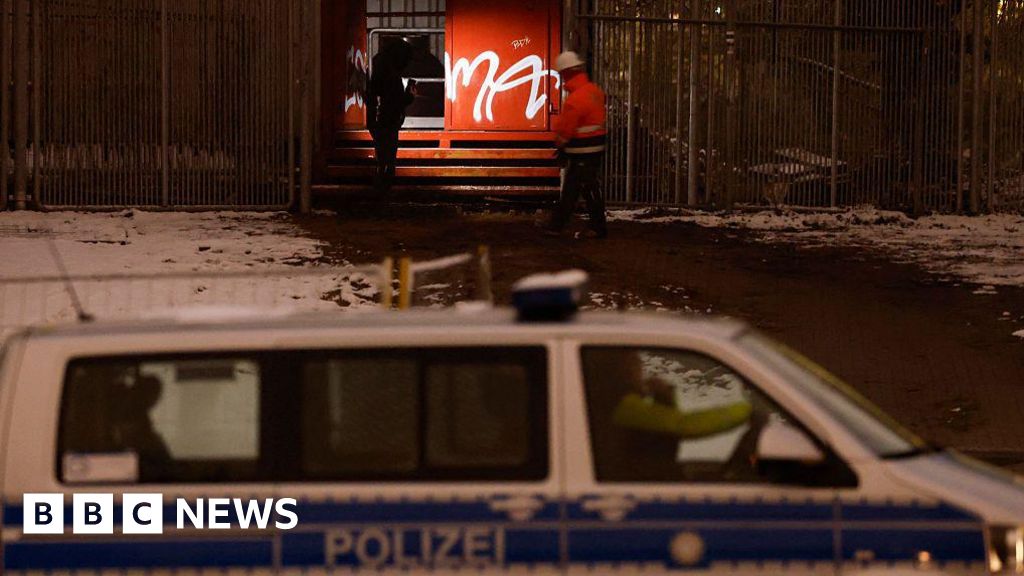
A suspected arson attack on cables near a gas-fired power plant in south-west Berlin cut electricity to roughly 45,000 households and 2,200 businesses; the far-left Vulkangruppe claimed responsibility, framing the action as targeting the fossil-fuel economy. Authorities said reconnections will continue through Thursday (about 10,000 households and 300 businesses had been restored by Sunday), hospitals were placed on emergency generators and some patients relocated, and police are treating the group's statement as plausible — the incident elevates operational, security, regulatory and insurance risks for local utilities and energy infrastructure.
Market structure: Direct winners are grid-equipment and microgrid/storage suppliers, emergency-generator vendors and cybersecurity/infrastructure-defense contractors; losers are local gas-fired plant operators, exposed utilities and nearby industrials (TSLA stands out given prior targeting). Expect a 3–12 month revenue uplift for suppliers (orderbook +5–15%) and an increase in pricing power for hardening services, while affected utilities face short-term margin pressure and reputational risk. Cross-asset: European utility credit spreads could widen 10–40bp near-term; EUR may underperform vs. majors on political risk; natural gas forwards could spike regionally by ~5–15% if plant outages persist.
Risk assessment: Tail risks include coordinated follow-up attacks causing multi-day national outages (GDP hit 0.1–0.4% quarterly) or heavy regulatory mandates raising capex by several €bn, squeezing ROIC. Time horizons: immediate (days) = operational disruption and volatility for Berlin-exposed names; short-term (weeks–months) = policy/capex reallocations and insurance repricing; long-term (quarters–years) = structural shift to hardened, decentralized grids. Hidden dependencies include insurer capacity, single-point grid nodes, and political reaction (hardening vs. criminalization) that can rapidly re-rate sectors. Key catalysts: police arrests, federal resilience package (>€5bn), or repeat incidents within 30–90 days.
Trade implications: Favor industrials and storage suppliers with European exposure (buy-side) and hedge or avoid single-site industrial names in Berlin (sell-side). Use pairs to capture relative rerating (grid suppliers vs. legacy utilities) and use options to monetize expected vol spikes: buy protection on TSLA if exposed and buy call spreads on selected infrastructure names. Enter positions within 1–6 weeks to capture policy-driven capex; reassess at 30/90-day regulatory milestones.
Contrarian angles: Consensus may overestimate persistent terrorism risk—historically infrastructure attacks produce short-lived equity moves followed by durable order flow for suppliers. Mispricing exists in diversified utilities (RWE/NEE) which are likely to weather headlines better than narrowly exposed peers (UNP/EONGY). Unintended consequence: aggressive criminalization or heavy-handed regulation could slow small-scale renewables installers while benefiting large-cap suppliers—favor scale and balance-sheet strength.
AI-powered research, real-time alerts, and portfolio analytics for institutional investors.
Request DemoOverall Sentiment
moderately negative
Sentiment Score
-0.35
Ticker Sentiment
