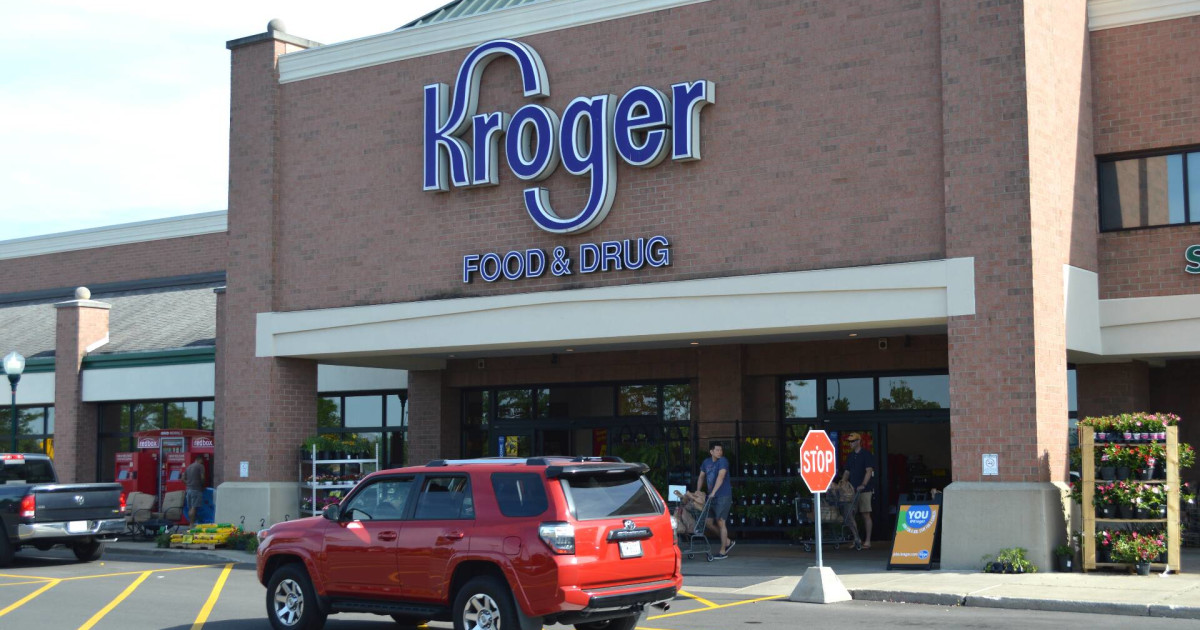
Kroger reported identical (ex-fuel) sales up 2.6% year-over-year in Q3 but lost $1.3 billion after general, operating and administrative expenses surged 44%; market-research data show Kroger's grocery dollar share slipped to 8.5% from 8.8% a year earlier while Costco gained to 8.2%. Interim CEO Ronald Sargent flagged weakening consumer sentiment and smaller, more frequent shopping trips (with a late-Q3 slowdown tied to a SNAP pause), and management is pursuing aggressive cost cuts—~1,000 corporate job eliminations, closure of three underperforming automated fulfillment centers by Jan 2026 and about 60 store closures over 18 months—alongside price reductions on 1,000+ items and expanded delivery partnerships to defend sales and margins.
Market Structure: Kroger’s Q3 shows widening bifurcation — loss of market share (8.8%→8.5%) and a $1.3bn hit driven by a 44% spike in G&A, while Costco (8.0%→8.2%) and Walmart remain direct beneficiaries of value-seeking behavior. Third‑party delivery partners (DASH/UBER/INSTA) capture immediacy demand, improving conversion but compressing grocery margins via variable fees; expect modest pricing power consolidation toward scale players over 6–12 months.
Risk Assessment: Near term (days–weeks) headline risk centers on holiday sales and weekly comps; short term (months) on SNAP/benefit programs and promotional cadence; long term (18–24 months) on store closures/automation payoff and labor costs. Tail risks include a renewed prolonged SNAP pause, accelerated union/labor inflation, or failed fulfillment closures creating supply chain shocks — any of which could shave 5–10% off Kroger comps and force deeper markdowns.
Trade Implications: Tactical positioning favors large-cap low-cost winners: overweight WMT and COST, underweight KR; implement KR downside exposure via 3–6 month put spreads to cap capital and exploit elevated idiosyncratic risk. Cross-asset: mild bid for IG duration if consumers pull discretionary spending (2–5bp flattening pressure on real yields); modest bearish bias on food commodity cyclicals if demand softens through Q1.
Contrarian Angles: Consensus underestimates resilience of premium/club models (Costco) and potential for Kroger’s targeted price reinvestment to defend core markets — cost cuts could fund localized share defenses, creating temporary margin recovery in 2–4 quarters. Watch for execution risk: if in-stock levels or service worsen, share loss will accelerate; if Kroger preserves service while cutting corporate costs, downside may be limited and the sell‑off overdone.
AI-powered research, real-time alerts, and portfolio analytics for institutional investors.
Request DemoOverall Sentiment
moderately negative
Sentiment Score
-0.45
Ticker Sentiment
