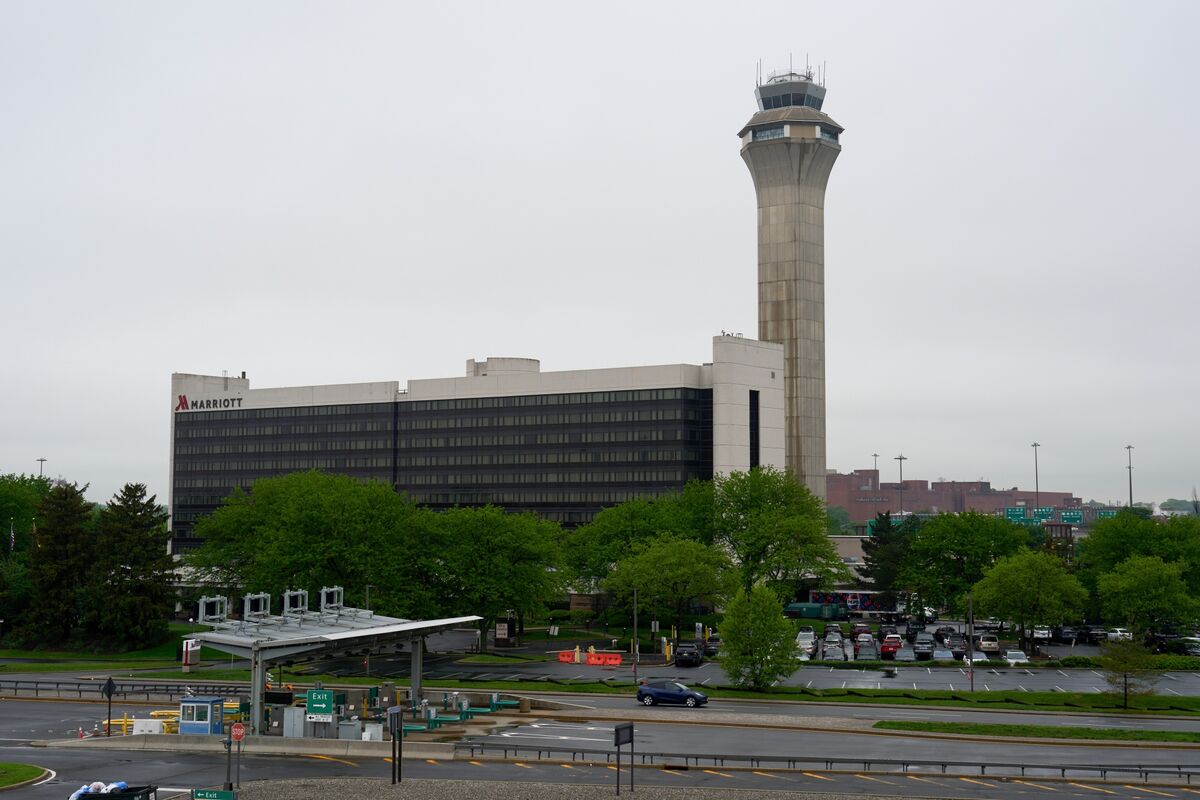
The FAA is reducing the number of flights permitted at Newark airport, capping arrivals at 28 per hour through June 15 and 34 per hour until October 25, in response to recent technology outages, staffing shortages, and runway construction that have caused significant delays and cancellations. This interim order, effective immediately, aims to alleviate congestion at the busy hub during peak travel season.
The U.S. Federal Aviation Administration has implemented immediate flight restrictions at Newark Liberty International Airport (EWR) due to persistent technology outages, air traffic control staffing shortages, and ongoing runway construction, which have collectively led to a significant increase in flight delays and cancellations. Effective immediately, the FAA has capped arrivals at 28 per hour through June 15, coinciding with the end of daily runway construction. This cap will also apply on Saturdays until the end of the year. Following June 15, the arrival rate will be limited to 34 aircraft per hour until October 25. These measures, outlined in an interim order, are designed to mitigate congestion and improve operational reliability at the busy hub, particularly during the peak travel season. The situation reflects a moderately negative operational environment at Newark, characterized by regulatory intervention to address systemic issues within the air traffic control system and airport infrastructure, carrying a moderate market impact primarily for air carriers with significant operations at EWR.
AI-powered research, real-time alerts, and portfolio analytics for institutional investors.
Request DemoOverall Sentiment
moderately negative
Sentiment Score
-0.30
