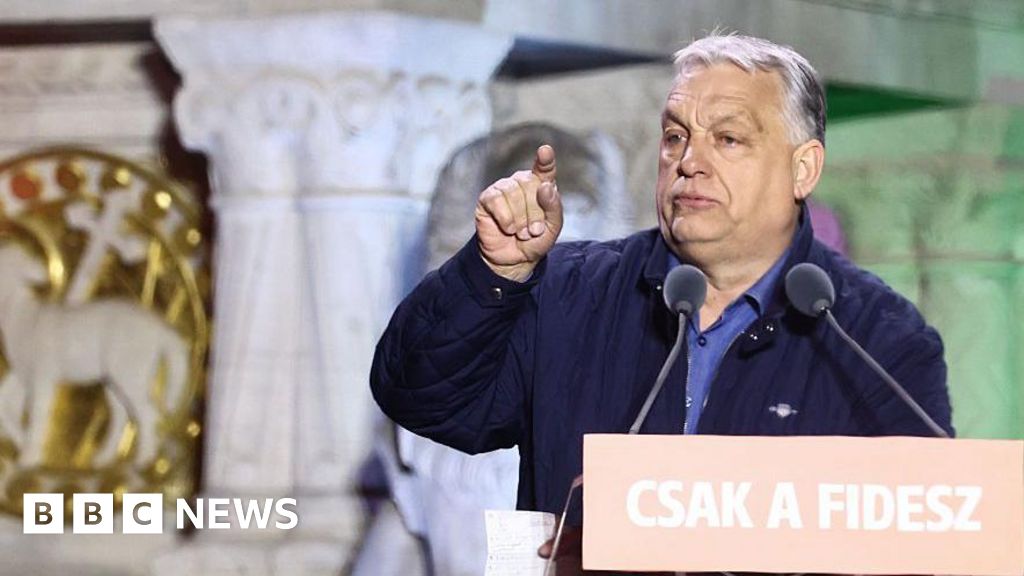
Hungary’s election could end Viktor Orbán’s 16-year rule, with most polls favoring Péter Magyar’s Tisza party. The outcome could reshape Hungary’s stance on the EU, Ukraine and Russia, and determine whether Fidesz keeps its current constitutional advantages in the 199-seat parliament, including the 106 directly elected constituencies and 5% list threshold. The vote is notable for its broader implications for European politics and Ukraine aid, but near-term market impact is mainly political rather than financial.
A credible change in Budapest would matter less as a single-country political event than as a regime-risk reset for Central Europe. The near-term market signal is not rates or GDP per se, but the probability of a cleaner policy transmission channel from EU funds to domestic contractors, banks, and consumer confidence; that is a multi-quarter rerating input, not a weekend headline. If Orbán survives, the trade is the opposite: more governance discount, more legal/administrative friction around EU disbursements, and a higher chance that Hungary remains an outlier in regional allocation models.
The second-order winner set is broader than the obvious pro-EU names. A Tisza-led government would likely improve the odds of frozen EU money eventually flowing, which supports Hungarian banks, utilities, and domestically exposed midcaps via lower sovereign spread and better credit impulse. The less obvious loser is the “sanctions arbitrage / political optionality” trade embedded in businesses that have benefited from opaque procurement, soft regulation, or Russian-linked commercial ties; that premium can unwind quickly even before formal policy changes are enacted.
The key tail risk is not just an upset result, but post-result instability. If the margin is narrow, expect street-level protest risk, legal challenges, and a delayed coalition calculus that can keep the forint, sovereigns, and local equities volatile for days to weeks. Conversely, if the opposition wins but falls short of a supermajority, the market may initially overprice reform speed; constitutional change is a years-long process, so the first leg of upside is in sentiment and capital flows, not immediate structural overhaul.
Contrarianly, the consensus may be underestimating how much of the “anti-Orbán” trade is already crowded in the polls and local sentiment. That argues for buying confirmation, not anticipation, because a benign outcome is likely to produce a sharp but tradable gap rather than a straight-line trend. The asymmetric setup is therefore in volatility and relative value: use the event to own downside protection into the vote and look for post-result dislocations in FX and bank equities rather than making a binary direction bet ahead of time.
AI-powered research, real-time alerts, and portfolio analytics for institutional investors.
Request DemoOverall Sentiment
neutral
Sentiment Score
-0.05
