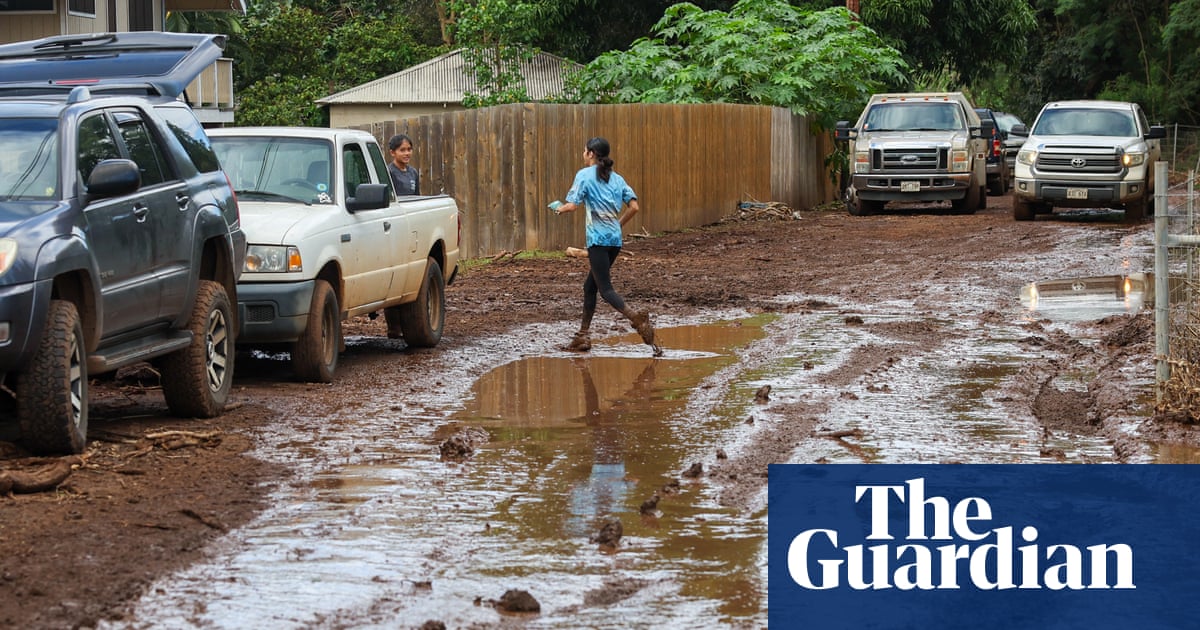
$1bn+ estimated cost: Hawaii Governor Josh Green said storm damages could top $1bn and are expected to rise after the worst flooding in two decades damaged hundreds of homes, some schools and a hospital. Agricultural losses totaled more than $9.4m statewide with Oahu farmers reporting ~$2.7m in crop damage; many farms lack federal crop insurance. Authorities are seeking federal assistance and local nonprofits have activated relief funds; parts of Oahu received 8–12 inches of rain and Kaala recorded nearly 16 inches on top of 26.6 inches earlier in March. Experts link increased intensity and frequency of heavy rains to human-caused climate change, implying higher future recovery and resilience costs.
This event functions as a concentrated stress-test of insured losses, public budgets and regional labor capacity rather than a one-off local shock. Expect a two-stage economic mechanism: an immediate cashflow hit to local property owners, insurers and municipalities over 0–3 months, followed by a 6–36 month rebuild cycle that amplifies demand for building materials, logistics and engineering services while hardening insurance pricing. Reinsurers and brokers typically capture the second-order benefits as rates reset; primary carriers absorb near-term claims volatility but can increase premiums or cede more to reinsurance, altering margin dynamics through the next 1–2 renewals.
Supply-side frictions will matter — skilled construction labor and long-lead materials (lumber, gypsum, HVAC equipment) are already tight nationwide, so Hawaii-specific rebuilding will import incremental demand that competes with mainland projects, lifting prices and lead times for 3–18 months. Municipal credit risk is more nuanced: a disaster of this scale creates short-term liquidity needs and political pressure for federal aid, which often prevents structural defaults but increases near-term budgetary strains and capital expenditure programs that benefit engineering/contracting firms. Climate-policy tail risks (faster-than-expected frequency of extreme precipitation) increase the probability that insurers accelerate premium repricing and that capital flows into catastrophe-linked instruments over the next 12–36 months.
Key reversals: a rapid federal disaster declaration + large grant flows would cap muni and bank downside and compress insurance-loss haircut assumptions; conversely, prolonged delays in aid or reinsurance capacity tightening would amplify credit and P&L stress. Watch upcoming reinsurance renewals, state budget amendments and permit pipelines as 3–12 month catalysts that will reprice both cyclical builders and financial intermediaries.
AI-powered research, real-time alerts, and portfolio analytics for institutional investors.
Request DemoOverall Sentiment
strongly negative
Sentiment Score
-0.70
