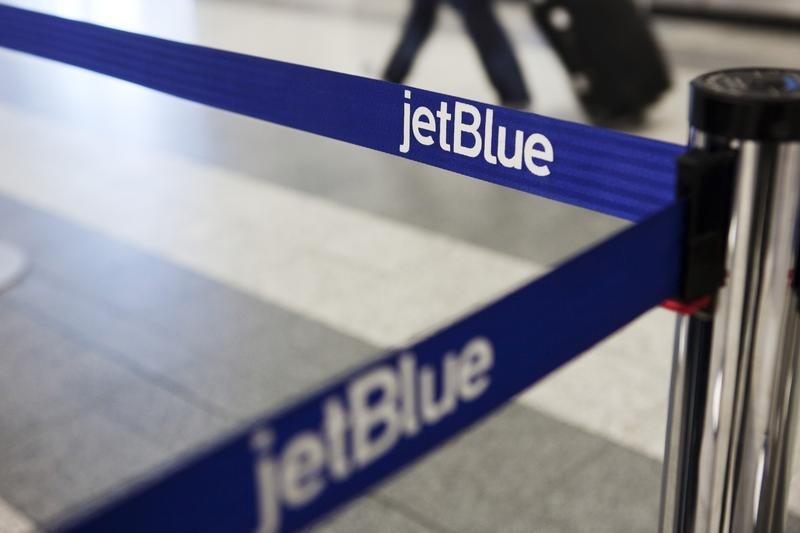
JetBlue shares jumped 14% after Semafor reported the airline is exploring potential merger partners and has tapped advisers to assess a possible sale. The carrier has scenario-planned potential deals with United, Alaska and Southwest but the review is preliminary and may not lead to talks. Any merger of two of the six largest U.S. carriers would face close antitrust scrutiny; JetBlue is pursuing a turnaround after its Spirit Airlines deal was blocked in 2024 and shares are down >40% since early last year.
A credible M&A narrative involving a top-six U.S. carrier materially reorders slot/gate economics in constrained airports: controlling 3–5 additional peak-hour gates can lift near-term yields on overlapping routes by 8–15% through reduced discounting and better schedule connectivity. The clearest direct beneficiaries are the target’s equity (takeout premium optionality) and acquirers that can extract unit-cost synergies via fleet commonality and route rationalization; secondary beneficiaries include regional partners and MRO/lease suppliers who pick up incremental flying and transition work.
Regulatory friction is the dominant path-dependent risk and sets a 6–24 month time horizon for material outcomes; expect the range of possible regulatory remedies to include forced slot/gate divestitures or runways of behavioral remedies that compress forecasted synergies by 30–70%. A deal priced to deliver only token cost synergies (low hundreds of millions) will be vulnerable — buyers will need to show >$300–800M annual synergies to justify a meaningful control premium versus the status quo, and failure to credibly model those will see equity repriced quickly.
Integration and labor mismatches are non-trivial tail risks: fleet heterogeneity, union concessions, and IT/FFP (frequent-flyer program) unwinds can convert projected synergy dollars into three-year drag. Watch for three near-term catalysts that shift probabilities materially: (1) explicit regulatory guidance or early consent decree language, (2) irrevocable indications of interest or exclusivity letters, and (3) activist or large institutional shareholder positioning — any of which can move implied takeover odds by 20–40% in weeks.
AI-powered research, real-time alerts, and portfolio analytics for institutional investors.
Overall Sentiment
mildly positive
Sentiment Score
0.25
Ticker Sentiment
