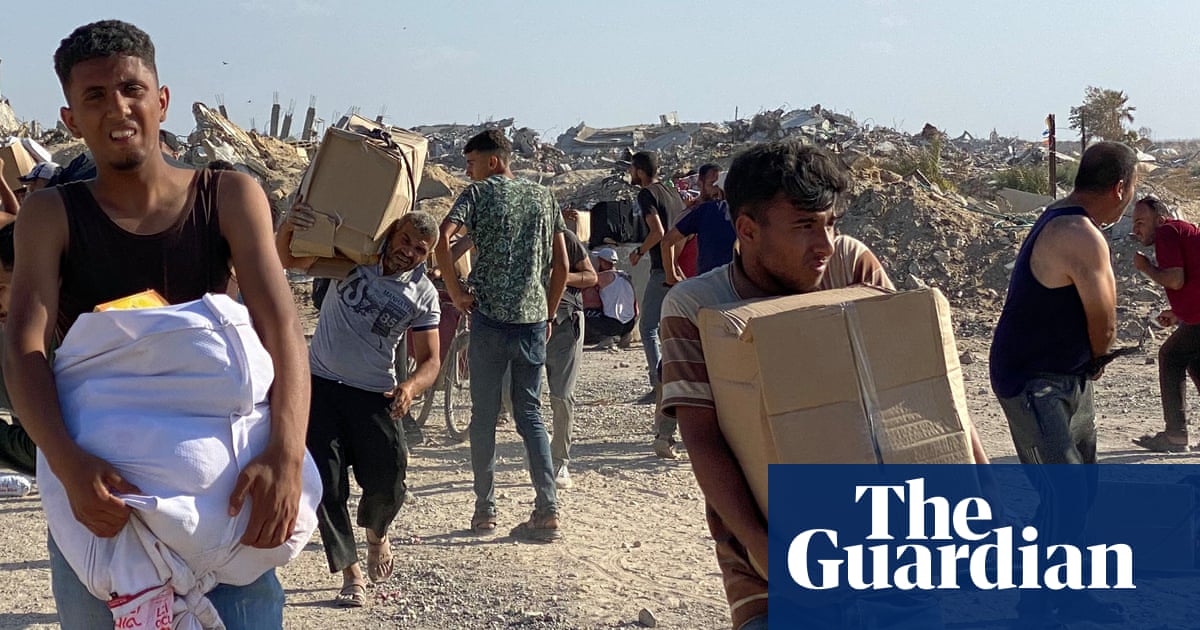
At least one Palestinian civilian was killed and 48 wounded after Israeli troops opened fire on crowds near a Gaza aid distribution center managed by the Israeli-authorized Gaza Humanitarian Foundation (GHF), which lost control of the site; the Israeli military claims it fired "warning shots" and denies targeting people. The UN and other humanitarian organizations have criticized the new distribution system, stating that it is inadequate to meet the needs of Gaza's population and allows Israel to use food as a weapon, with the head of UNRWA calling it a waste of resources. The GHF's founding director resigned, citing an inability to adhere to humanitarian principles, and the UN has expressed concerns about the group's inexperience and the potential for friction.
The humanitarian situation in Gaza has critically deteriorated, exemplified by an incident where Israeli troops reportedly opened fire on Palestinian civilians at an aid distribution point, resulting in at least one fatality and 48 injuries. This event occurred as the Israeli-authorized Gaza Humanitarian Foundation (GHF), tasked with food distribution, lost control of its facility, lending credence to prior warnings from the UN and other international NGOs about the new aid system's inadequacy and the GHF's inexperience. These organizations, including UNRWA whose head Philippe Lazzarini described the new model as a "waste of resources" and a "distraction from atrocities," have stated that it cannot meet the needs of Gaza's 2.3 million inhabitants and risks politicizing aid. This view is reinforced by the resignation of GHF's founding director, Jake Wood, who cited an inability to operate while adhering to core humanitarian principles. The backdrop includes an 11-week siege, a tight Israeli blockade leading to widespread hunger, an IPC forecast of nearly 71,000 children under five facing acute malnourishment, and a global hunger monitor's assessment that half a million Gazans face starvation. While the Israeli military stated it fired "warning shots" and Prime Minister Netanyahu acknowledged a "momentary loss of control," the incident highlights the severe fragility on the ground and the profound failure of the current aid distribution strategy. The situation underscores significant geopolitical instability (a key theme identified as "Geopolitics & War"), with potential repercussions for regional supply chains and broader market sentiment, despite the immediate market impact score being neutral, reflecting a pessimistic outlook on the human and operational conditions rather than immediate financial market shocks.
AI-powered research, real-time alerts, and portfolio analytics for institutional investors.
Request DemoOverall Sentiment
neutral
Sentiment Score
0.00
