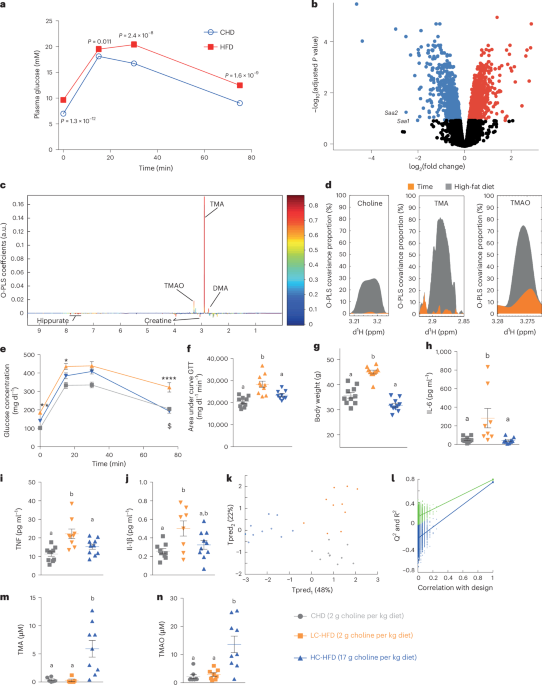
Preclinical research identifies the gut microbial metabolite trimethylamine (TMA) as a direct inhibitor of IRAK4, a central Toll‑like receptor kinase, with a measured binding Kd of 14 nM and functional IC50 of 3.4 µM (Ki ≈ 0.7 µM). In multiple mouse models and human primary cell assays, chronic subcutaneous TMA (0.1 mM in circulation) or genetic/pharmacologic IRAK4 suppression (Irak4−/− and PF06650833) normalized HFD-induced low‑grade inflammation and improved glucose tolerance and insulin signalling; HC‑HFD mice showed plasma TMA ≈5.9 µM versus ≈0.3–0.38 µM in controls. Findings point toward IRAK4 (and microbiome/FMO3 modulation) as a translational target for insulin resistance and metabolic disease, with potential IP implications but also context-dependent safety considerations given contrasting data on TMAO.
Market structure: The paper reallocates economic opportunity from a singular TMAO-risk narrative toward a split market—IRAK4-targeted therapeutics (small-molecule inhibitors) and the upstream microbiome/metabolomics infrastructure. Near-term winners are instrument/assay vendors (WAT, BRKR, QGEN) and CROs supporting IRAK4/PF-06650833-style trials; losers include pure-play TMAO alarmist diagnostics and supplement-sellers whose negative narratives may reverse. Expect modest re-pricing: instrument OEM revenue upside of ~2–5% CAGR over 6–24 months as labs scale metabolomics assays; drug developers face binary clinical-risk valuation (infection safety tail risk).
Risk assessment: Tail risk is regulatory/safety: IRAK4 inhibition can increase serious bacterial infection; a single adverse safety signal in Phase II could vaporize equitied biotech valuations (>-60% moves). Time horizons split: academic/bench demand uplift is immediate (0–6 months), trial-driven pharma re-rating medium-term (6–24 months), commercialization multi-year (2–5 years). Hidden dependency: benefits hinge on TMA/TMAO metabolic routing (FMO3 activity) — FMO3 modulation could flip cardiovascular risk, creating complex combination-therapy regulatory paths. Catalysts: 1) PF-06650833 Phase II/real-world safety updates (3–12 months); 2) large cohort metabolic/dietary intervention readouts (6–18 months).
Trade implications: Tactical plays: overweight WAT and BRKR to capture instrument demand; buy 6–12 month call spreads to limit capital at risk. Relative-value: long BRKR (tools) vs short BIO.B (diagnostic/consumer health names exposed to TMAO narrative collapse) to capture narrative rotation. Options: buy 9–12 month calls on WAT/BRKR (25–35% OTM) sized to 1–3% portfolio risk to capture research funding flows; avoid long-biotech unilateral exposure until safety data clears.
Contrarian angles: Consensus underestimates context-dependence—TMA benefit is diet- and FMO3-dependent; crowd may overrotate into IRAK4 drug names ignoring infection liabilities. Reaction is likely underdone for instrument vendors (slow but steady procurement cycles) and overdone for speculative TMAO-negative plays. Historical parallel: early cytokine/TLR-targeted strategies showed promise then compressed by safety/regulatory setbacks (PCSK9-like long development cycles but infection-safety parallels). Unintended consequence: attempts to increase systemic TMA (eg FMO3 inhibition) could worsen atherosclerotic endpoints in subsets, creating regulatory U-turns and stranded assets.
AI-powered research, real-time alerts, and portfolio analytics for institutional investors.
Request DemoOverall Sentiment
mildly positive
Sentiment Score
0.25
Ticker Sentiment
