
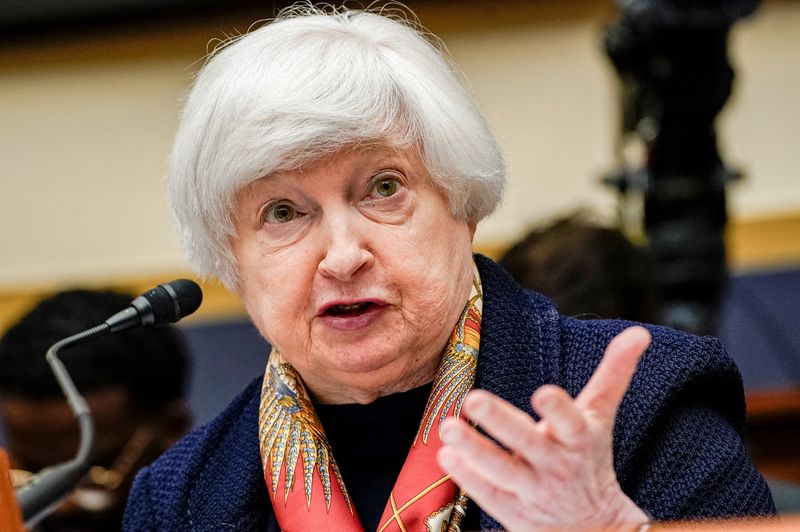
Janet Yellen said one U.S. interest rate cut later this year is still possible, but warned that the Middle East conflict is creating a broad supply shock and upward pressure on inflation. The Fed has kept rates at 3.50%-3.75% and remains cautious as energy disruptions and oil-price spikes feed into March CPI. The article points to higher inflation risk and a more uncertain policy outlook, with potential market-wide implications for rates, bonds, and energy.
The market is still underpricing the asymmetry between a temporary geopolitical risk premium and a more durable macro hit from higher energy. Even if the oil spike fades on peace-talk headlines, the Fed’s reaction function has shifted toward “higher for longer” because inflation expectations are now being pulled by supply, not demand; that is much harder for policymakers to dismiss. The first-order beneficiaries are energy producers and commodity-linked equities, but the more interesting second-order winners are banks and insurers with short duration balance sheets, while losers are rate-sensitive cyclicals and leveraged consumer names that cannot pass through fuel costs.
The key near-term catalyst is not the conflict itself but the next inflation prints and any upward drift in breakevens. If gasoline and shipping costs remain elevated for 4-8 weeks, the market will likely push out the first cut by one meeting and re-rate the front end higher; that is a direct headwind for the broad market multiple, especially software and long-duration growth. Conversely, a ceasefire or credible de-escalation should compress oil quickly, but the Fed will not fully reverse course until the data rolls over, so the downside in rates-sensitive equities can persist even after crude retraces.
The consensus is too focused on the headline probability of peace and not enough on the lagged macro transmission. A blockade or conflict premium that lasts only days is a tradable energy event; one that lasts into the next CPI cycle becomes a margin squeeze across transport, airlines, chemicals, and retail. That creates a strong asymmetric setup: energy upside is partly capped by diplomacy, while non-energy downside extends through earnings revisions and lower multiples.
The cleanest trade is a tactical long XLE versus short XLY or XLI for the next 1-2 months, because the latter group absorbs both fuel-cost pressure and valuation compression if rate-cut expectations slip. On rates, consider a short in front-end duration via SFR or TLT puts into the next CPI/FOMC window; the payoff improves if oil stays bid and cuts get repriced later. HSBC is not the macro winner here, but if you want a cross-asset proxy, its equity is more resilient than pure asset managers because higher volatility and rates uncertainty usually support trading and advisory activity.
AI-powered research, real-time alerts, and portfolio analytics for institutional investors.
Request TrialOverall Sentiment
mildly negative
Sentiment Score
-0.15
Ticker Sentiment
