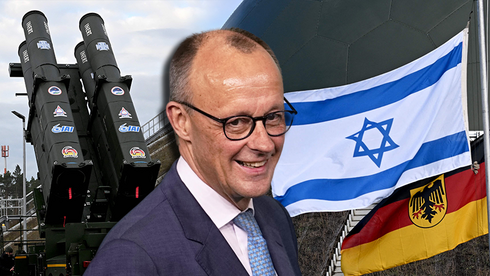
Chancellor Friedrich Merz visits Israel following a Gaza cease-fire and the lifting of Germany's partial arms embargo, a trip underscored by Israel's transfer of the first operational Arrow 3 missile-defense system to Germany. The Arrow 3 arrangement — described as the largest Israel-Germany security cooperation project and valued at roughly €3.6 billion — will be deployed near Berlin with full deployment expected by 2030 and will form the top layer of a multi-tier air-defense shield alongside Patriot, Iris-T SLM and Skyranger systems. The deal strengthens Germany's strategic deterrent against medium-range threats (citing concerns about Russia's new missiles) while the visit seeks to repair bilateral ties amid domestic political controversy over Israel policy and humanitarian issues in Gaza.
Market structure: Germany’s €3.6bn Arrow 3 deal re-routes near-term European procurement dollars to strategic air-and-space layers, directly benefiting missile-interceptor integrators and radar/sensor suppliers while leaving cruise-missile and low-altitude air-defence specialists relatively under-bid. Arrow’s unique niche (exo-atmospheric intercept through 2030) increases pricing power for prime contractors and raises barriers to entry for smaller vendors — expect contract cadence and service revenue to back-load through 2026–2030. NATO-led sensor integration needs create durable aftermarket and systems-integration demand rather than one-off hardware sales.
Risk assessment: Tail risks include a political reversal in Berlin (change in coalition), US/Israeli export-control friction, or a saturation of early-warning sensor capacity that reduces Arrow effectiveness — each could cut projected revenue by 30–60% for parties dependent on system exports. Short-term (0–12 months) volatility centers on German budget approvals and NATO announcements; medium/long (1–5 years) risk is execution on sensor networks and Arrow-4 funding. Hidden dependency: Arrow’s operational value hinges on multinational radar/space assets, not just interceptors.
Trade implications: Prefer equities exposed to interceptors, radars and space sensors (defense primes and specialized mid-caps) with 12–36 month horizons; use funded call spreads to capture discrete contract wins while limiting downside. Expect modest upward pressure on German defensive capex funding that could widen 10y Bund yields by 10–30bps vs current levels if financed domestically; FX: marginal EUR support vs RUB/EM pairs tied to Russia risk. Catalysts: German deployment timeline (2025–2030), NATO sensor procurement windows, Arrow-4 program green-lighting.
Contrarian angles: The market underrates sensor/space plays versus interceptors — IAI/Rafael headlines get attention but Hensoldt/Elbit/Teledyne-style sensor franchises are higher(alpha) due to recurring services and integration. The crowd may overvalue Arrow as a standalone solution; buying sensors and integration exposure is a lower-risk, higher-conviction route. Historical parallel: post-2014 European rearmament saw outsized returns in niche radar and electronics names vs broad primes; expect a similar dispersion here.
AI-powered research, real-time alerts, and portfolio analytics for institutional investors.
Request DemoOverall Sentiment
neutral
Sentiment Score
0.12
