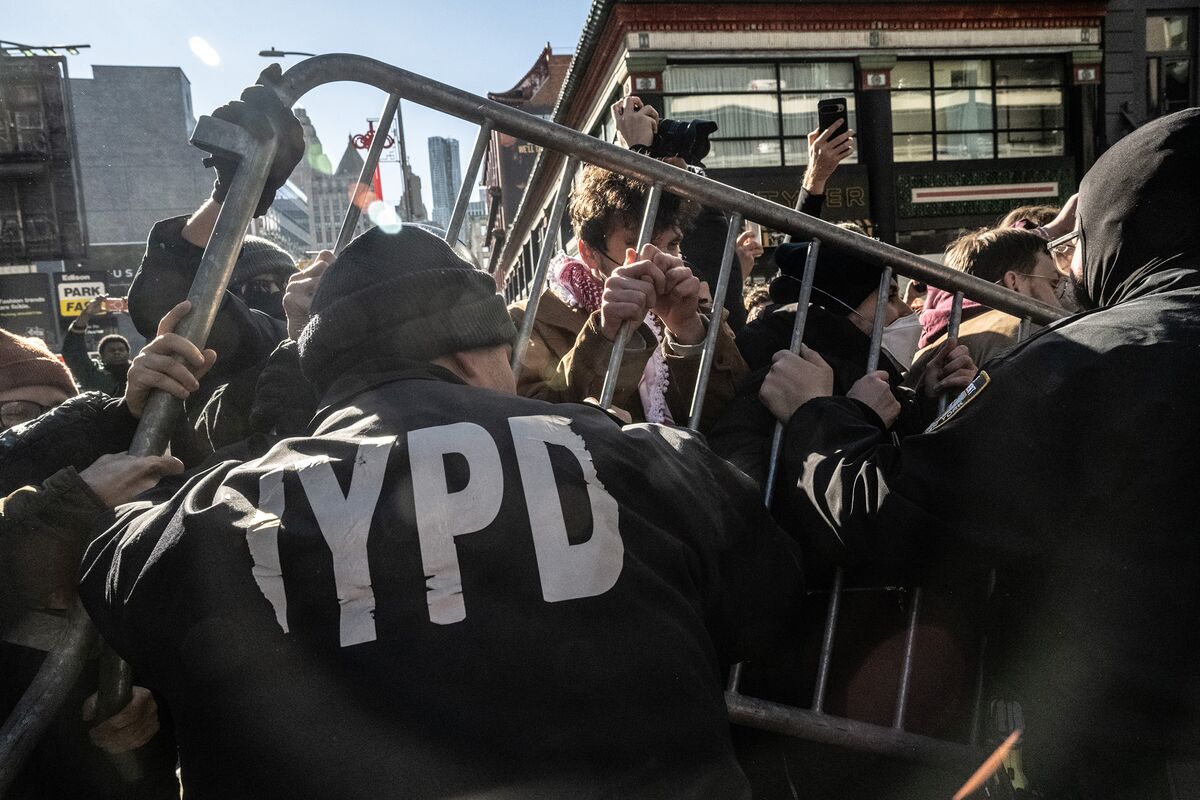
More than 100 protesters blocked the Department of Homeland Security parking-garage ramp near Chinatown in Lower Manhattan on Saturday, forcing federal agents to retreat from a planned immigration operation; NYPD logged the first 911 call at 11:46 a.m., found demonstrators blocking exits and throwing garbage, and made several arrests after orders to disperse were ignored. The episode signals localized disruption to federal enforcement activity and elevated civil unrest risk in Manhattan but is unlikely to move markets beyond potential short-lived local security or operational impacts.
Market structure: This localized protest creates micro-demand for crowd-control, surveillance and contract security services (favors ADT, L3Harris (LHX), Palantir (PLTR) and large defense primes with DHS footholds like LMT/NOC). Small-business revenue in Chinatown and short-term NYC footfall losers; expect modest widening of NY-specific muni spreads vs. Treasuries by ~1–5bp if disruptions persist beyond a week. Pricing power shifts to vendors with standing federal/state contracts and rapid deployment capacity; private/procurement cycles matter more than retail sentiment.
Risk assessment: Tail risks include escalation to multi-day civil disruption (low prob, high impact) that could trigger emergency procurement (+10–30% near-term security spend) or political backlash that freezes awards (negative for contractors). Immediate (hours–days): operational disruptions and reputational headlines; short-term (weeks–3 months): municipal security line-items and RFP timing; long-term (6–24 months): budget appropriation shifts tied to election cycle. Hidden dependency: actual contract flow depends on DHS/NYC procurement calendars and Congressional appropriations, not protests alone.
Trade implications: Favor small, tactical exposure to contractors/security tech—size positions to 1–2% NAV each and use options to cap downside. Reduce NY-centric muni exposure by 1–2% of fixed-income allocation and reallocate to national short-duration muni ETF (MUB) to avoid local spread risk. Use 3-month call spreads on LHX/PLTR to express upside tied to potential RFP acceleration; exit if no material RFP/award news within 6 months or if DHS budget guidance revises down >5% year-over-year.
Contrarian angles: Consensus will treat this as ephemeral; instead, treat protests as a trigger that can accelerate already-planned municipal/federal security procurements — underpriced optionality in smaller-cap security tech (PLTR small-call exposure). Reaction is likely underdone given procurement lag: if awards materialize, equity moves could be 10–20% in 3–6 months; conversely, a political clampdown on contracting is the main risk — size positions accordingly and set tight stop-loss/triggers.
AI-powered research, real-time alerts, and portfolio analytics for institutional investors.
Request DemoOverall Sentiment
neutral
Sentiment Score
0.00
