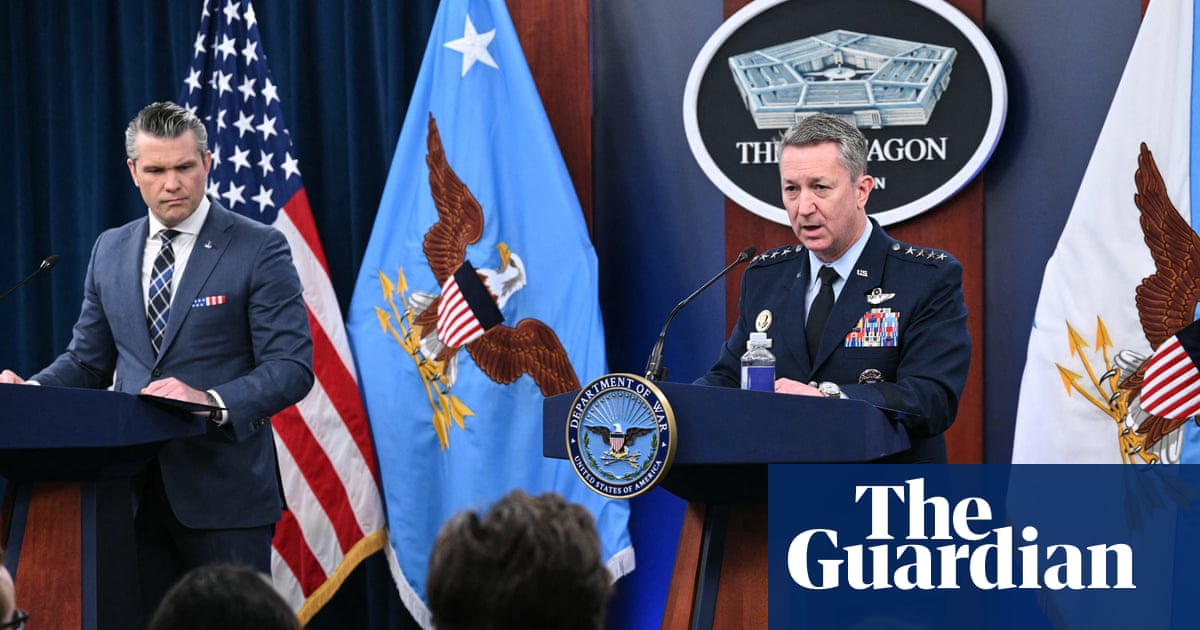
Pentagon is reportedly preparing for weeks of possible ground operations in Iran as an additional 3,500 US troops arrived (the US typically stations ~50,000 in the region). The Pentagon has requested an extra $200bn beyond its ~$1tn annual budget, and options cited include securing the Strait of Hormuz or seizing Iranian enriched uranium or oil facilities. This escalatory path increases risk of a broader regional conflict, likely driving risk-off flows, higher oil and gas prices, and elevated volatility in defense and energy sectors.
The combination of an incremental Pentagon funding ask (~$200bn cited) layered on top of an already large baseline defense budget creates a palpable multi-quarter revenue tail for prime contractors and logistics providers; a 20% incremental budget shock, if approved, would likely translate into mid-to-high single-digit organic revenue upside for the largest primes within 6–18 months and meaningful margin expansion for suppliers with spare capacity. Operationally, demand will skew toward expeditionary lift, precision strike munitions, ISR/sensors, and special-operations enablers — areas where LMT/NOC/RTX/GD have concentrated program exposure and where order book visibility is fastest to move to backlog.
Energy and shipping are the quickest transmission channels to global markets: a disruption of Hormuz chokepoint activity or credible threat that raises insurance/freight premiums would compress seaborne crude flows (~15–20% of traded crude) and can push Brent toward $90–110 within weeks absent coordinated SPR releases. That outcome amplifies margin stress for airlines and refiners while enlarging free-cash-flow capture for integrated majors and US E&Ps over the following 1–6 months.
Political constraints in Congress and domestic election calculus create highly asymmetric execution risk — funding and clear authorities are not binary and could be delayed or scaled back, creating stop-start procurement dynamics that favor firms with diversified backlog and low single-source program risk. The biggest tail event remains escalation to strikes on regional energy infrastructure or US bases, which would rapidly reprice risk assets, spike volatility, and tighten global commodity-linked supply chains for months.
Tactically, position sizing should reflect a high probability of escalation noise (days–weeks) and lower-probability structural budget wins (months–years). Hedging realized volatility with short-dated protection while taking directional exposure to defense primes and integrated energy captures both the likely path and big tails.
AI-powered research, real-time alerts, and portfolio analytics for institutional investors.
Request DemoOverall Sentiment
strongly negative
Sentiment Score
-0.70
