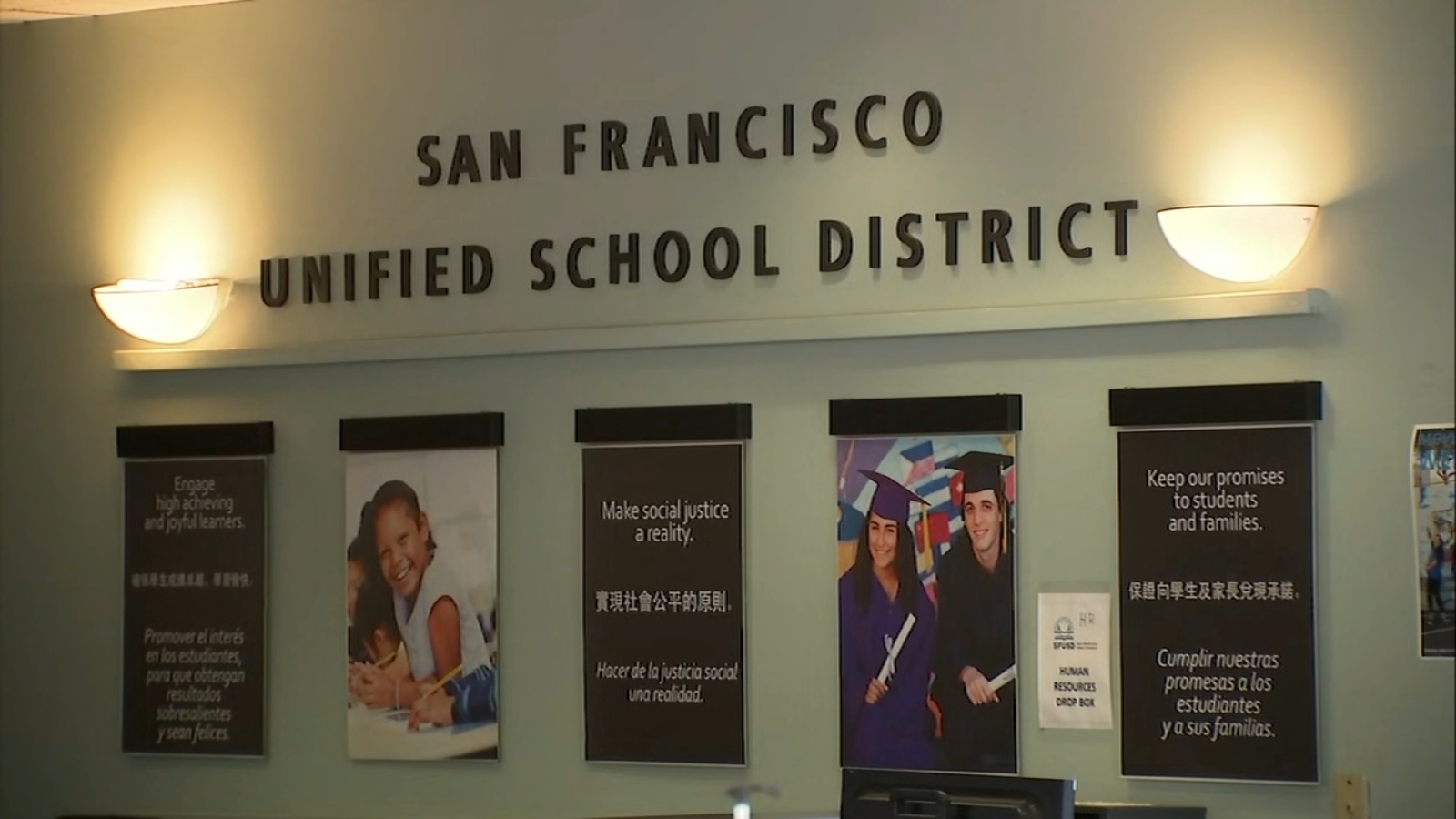
San Francisco Unified School District and the United Educators of San Francisco remain deadlocked after an 11-month negotiation process and a state fact-finder's report that the union said "did not go far enough," with over 5,000 educators voting to authorize a potential strike. SFUSD — facing a projected $100 million budget deficit — has offered a 6% total wage increase over three years (2% annually) and fully funded family healthcare; a confirmed strike could cost the district millions per day and disrupt education for roughly 50,000 students, prompting mayoral intervention and community contingency planning.
Market structure: A short SF teachers strike is a localized shock that creates clear winners (remote learning and childcare operators) and losers (SF small businesses, local retail/food service, and SFUSD liquidity). Expect demand to shift near-term toward Stride (LRN), Chegg (CHGG) and Bright Horizons (BFAM) services as parents buy tutoring/childcare for 1–8 weeks; conversely expect daily sales tax and foot-traffic revenue losses in SF on the order of $3–10m/day while a strike persists, compressing margins for local restaurants and ad-driven local platforms (YELP).
Risk assessment: Tail risks include a protracted 4–12 week strike forcing permanent enrollment shifts to private/online schools and potential SFUSD credit pressure (rating downgrade risk; municipal spread widening of ~25–75bps for CA school district paper). Immediate risk window is days–weeks around the next negotiation (Thursday); if unresolved past 2 weeks, move to short-term positioning (weeks–months) as enrollment and budgetary effects crystallize; long-term (quarters) depends on whether district fills staffing gaps or cuts programs. Hidden dependencies: state intervention, use-of-reserves constraints and mayoral/political pressure can truncate or amplify the strike; catalysts are the fact-finding report acceptance/rejection and any board emergency reserve actions.
Trade implications: Tactical: establish 2–3% long positions in LRN and CHGG for a 3-month horizon and size BFAM at 1–2% as a defensive growth play for childcare demand; implement 3-month call spreads (buy 10–20% OTM calls, sell 30–40% OTM) to cap cost. Defensive/short: take a 1% short or buy 1-month 10–15% OTM put spreads on YELP to capture local ad revenue pain, and trim 2–3% exposure to California-specific muni ETFs (e.g., CMF) to reduce concentration to SF-area credit. Use stop-losses at 8–12% and re-rate after 2 weeks of confirmed strike activity.
Contrarian angles: The market may overprice long-term credit risk—histor parallels (Chicago/LA teacher disputes) show most strikes resolve with limited permanent muni-credit damage, so avoid outright long-duration muni shorts. If the strike resolves within 48–72 hours, sell LRN/CHGG call spreads and cover YELP puts for a quick mean-reversion trade; if strike extends beyond 2 weeks, increase long exposure to edtech/childcare by another 1–2% and consider selective buys in private-school operators or ancillary service providers that could gain market share.
AI-powered research, real-time alerts, and portfolio analytics for institutional investors.
Request DemoOverall Sentiment
moderately negative
Sentiment Score
-0.45
