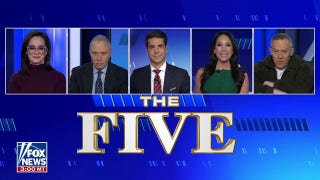
President Trump said he held off military strikes on Iran after citing reports that Iran’s leadership halted more than 800 scheduled executions, a claim echoed by the White House press secretary who warned consequences would follow continued killings. The administration also signaled tougher trade measures—announcing a 'final' 25% tariff targeting countries doing business with the Iranian regime—while protests that began in December 2025 have reportedly killed over 2,000 people; the White House and Iran offered no immediate clarifying comment. For investors, the episode raises renewed Middle East geopolitical risk and trade-policy uncertainty that could pressure oil and regional emerging-market assets if tensions escalate or sanctions widen.
Market structure: A near-term de-escalation signal (cancelled executions) lowers immediate tail risk but preserves chronic geopolitical premium. Winners if tensions persist: defense primes (LMT, NOC, RTX), gold (GLD) and energy producers (XOM, CVX) as insurance; losers: EM sovereigns/FX, commercial airlines (AAL, UAL) and trade-sensitive industrials if tariffs/secondary sanctions expand. Cross-assets: expect safe-haven flows into USD and Treasuries (yields down 10–30bp intraday), higher implied volatility in crude and gold options, and sovereign CDS widening in EM by 50–200bp on renewed sanctions fears.
Risk assessment: Tail risks include a regional military incident (low-probability, high-impact) that could spike Brent >20% in 48–72 hours, or imposition of broad secondary sanctions that disrupt European banking corridors. Time horizons: immediate (days) = volatility spikes; short (weeks–months) = sanctions, tariff implementation and capital flight; long (quarters) = sustained defense spending and supply-chain re-shoring. Hidden dependencies: European banks’ exposure, insurance/shipping rerouting, and OPEC+ supply response. Catalysts: verified sanctions announcements, US tariff actions within 14–30 days, or a large protest-driven regime instability event.
Trade implications: Tactical hedges: allocate 1–3% to GLD or short-duration gold calls for 1–3 months; establish 2–4% longs in LMT/RTX with 3–6 month horizon, trimming on +15% rallies or de-escalation confirmation within 30 days. Pair trades: long defense (LMT) vs short airlines (UAL/AAL) 1:1 for 1–3 months. FX/credit: reduce EM equity exposure by 3–5% and overweight UUP or short EEM (1–2%) until sanctions clarity; buy 30–60 day crude call spreads (USO/XLE) sized at 0.5–1% if Brent crosses $85.
Contrarian angles: Consensus assumes persistent high premiums; that may be overdone—if no kinetic action and sanctions are symbolic, cyclicals and EM can rebound 5–10% within 4–8 weeks. Historical parallels (2019 tanker incidents, 2020 tensions) show 7–12 day volatility spikes then mean reversion; downside is secondary sanctions that produce structural FX dislocations. Unintended consequence: tariff threats could accelerate onshoring — favor select domestic industrials (CAT, XLI) on a 6–12 month view if policies materialize.
AI-powered research, real-time alerts, and portfolio analytics for institutional investors.
Request DemoOverall Sentiment
moderately negative
Sentiment Score
-0.40
