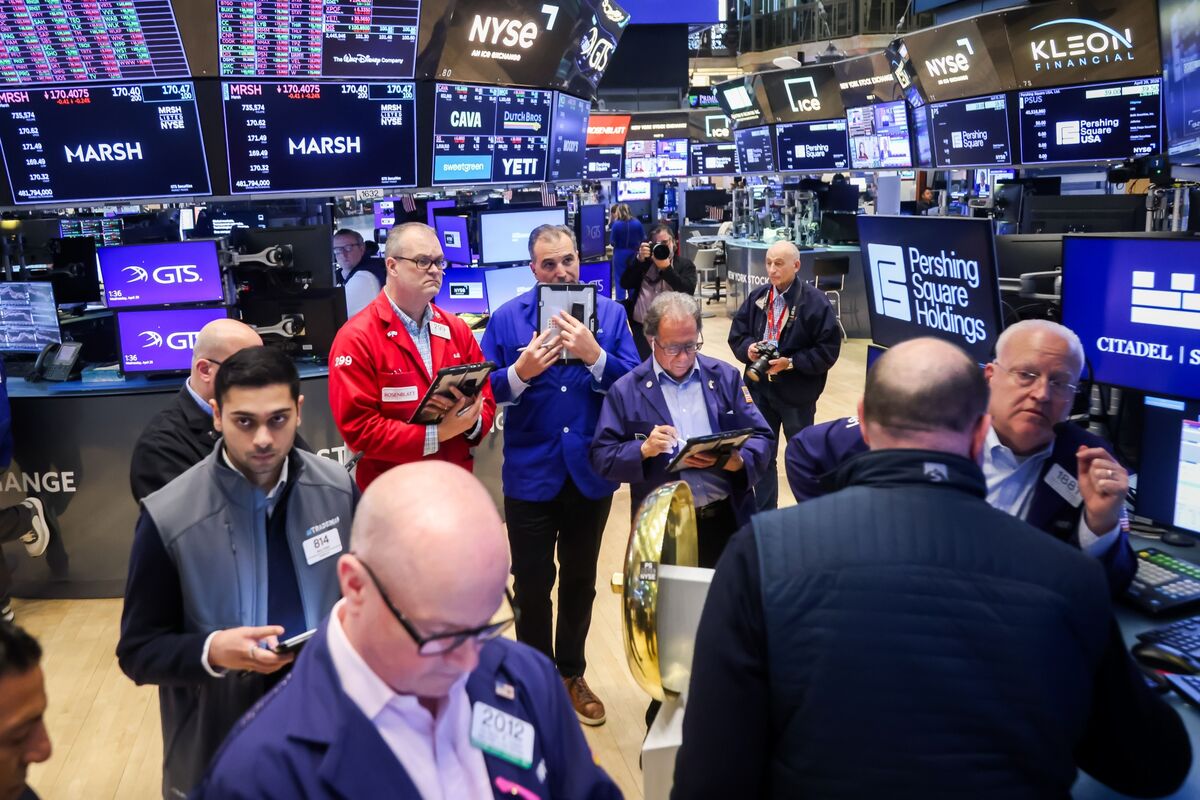
US equity futures rose 0.4% for the S&P 500 and 0.5% for the Nasdaq 100 as bullish mega-cap tech earnings lifted sentiment. Brent crude fell 3.5% to $114 per barrel after reaching a four-year high, easing some pressure on risk assets. The move points to a constructive pre-market tone for equities, especially tech, alongside a sharp pullback in energy prices.
The immediate winner is not just the mega-cap complex, but the broader group of suppliers and software/platform names with the highest operating leverage to incremental ad spend and capex. When leadership comes from a narrow set of large tech names, the market tends to reward adjacent beneficiaries first and then rotate into lower-quality beta names only if breadth improves over the next 1-2 sessions. That makes this more of a factor-driven tape than a fundamental re-rating: semis, cloud infrastructure, and ad-tech can outperform on sympathy even if the earnings beat is idiosyncratic rather than a new demand signal. The bigger second-order effect is on rates and duration-sensitive positioning. A tech-led futures bid usually pressures real yields lower or at least caps them intraday, which can create a short-covering loop in long-duration equities and unprofitable growth. But that same setup is fragile if oil’s decline is interpreted as a growth scare rather than benign disinflation; if crude keeps falling for several days, energy equities and cyclicals may start to underperform as investors price slower global demand, not just lower input costs. For the next 1-5 trading days, the key risk is earnings dispersion turning into index concentration. If a handful of mega-caps are carrying futures while the equal-weight market lags, the rally is more vulnerable to reversal because passive inflows will not provide much incremental support outside the leaders. Over a 1-3 month horizon, the trade becomes more interesting if lower oil feeds into softer inflation prints without triggering recession fears; that would be constructive for multiples, but only if labor and credit data stay stable. Consensus is probably underestimating how much of this move is mechanical positioning rather than fresh fundamental conviction. After a period of crowded short-duration and energy inflation hedges, a modest positive earnings surprise can force a larger reallocation than the headline move suggests. The contrarian read is that the best risk/reward may not be chasing the index higher, but fading the most crowded winners once the initial squeeze exhausts and rotating into sectors that benefit from lower input costs and stable growth.
AI-powered research, real-time alerts, and portfolio analytics for institutional investors.
Request DemoOverall Sentiment
mildly positive
Sentiment Score
0.35
