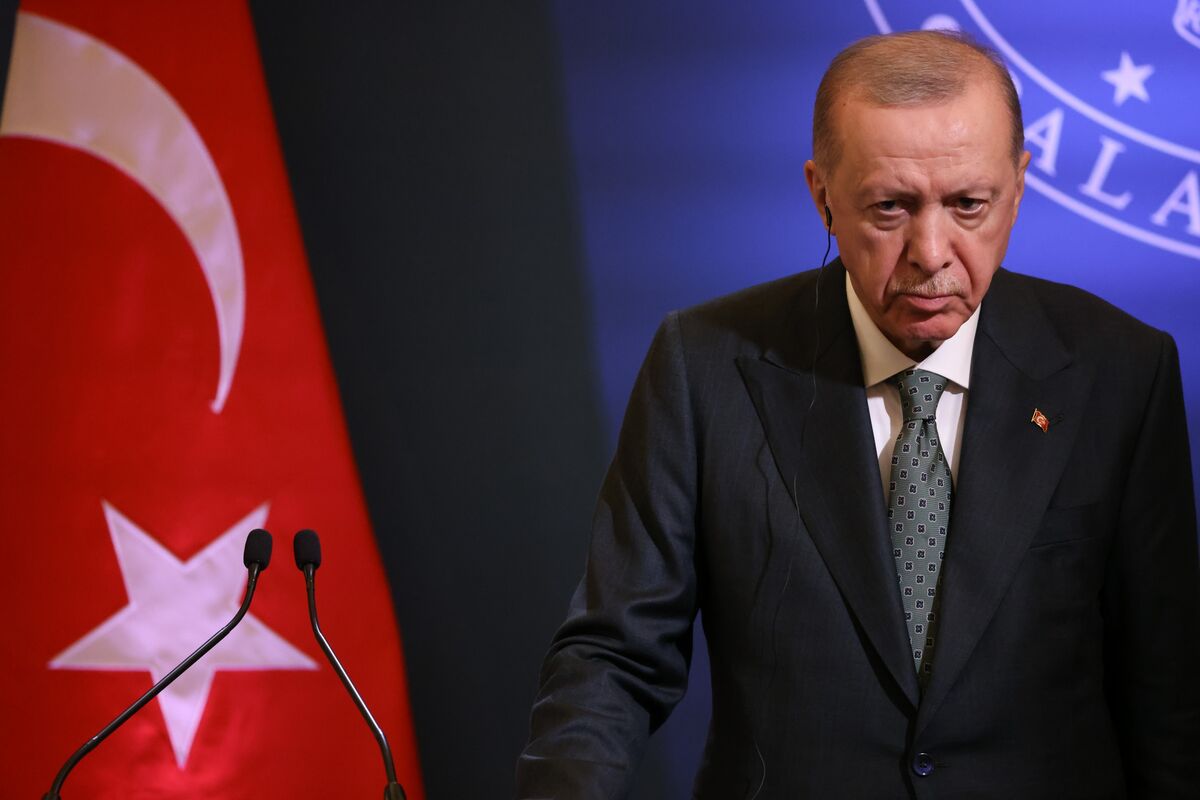
Turkish President Erdogan reaffirmed his commitment to the country's economic program despite restating his aversion to interest rates, a key component of the orthodox approach to combatting inflation. Erdogan, speaking at an Islamic banking event, expressed his continued desire for an interest-free economic system, highlighting a potential conflict between his personal views and the current monetary policy.
Turkish President Erdogan's recent statements, reiterating his opposition to high interest rates while simultaneously endorsing the country's orthodox economic program, inject a degree of uncertainty into Turkey's policy trajectory. His remarks, made at an Islamic banking event where he expressed a preference for an interest-free economy, highlight a persistent ideological divergence from the current monetary policy framework, which relies on elevated borrowing costs to curb rampant inflation. This apparent contradiction may raise concerns among market participants regarding the steadfastness and long-term viability of the current anti-inflationary stance, potentially impacting investor confidence in Turkish assets. The "moderately negative" sentiment and "uncertain" tone accompanying this development underscore the market's sensitivity to signals that could imply a weakening of commitment to orthodox economic principles, especially within an emerging market context grappling with significant inflation.
AI-powered research, real-time alerts, and portfolio analytics for institutional investors.
Request DemoOverall Sentiment
moderately negative
Sentiment Score
-0.40
