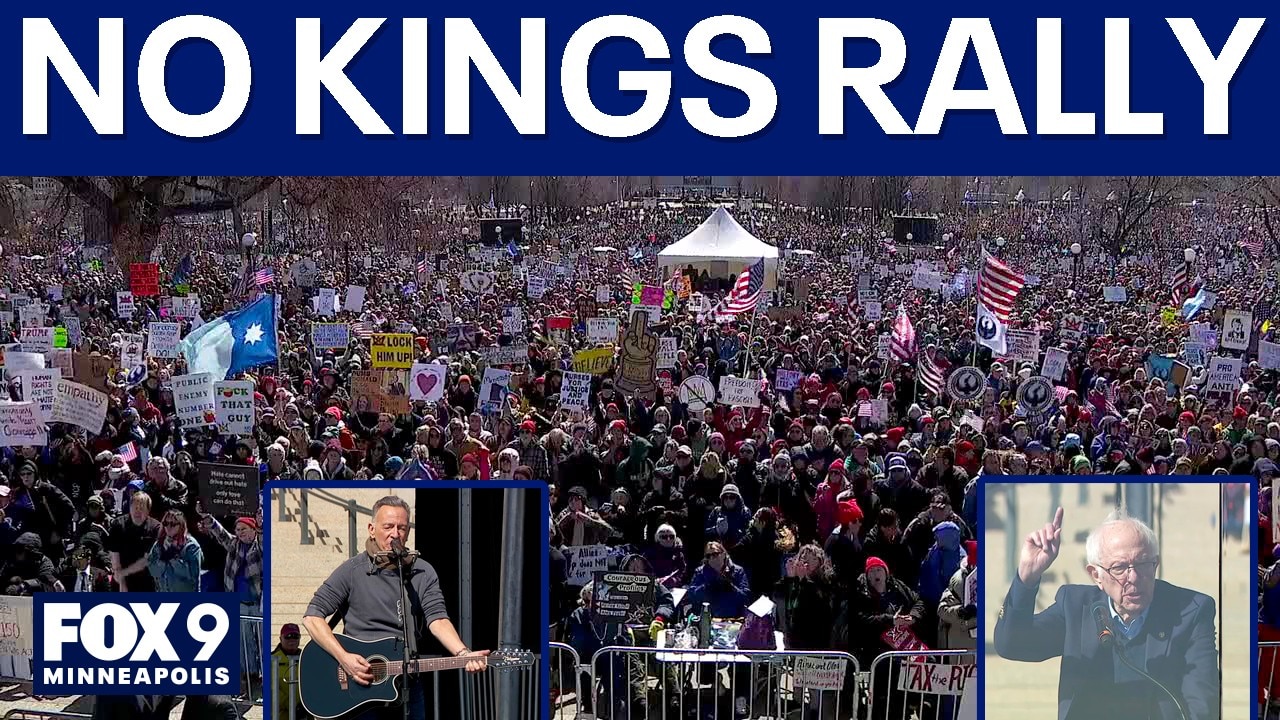
100,000 people gathered at the Minnesota State Capitol for the No Kings rally, with Indivisible Twin Cities reporting ~8 million participants across ~3,300 rallies nationwide. The protests are being staged ahead of the November midterms and organizers plan continued mobilization including a national strike planned for May 1; it is unclear how much this will affect voter turnout or election outcomes.
Recent large-scale civic mobilizations are a catalyst for concentrated near-term political advertising and grassroots fundraising; the net market effect is a compressed time window where digital ad platforms and payment processors capture outsized revenue flows. Expect CPMs and targeted spend to reallocate into highly measurable digital channels for a 6–12 week window ahead of decisive calendar events, driving a 5–15% sequential revenue uplift for dominant platforms if history repeats.
A second‑order beneficiary is state and local security procurement: sustained organizing increases short‑term demand for non‑lethal crowd‑management gear, communications upgrades and IT for situational awareness, favoring select defense/tech contractors on a 3–9 month procurement cadence. Conversely, concentrated on‑street activity creates transient foot‑traffic and sales risk for discretionary retail in affected urban centers and can widen short‑dated muni spreads on the margin as cities reallocate operating cash toward security and overtime.
Principal market risk is binary turnout: if organizers convert mobilization into persistent voter registration and GOTV, political outcomes (and sectoral policy risk) shift over quarters; if mobilization fades, the elevated ad spend and volatility compress quickly. Key timeframes to watch are the next coordinated mobilization windows and the run‑up to the general election — effects should manifest within weeks for ad revenues and volatility, and within months for procurement and budgetary reallocation.
AI-powered research, real-time alerts, and portfolio analytics for institutional investors.
Request DemoOverall Sentiment
neutral
Sentiment Score
0.00
