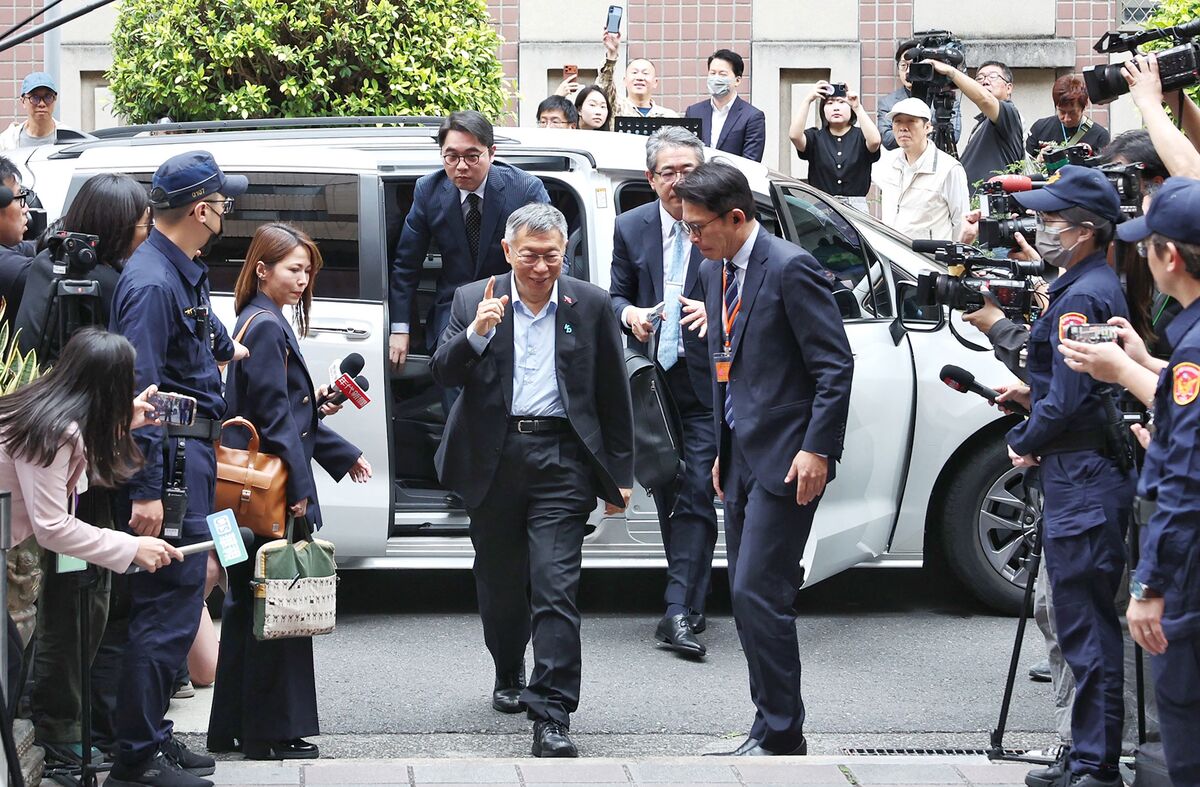
Ko Wen‑je was sentenced to 17 years in prison after conviction on bribery and corruption charges tied to a real-estate development; the Taipei District Court also stripped him of civil rights for six years, barring a 2028 presidential run. The 66‑year‑old former Taipei mayor's removal from the political field will reshape Taiwan's electoral dynamics and could modestly increase political risk and investor caution toward Taiwan assets.
A sudden removal of a high-profile centrist challenger creates an immediate political vacuum that tends to compress the middle and polarize vote flows toward the major parties. That compression increases near-term policy uncertainty (budgets, land-use approvals, regulatory scrutiny) and historically leads to a 3–7% underperformance of small/mid-cap Taiwan names versus the large-cap export champions over the following 1–3 months as capital concentrates in perceived safe-havens.
Real-estate and developer credit are the first-order transmission channels: increased legal/regulatory scrutiny of politically connected projects typically widens bond spreads by 100–300bps within 3–12 months and prompts a 15–30% drop in transactional volumes in the most exposed municipalities. Regional banks with >10% CRE exposure are the most levered to this cycle and could see reserve build-outs; we should expect idiosyncratic credit dislocations rather than systemic sovereign stress.
For tradeable sector dynamics, expect an intra-market flight-to-quality: export-leading semiconductors and infrastructure suppliers hold up better than domestic-dependent retail, construction and local financials. On a 3–12 month horizon, semiconductor capex end-markets remain the dominant earnings driver and will reassert outperformance as global orders and inventory normalization resume.
Key near-term catalysts to watch are coalition formation within the major parties, court-appeal timelines, municipal land-auction outcomes, and onshore capital flows; reversals can be quick if legal outcomes change or if a consolidated opposition narrative emerges. The consensus risk-off price action could overshoot given Taiwan’s heavy reliance on export orders that are largely insulated from short-term domestic political noise, creating a window for asymmetric bets.
AI-powered research, real-time alerts, and portfolio analytics for institutional investors.
Request DemoOverall Sentiment
strongly negative
Sentiment Score
-0.60
