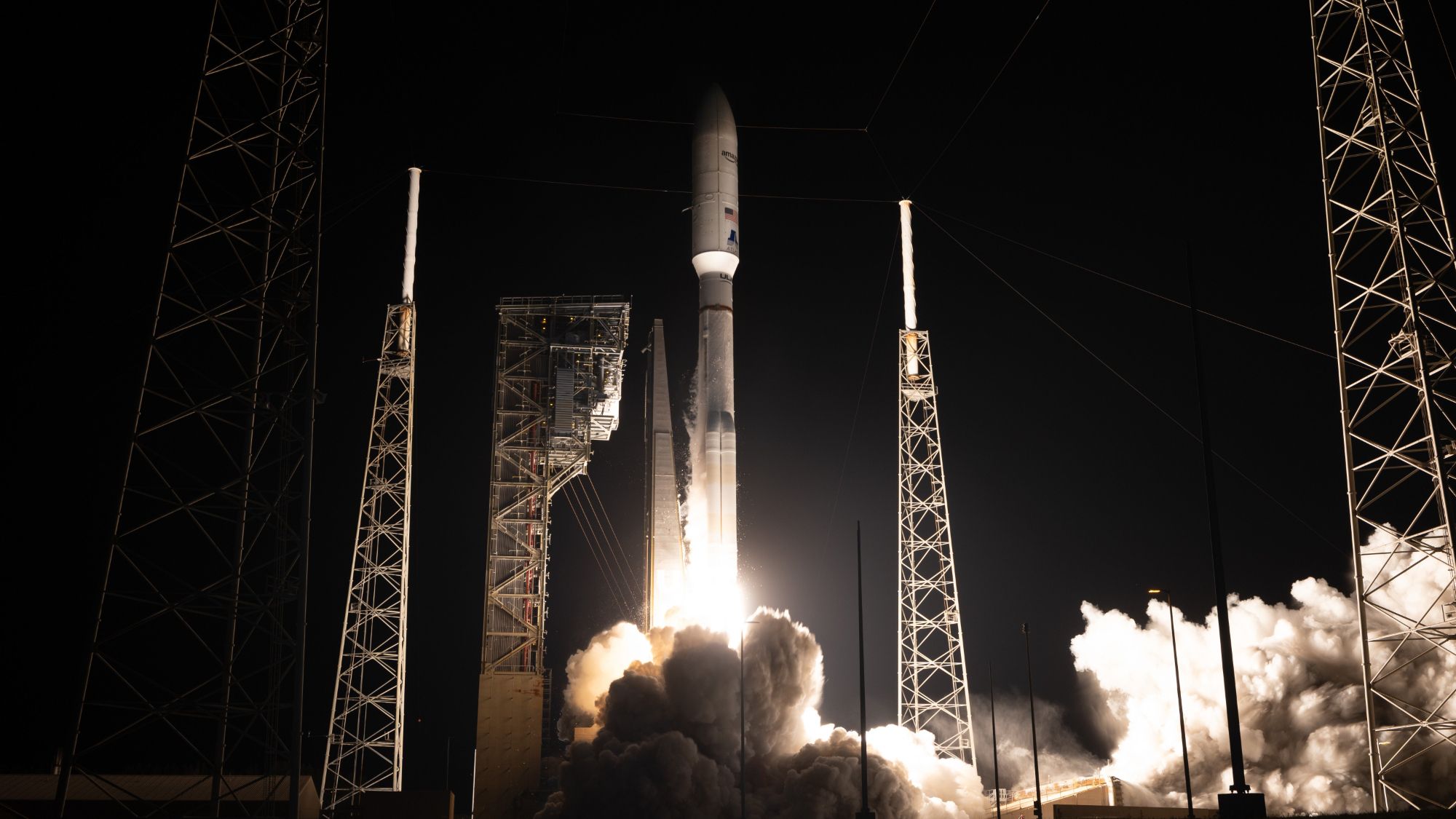
Atlas V launched 29 Amazon Leo broadband satellites (18 tons total) on April 4, 2026 — the heaviest payload ever for the vehicle — and ULA reports all 29 were deployed into their target orbit. The mission (LA-05) used a higher-performing RL10C Centaur upper-stage engine variant to enable the increased payload, advancing Amazon Leo toward its ~3,200-satellite target (241 in orbit after nine launches).
Incremental improvements in upper-stage performance (higher specific impulse / longer coast capability) do more than cut per-launch dollars — they change the tempo of a megaconstellation program. For a program financed over many years, a modest increase in mass-to-orbit reduces required launch cadence by a non-trivial percentage, easing factory throughput, lowering short-term capex burn and shifting where marginal dollars need to be allocated (ground stations, user terminals, software). Those effects compress near-term execution risk even if gross revenue timing for end-user service remains multi-year.
That cadence change creates knock-on effects across the supply chain and insurance markets. Satellite subsystem suppliers (deployables, RF payloads, ACS) face lower peak production stress, which can reduce premium overtime costs and supplier expediting fees — that margin accrues to the program sponsor, not the manufacturer. Insurance rates should trend down if aggregate mission exposure falls, but countervailing risks (orbital congestion, cumulative collision probability) can push rates up — the net will be decided over the next 6–18 months as manifest plans and orbital spacing are filed.
Competitively, incumbents with large deployed fleets retain a huge time-to-market advantage; a single supplier performance improvement does not erase network effects, ground-system scale, or regulatory spectrum positions. The practical lever here is negotiating power: demonstrated lift flexibility converts directly into procurement optionality and cost leverage for payload buyers. Key catalysts to watch are announced cadence adjustments, multi-year launch contracts, and insurer loss-ratio commentary — any of which could re-rate the growth vs. capex trade for the program sponsor over quarters to years.
AI-powered research, real-time alerts, and portfolio analytics for institutional investors.
Overall Sentiment
moderately positive
Sentiment Score
0.35
Ticker Sentiment
