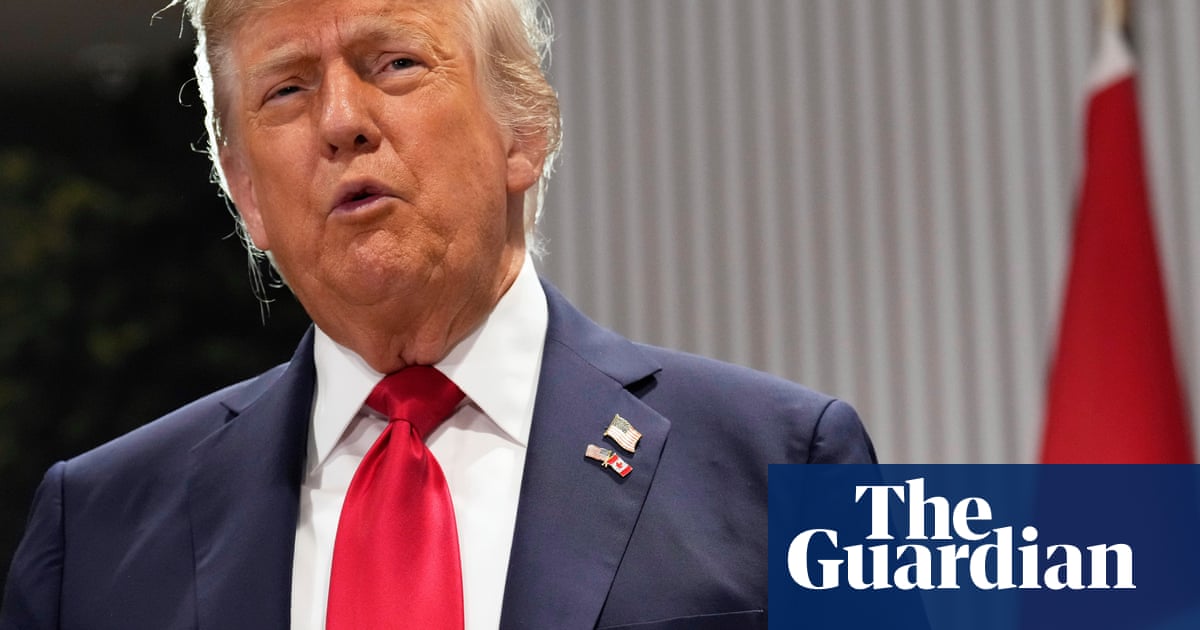
At the G7 summit, Donald Trump advocated for Russia's readmission, stating the Ukraine war wouldn't have occurred if Moscow remained in the group and blaming Obama and Trudeau for Putin's expulsion. Trump also reiterated his stance against sanctions due to their cost to the U.S., while the EU is pushing for tighter sanctions, including lowering the cap on Russian oil prices from $60 to $45 a barrel, to reduce Russian oil revenues and pressure Moscow towards a ceasefire; Zelenskyy criticized Russia's actions and urged a stronger international response.
The G7 summit reveals significant geopolitical and economic policy divergences, primarily driven by U.S. President Trump's distinct positions. Trump advocated for Russia's readmission to the group and expressed skepticism towards further sanctions, citing their economic burden on the U.S. as "billions and billions of dollars," even as Ukrainian President Zelenskyy presses for stronger measures. This stance contrasts sharply with the European Commission's call, articulated by President Ursula von der Leyen, to intensify pressure on Moscow by lowering the Russian oil price cap from $60 to $45 per barrel, aiming to further curtail Russia's oil revenues, which are reported to have fallen by almost 80% due to existing G7 and EU sanctions. Concurrently, Trump reaffirmed his pro-tariff stance, stating "I’m a tariff person," during discussions with Canadian Prime Minister Mark Carney, signaling potential for ongoing trade friction, exemplified by existing levies on Canadian goods. These conflicting signals at a high-level international forum contribute to a "mixed" sentiment (sentiment score: -0.1) and a "moderate" market impact score of 0.6, underscoring the uncertainty surrounding future international cooperation on sanctions and trade policies.
AI-powered research, real-time alerts, and portfolio analytics for institutional investors.
Overall Sentiment
mixed
Sentiment Score
-0.10
