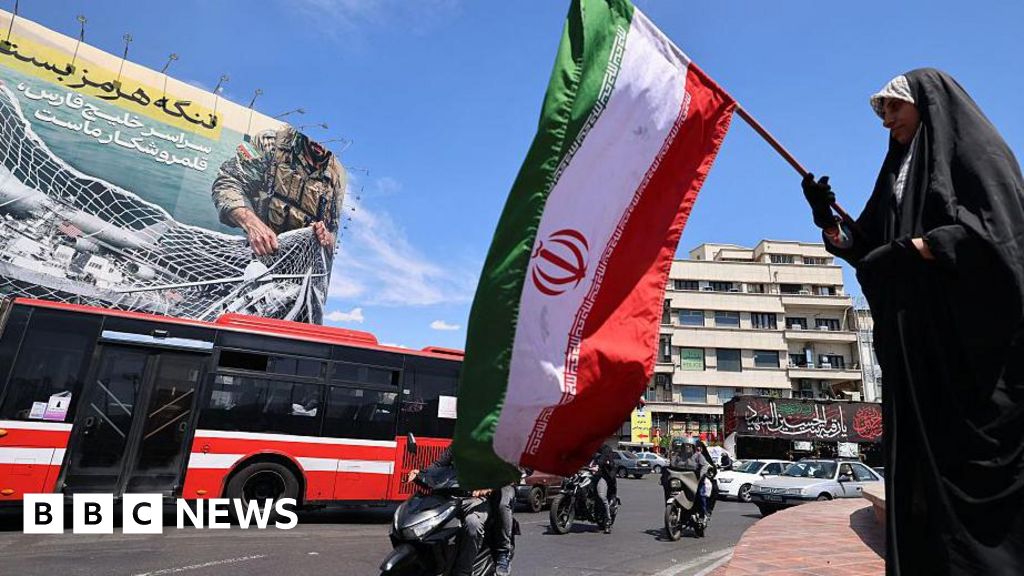
Trump threatened a U.S. naval blockade of the Strait of Hormuz and said the military is prepared to resume attacks on Iran, escalating geopolitical and shipping risks. The move raises the odds of disruption to global oil flows, higher energy prices, and potential retaliation against U.S. naval vessels, while leaving the broader U.S.-Iran conflict unresolved. With the war entering its second month and the ceasefire appearing fragile, the risk of a market-wide shock remains elevated.
The market is underpricing the asymmetry between a rhetorical blockade and an actual enforced disruption. Even without a full closure, the combination of mine-clearing operations, shipping uncertainty, and potential inspection/friction premiums can quickly widen tanker insurance, freight rates, and prompt carriers to reroute tonnage out of the Gulf, creating a near-immediate squeeze in available vessel supply. That matters more than the headline oil price: the first-order shock is not just barrels, but time-to-delivery and working capital tied up in transit.
The biggest second-order beneficiaries are non-Gulf exporters with spare seaborne capacity and companies with contractual indexation to global crude benchmarks. US LNG and North Sea-linked energy exposure may also see relative support if traders assume a broader Middle East premium across hydrocarbons, while Gulf-dependent refiners, airlines, chemical producers, and container/logistics names face margin pressure from both feedstock and transport costs. A sustained disruption would likely hit Asia hardest, especially China and India, because their import baskets are most exposed to the Strait and their strategic reserves are less flexible than Western commentary implies.
The key catalyst window is days, not months: any successful interdiction event, mine incident, or publicized inspection of a foreign-flagged vessel could reprice risk faster than physical supply changes. The main reversal would be a credible diplomatic off-ramp or a visible US decision to tolerate symbolic rather than operational enforcement; absent that, risk premia can compound even if actual volumes only fall modestly. The contrarian view is that the most probable outcome is chronic friction rather than a clean blockade, which means the energy trade may be less about extreme spikes and more about persistent volatility and a higher floor in freight/insurance.
Politically, the administration is creating a feedback loop where any attempt to prove resolve raises the odds of a headline incident, and any restraint looks like retreat. That makes this a bad setup for beta-sensitive assets: equity markets can initially ignore the rhetoric, but energy-heavy inflation expectations and election odds can shift sharply once consumers see gasoline and shipping costs filter through. The bigger risk is that the market focuses on crude while missing the broader inflation impulse from logistics, which can bite cyclicals and transports even if oil itself mean-reverts.
AI-powered research, real-time alerts, and portfolio analytics for institutional investors.
Request DemoOverall Sentiment
strongly negative
Sentiment Score
-0.60
