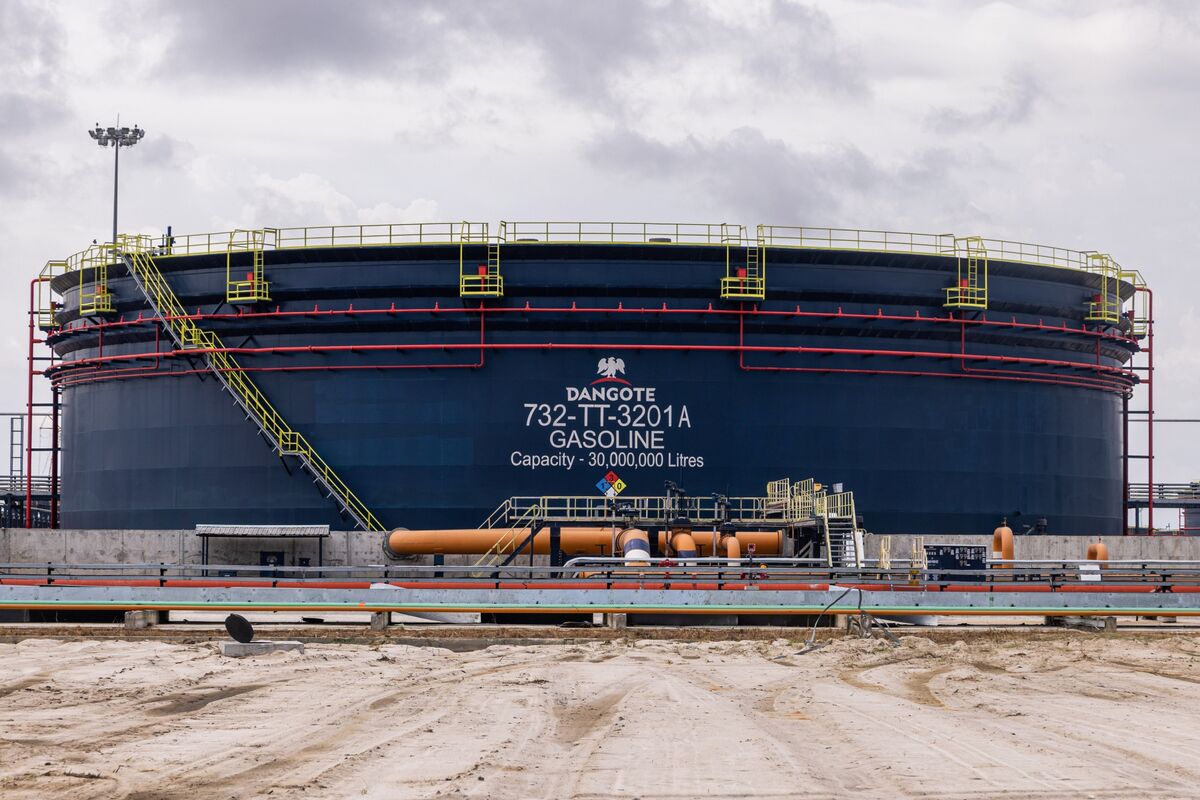
Nigeria will increase the number of crude cargoes allocated to the Dangote Refinery to boost domestic refined-product supply amid disruptions to global energy routes caused by the Iran war. State-owned NNPC officials say higher crude feedstock to Dangote should translate into increased refined output and improved product availability, reducing local supply shocks. This is a targeted, domestic supply-side measure that is likely to support Nigerian fuel markets and Dangote’s crude throughput in the near term.
Re-routing more domestic barrels into a large local refinery is a structural demand shock for seaborne product and crude flows from the Atlantic Basin: expect a measurable reduction in spot clean-product imports into West Africa and shorter-haul seaborne crude lifting. That flow change should compress short-term product tanker utilization on routes into Lagos/Port-Harcourt and support inland diesel/gasoline availability — a win for downstream marketers, a headwind for spot tanker rates and third-party traders reliant on arbitrage windows.
The fiscal and foreign-exchange mechanics are non-trivial. Lower product import bills reduce FX outflows and government short-term import financing needs, which can ease Naira pressure and reduce fuel subsidy cash calls; conversely, diverting export barrels to domestic use cuts export FX inflows and can tighten government revenues if not offset by refined-product sales. Expect these effects to manifest in 1–6 months as allocation schedules and offtake contracts are adjusted.
Key operational drivers will determine whether this is durable: refinery ramp-up rate, yield slate vs local product demand mix, and maintenance reliability. A protracted commissioning or lower-than-expected middle-distillate yields would blunt the move’s positive impact and quickly restore seaborne product imports. Geopolitical tail risks (e.g., wider Iran-related disruptions or a sudden opening of alternate crude sources) can reverse crude/differential moves within weeks.
Contrarian read: the market may underprice execution risk and timing; large grassroots refineries historically take 3–9 months to reach steady-state yields and often require feedstock matching and logistic reconfiguration. If ramp issues occur, short-term opportunities open in product importers and tanker owners — but if commissioning proceeds smoothly, expect sustained pressure on West African spot tanker markets and a modest tightening of Atlantic crude availability over 3–12 months.
AI-powered research, real-time alerts, and portfolio analytics for institutional investors.
Request DemoOverall Sentiment
mildly positive
Sentiment Score
0.20
