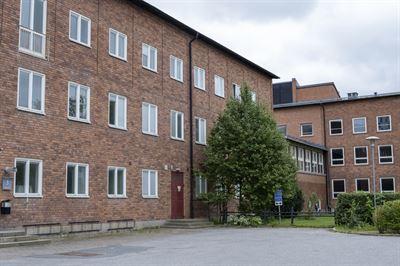
The Nordic Investment Bank has provided a SEK 700 million (≈€63.6m) loan to state‑owned Akademiska Hus to refurbish educational and research facilities in Solna, Gothenburg and Uppsala as part of a SEK 1.4 billion (≈€126m) project. The work will create new life‑science labs and flexible office space, expand capacity for Sweden’s life‑science clusters, and improve building energy performance by at least one energy class (several by up to three), aligning with NIB’s green finance mandate and support for research productivity.
Market structure: The NIB SEK 700m loan (50% of a SEK 1.4bn project) disproportionately benefits Swedish construction contractors and specialist lab/energy-efficiency suppliers — expect positive revenue visibility for Skanska (SKA-B.ST), NCC (NCC-B.ST) and Peab (PEAB-B.ST) over 6–24 months and rental premium capture for science‑park landlords (e.g., CAST.ST, FABG-B.ST). Pricing power shifts toward builders with certified green credentials; specialized lab fit-outs can command 10–25% higher rents and extend lease durations by 3–7 years versus vanilla office space. Cross-asset: modest (5–15bp) Nordic IG spread compression likely, slight SEK appreciation (0.5–1%) on visible government-backed capex, and temporary upward pressure on construction commodities (steel/cement) ~1–3% in the next 3–6 months.
Risk assessment: Tail risks include a political reversal reducing public support (low prob, high impact), cost overruns >20% eroding contractor margins, and a 100bp+ move higher in yields compressing property valuations. Immediate (days) market moves are small; short-term (weeks–months) orderbook updates and tender awards matter; long-term (12–36 months) value depends on occupancy and biotech funding cycles. Hidden dependency: tenant demand ties to VC/grant flows — a biotech funding pullback could create niche lab oversupply.
Trade implications: Direct plays — small, tactical longs in SKA-B.ST and NCC-B.ST (2–3% NAV each, 6–12m horizon) and selective science‑park REITs CAST.ST and FABG-B.ST (1–2% NAV each, 12–36m). Use 3–6 month call spreads on SKA-B.ST (buy 10% OTM, sell 25% OTM) sized to 0.5% NAV to limit premium. Pair: long SKA-B.ST vs short VINCI.PA (1:1 notional) to express Nordic domestic tailwind vs continental exposure. Overweight short-duration Nordic IG credit (3–5% NAV) to capture 5–15bp tightening.
Contrarian angles: Consensus ignores the risk of lab overcapacity and wage inflation for specialist technicians — if biotech funding weakens, niche vacancy could rise 15–25%, compressing niche-REIT yields. The market may underprice execution risk: a single large Swedish contractor missing tenders or reporting >20% margin erosion would be a trigger to cut longs. Historical analog: post‑2010 university capex took 18–36 months to convert to stable cashflow; this is not a near-term cashflow multiplier for all players.
AI-powered research, real-time alerts, and portfolio analytics for institutional investors.
Request DemoOverall Sentiment
mildly positive
Sentiment Score
0.30
