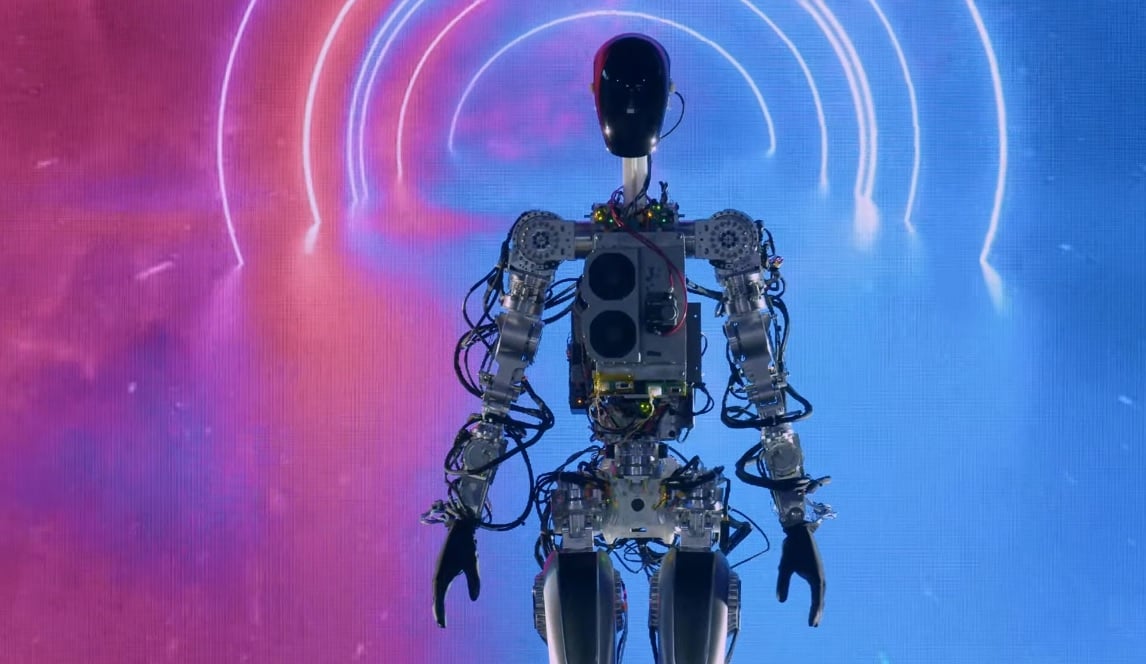
Tesla reported an 11% decline in automotive revenue in Q4 2025 and has committed roughly $20 billion in 2026 capex to manufacturing and compute as it pivots Fremont to produce up to one million Optimus humanoid robots per year, targeting a $20,000 manufacturing cost per unit. Musk projects one million units a year (Optimus 3) ultimately, even as the robots are currently in R&D and “not doing meaningful work” in factories; analysts and robotics veterans warn of technical, safety, cost and adoption barriers that question near-term commercial viability and the investment’s payoff.
Market structure: Tesla’s pivot of $20bn capex toward humanoid robots shifts demand from traditional vehicle production to long‑cycle robotics supply chains (motors, actuators, sensors, datacenter GPUs). Winners: robotics component suppliers and datacenter infra vendors; losers: legacy EV margins and Ford/GM if Tesla underinvests in EV competitiveness. Expect incremental demand for semis and sensors but a multi‑year cadence—robot hardware supply will lag announced volumes, capping pricing power near term.
Risk assessment: Immediate risk (days-weeks) is sentiment-driven equity weakness and option vol spikes around earnings; short-term (months) risk is large cash burn causing liquidity squeezes or credit downgrades; long-term (1–3 years) risk is commercial failure of humanoids leading to stranded assets. Hidden dependency: Tesla’s claim assumes favorable unit economics (target $20k) and learning‑curve gains—if realized rates are <50% of plan, capex ROI collapses. Catalysts: Q1–Q2 2026 cash flow, supplier orders, and the Fremont conversion timeline will accelerate or reverse the thesis.
Trade implications: Favor short-biased exposure to TSLA (equity or delta‑limited put spreads) into the next 2–6 quarters while buying selective long exposure to AI infra winners (IBM for z‑series demand, NVDA for datacenter GPUs, META selectively) that monetize compute. Rotate away from high multiple EV peers lacking clear cash runway; increase defensive duration and credit hedges if Tesla debt yields widen. Options: buy 3–9 month TSLA put spreads 20–35% OTM to cap cost and sell nearer-term calls against any small core short.
Contrarian angles: Consensus underestimates the supplier revenue upside if Tesla actually spends $20bn—component makers could see multi‑hundred‑million revenue inflection even if robots fail commercially. Conversely, the market may be overpricing execution risk: a verified cash‑burn event (capex delays, downrounds) could drive >30% downside from current levels. Historical parallel: dot‑com hardware pivots created years of supplier wins amid platform failures; position sizing should reflect asymmetric tail risk on both sides.
AI-powered research, real-time alerts, and portfolio analytics for institutional investors.
Request DemoOverall Sentiment
moderately negative
Sentiment Score
-0.55
Ticker Sentiment
