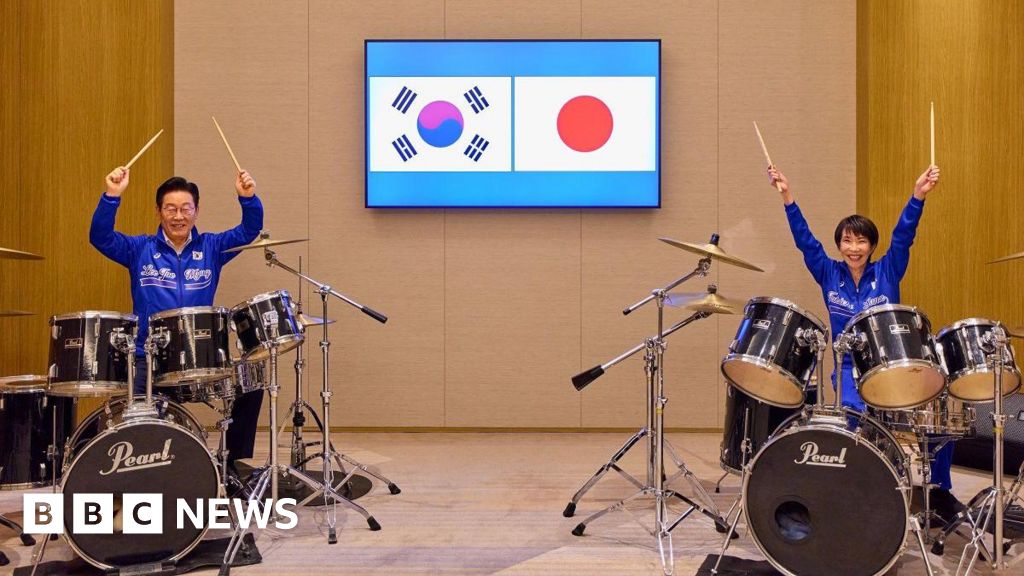
South Korean President Lee Jae Myung and Japanese Prime Minister Sanae Takaichi closed summit talks with a widely publicized K-pop drum duet that served as a symbolic reset in Korea–Japan relations; both leaders pledged to boost economic cooperation and underscored trilateral cooperation with the US amid rising regional tensions. The meeting comes as China has been tightening exports of rare earths and dual‑use goods to Japan, highlighting supply‑chain and export‑control risks, but the public rapprochement reduces near‑term diplomatic friction and may modestly lower geopolitical risk premia in the region.
Market structure: Improved Korea–Japan diplomatic thaw reduces the probability of episodic trade shocks (2019-style export controls), which directly benefits semiconductor supply-chain players (equipment suppliers, foundries) and exporters in autos/electronics. Expect modest re-rating (5–20%) over 6–12 months for firms with high Korea–Japan supply-chain exposure as risk premia compress and order visibility steadies.
Risk assessment: Tail risks include renewed historical/wartime disputes or a North Korean provocation that reverses cooperation; these are low-probability but would spike safe-haven flows and FX volatility within days. Time horizons: immediate impact is negligible (days), medium-term (weeks–months) depends on concrete trade/rare-earth MOUs, long-term (quarters–years) is structural — potential increased defense procurement and supply-chain diversification.
Trade implications: Favor exposure to semiconductor equipment (supply normalization), rare-earth/critical materials (reshoring/diversification), and defense primes (trilateral security cooperation). Cross-asset effects: expect mild JPY strength on durable security ties and lower tail-risk premiums in KOSPI/Nikkei; sovereign spreads tighten marginally for Japan/Korea if cooperation yields trade agreements.
Contrarian angle: Consensus treats the summit as symbolic; the actionable mispricing is in securities that price continued bilateral friction. If formal agreements (MOUs on rare earths/dual-use exports) arrive within 90 days, names currently discounted for geopolitical risk should re-rate sharply; conversely, any North Korea incident would flip these trades within 72 hours.
AI-powered research, real-time alerts, and portfolio analytics for institutional investors.
Request DemoOverall Sentiment
neutral
Sentiment Score
0.12
