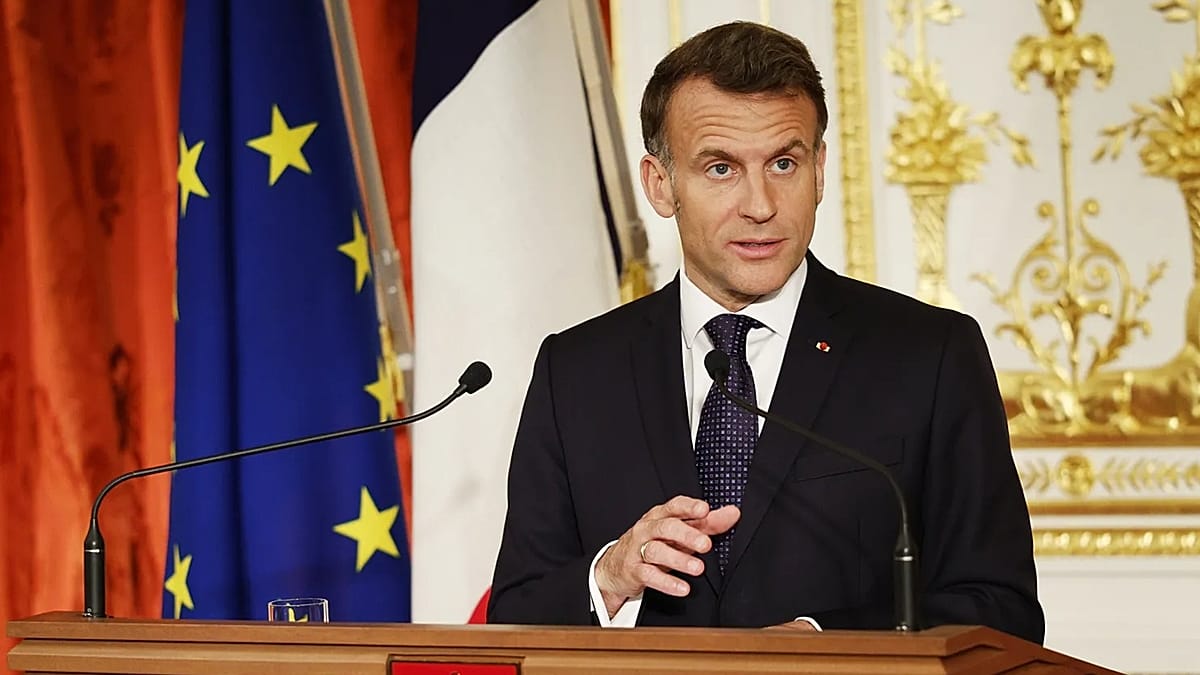
95% of Japan's oil imports come from the Middle East and Iran's response to the month‑long US‑Israeli war has effectively disrupted transit through the Strait of Hormuz, forcing Japan to tap strategic reserves. Diplomatic friction has emerged as France refused US requests to allow military overflights, exposing alliance unpredictability and raising geopolitical risk. France and Japan signed roadmaps on critical minerals and defence cooperation, but near‑term implications are higher energy price and shipping‑supply‑chain risk — sector‑moving for energy and logistics.
Geopolitical unpredictability is shifting the marginal locus of policy risk from price to access: governments will increasingly pay a premium to guarantee supply and transit security rather than rely on market-adjusted flows. That raises the effective return on capital for firms involved in near-shore critical-minerals processing, defense integration projects, and logistics operators that can offer secure corridors; expect governments to underwrite capex or sign guaranteed offtakes, compressing payback from years to 24–48 months for targeted projects.
Energy-market second-order mechanics favor service providers and transport owners more than upstream cashflow in the first 90 days of a transit shock: rerouting around long alternatives increases voyage distance and bunker consumption per trip, while insurance and time-charter rates spike non-linearly. This amplifies revenue for tankers and dry-bulk owners and pushes short-term refining and petrochemical margins volatile regionally as feedstock flows reallocate; corporates with flexible routing and owned tonnage capture 50–200% of the immediate margin swing versus spot buyers.
Catalysts and reversals are layered by horizon: days for episodic shipping incidents or insurance announcements, weeks for coordinated SPR or diplomatic de-escalation, and 6–36 months for policy-driven reshoring and buildout of alternative logistics. Tail risk remains meaningful — a prolonged choke or wider regional escalation would force structural re-pricing of insurance, DERISKING premiums into capital budgets and altering trade flows permanently, while rapid diplomatic repair could unwind 60–70% of near-term premia within a month.
AI-powered research, real-time alerts, and portfolio analytics for institutional investors.
Request DemoOverall Sentiment
mildly negative
Sentiment Score
-0.25
