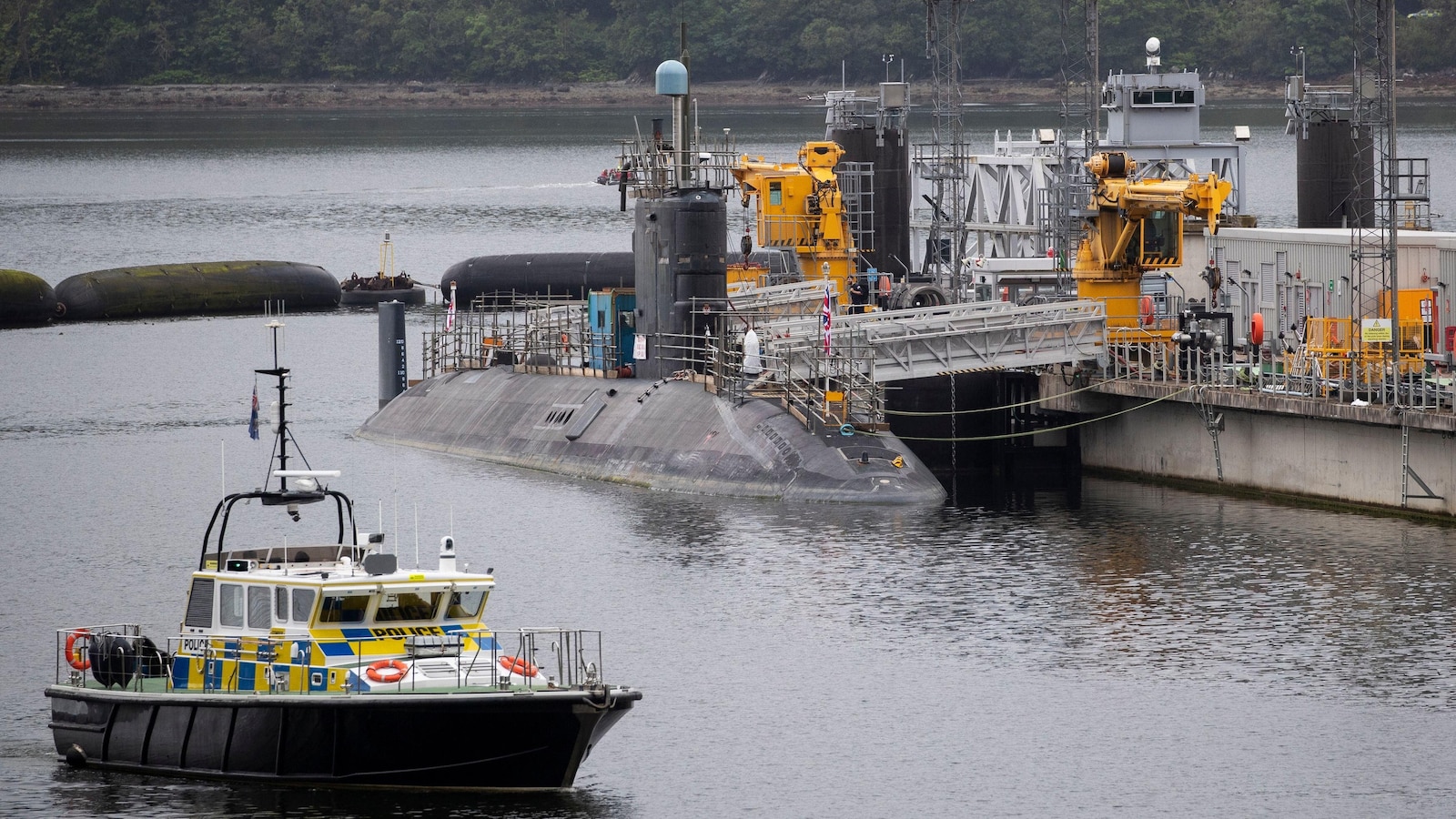
Two individuals (a 34-year-old Iranian man and a 31-year-old Romanian woman) were charged after attempting to enter HM Naval Base Clyde (Faslane) on Thursday. They were detained and will appear at Dumbarton Sheriff Court on Monday; police did not release names or specific charges ahead of the hearing. Faslane, about 40 miles (64 km) northwest of Glasgow, houses the U.K.'s nuclear-armed submarine deterrent (four Trident-armed submarines), making this a security incident but one with limited immediate market implications.
The immediate market effect will be concentrated in security services and base-support contractors rather than headline platform manufacturers. Expect accelerated procurement for access-control, perimeter hardening and intrusive inspection services with contract awards likely in the “low tens of millions” per site range announced within weeks-to-months; recurring maintenance and systems integration contracts could push aggregate incremental revenue into the high-single-digit millions annually for niche suppliers.
Operationally, tightened vetting and expanded checks typically shave throughput from facilities with high-clearance personnel; estimate a 1–3% near-term reduction in sortie/maintenance capacity at complex submarine yards and bases while new procedures are implemented, which will ripple to specialized subcontractors and shift tight delivery windows further out by 2–6 weeks. That creates short-lived upside for agile engineering and staffing firms that can redeploy crews to cover schedule gaps and for rental/temporary labour providers.
Strategically, the incident reframes procurement away from pure physical barriers toward integrated cyber-physical access solutions and intelligence-linked monitoring — a multi-year secular upgrade path that favors firms able to bundle sensors, identity management and managed services. Counterpoint: one-off incidents rarely prompt large capital programs overnight; political and budgetary inertia means much of the spend will be phased over 3–18 months, so the optimal exposure is tactical and event-driven rather than buy-and-hold deep cyclical.
AI-powered research, real-time alerts, and portfolio analytics for institutional investors.
Overall Sentiment
neutral
Sentiment Score
0.00
