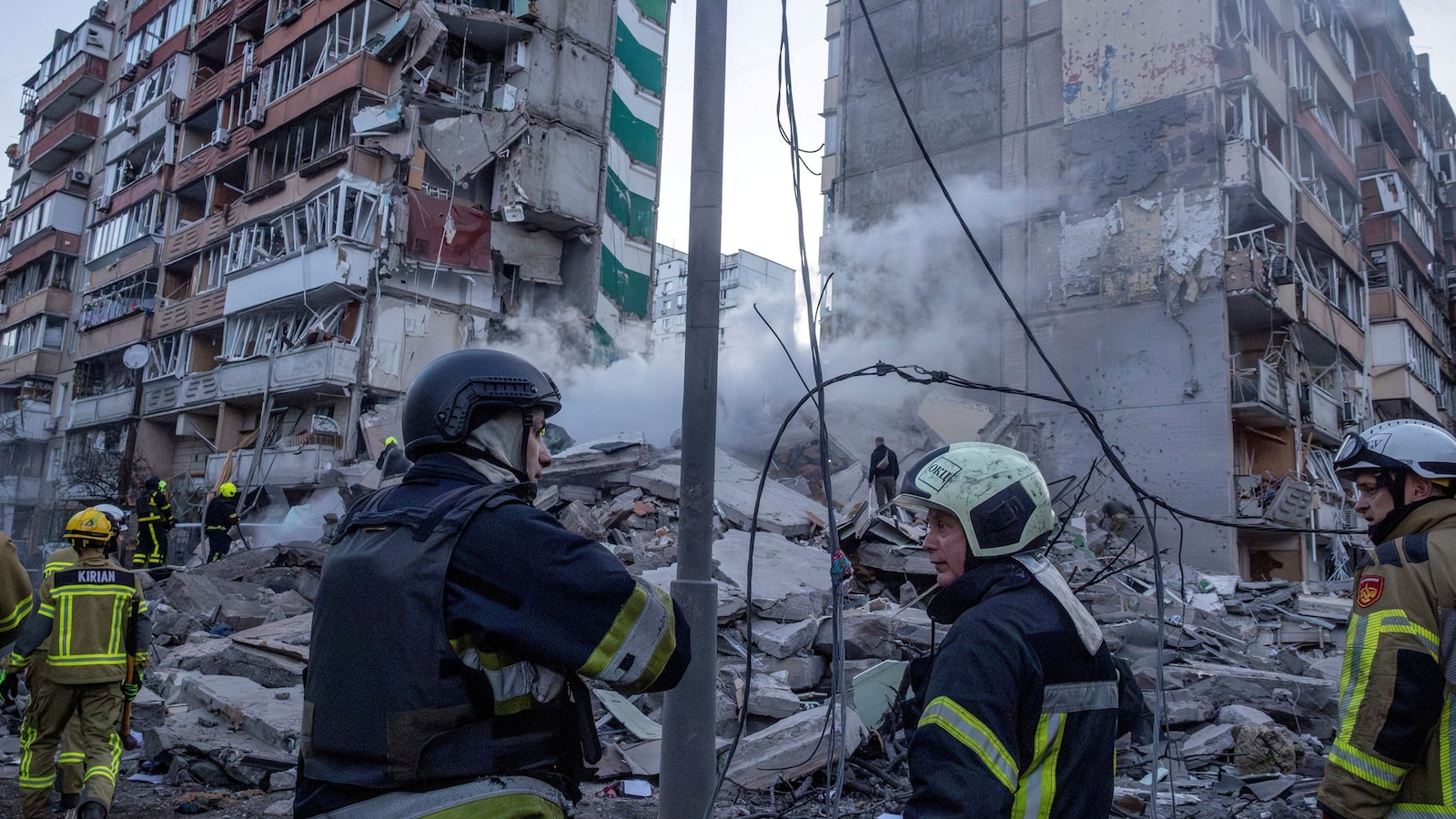
Russian drone and missile strikes killed at least 7 people in Kyiv, with around 20 others feared trapped under rubble, amid what Ukraine called the largest sustained aerial attack of the war to date. Ukraine said Russia launched 675 drones and 56 missiles overnight, while total launches across Wednesday and Thursday reached at least 1,623 munitions, causing at least 16 deaths and more than 100 injuries. Zelenskyy urged worldwide sanctions and pressure on Moscow as the attacks continued.
The market implication is not just escalation risk; it is a shift in the cost curve of air defense and civilian resilience. Sustained high-volume drone saturation favors the attacker economically, because cheap munitions force defenders to spend scarce interceptor inventory and operating hours at a much higher unit cost, which eventually pressures readiness across multiple fronts. That dynamic is more important than headline casualty counts for equities: it argues for persistent demand in layered air defense, counter-UAS, EW, hardened infrastructure, and repair logistics rather than a one-off spike. Second-order effects are likely to show up in European industrials and utilities through procurement urgency, not through direct battlefield exposure. Any widening perception that the conflict is becoming more industrialized and less negotiable should support the defense capex cycle in NATO, especially for firms tied to missile defense, radar, secure comms, and critical infrastructure protection. On the negative side, risk premia rise for CEEMEA assets, European cyclicals with Russia/Ukraine supply-chain exposure, and insurers/reinsurers with urban catastrophe tail risk if strike patterns continue to normalize. The key catalyst is whether Western capitals convert rhetoric into faster export approvals, replenishment orders, and funding tranches over the next 2-8 weeks. If that happens, defense names can rerate on backlog visibility even before revenues hit; if not, the move may fade as the market discounts headline fatigue. The contrarian read is that the broader market may underprice how much prolonged stalemate benefits defense suppliers and how little it changes near-term macro growth, unless there is a step-change in sanctions or escalation that directly hits energy or shipping flows.
AI-powered research, real-time alerts, and portfolio analytics for institutional investors.
Overall Sentiment
extremely negative
Sentiment Score
-0.85
Ticker Sentiment
