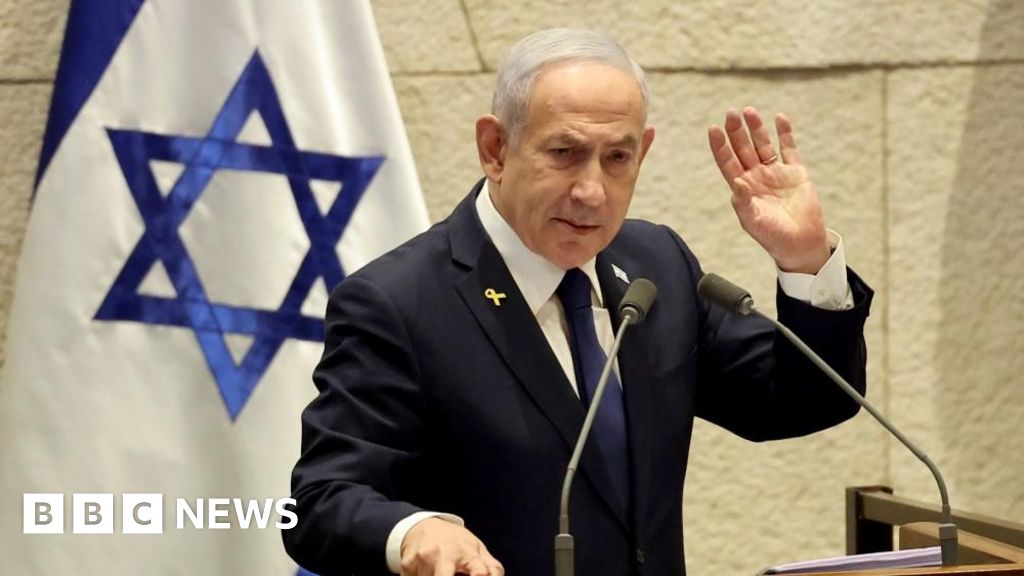
Israeli Prime Minister Benjamin Netanyahu has formally requested a presidential pardon from Isaac Herzog as he continues to face a five-year criminal trial on bribery, fraud and breach-of-trust charges across three cases; the president will seek opinions from justice officials before deciding. The move, prompted in part by appeals from allies including former US President Trump, risks deepening domestic political polarization and public concern over the rule of law amid recent mass protests over judicial reform and the ongoing Gaza conflict, creating potential political and sentiment-driven risks for Israeli markets and foreign investors.
Market structure: A presidential pardon materially shifts political risk from courtroom uncertainty to street-level and international legitimacy risk — winners in a short-run shock are defense and cybersecurity exporters (Elbit ESLT, Check Point CHKP) and liquid large-cap exporters that price in risk; losers are domestically-sensitive banks, real-estate and consumer names and the broad MSCI Israel ETF (EIS) where capital flight would concentrate. Pricing power shifts toward providers of security services and away from domestic-credit providers; expect 10–75bp widening in domestic bank funding spreads and a 2–6% immediate weakness in the ILS on a credible unrest scenario.
Risk assessment: Tail events include sustained mass protests leading to government paralysis, emergency powers or conditional US aid adjustments — each could push 10-yr Israeli yields +40–150bp and cut FDI into tech by 10–30% over 12–36 months. Time horizons: immediate (days) — market volatility spikes and FX/bond moves; short-term (weeks–months) — tactical rotations and flows; long-term (quarters–years) — governance erosion lowers valuation multiples. Hidden dependencies: VC and IPO pipeline sensitivity to perceived rule-of-law; catalysts are Herzog’s decision (likely within 30–90 days), court rulings, and renewed mass protests.
Trade implications: Favor 1–2% long positions in ESLT (defense) and 0.5–1% in CHKP (cyber) with 3–12 month horizons; buy 3-month EIS protective puts (put-spread to cap cost) sized 1–2% to hedge equity exposure. Hedge currency by adding 3–5% USD exposure or buying 3-month USD/ILS call options sized to cover 3% portfolio FX risk; establish 1% position short Israeli sovereign duration via CDS or futures to profit from yield widening if protests escalate.
Contrarian angles: Markets may over-price permanent damage — a quick pardon could produce a sharp relief rally (EIS +5–12% within 1–2 weeks) so stagger protective position entry and scale into shorts only after clear protest escalation. Historical parallel: 2019–20 political shocks in Israel caused transient equity underperformance but recovered within 6–12 months once policy clarity returned; unintended consequences include long-term foreign capital re-rating of Israeli tech multiples by 10–20% if governance concerns persist.
AI-powered research, real-time alerts, and portfolio analytics for institutional investors.
Request DemoOverall Sentiment
moderately negative
Sentiment Score
-0.35
