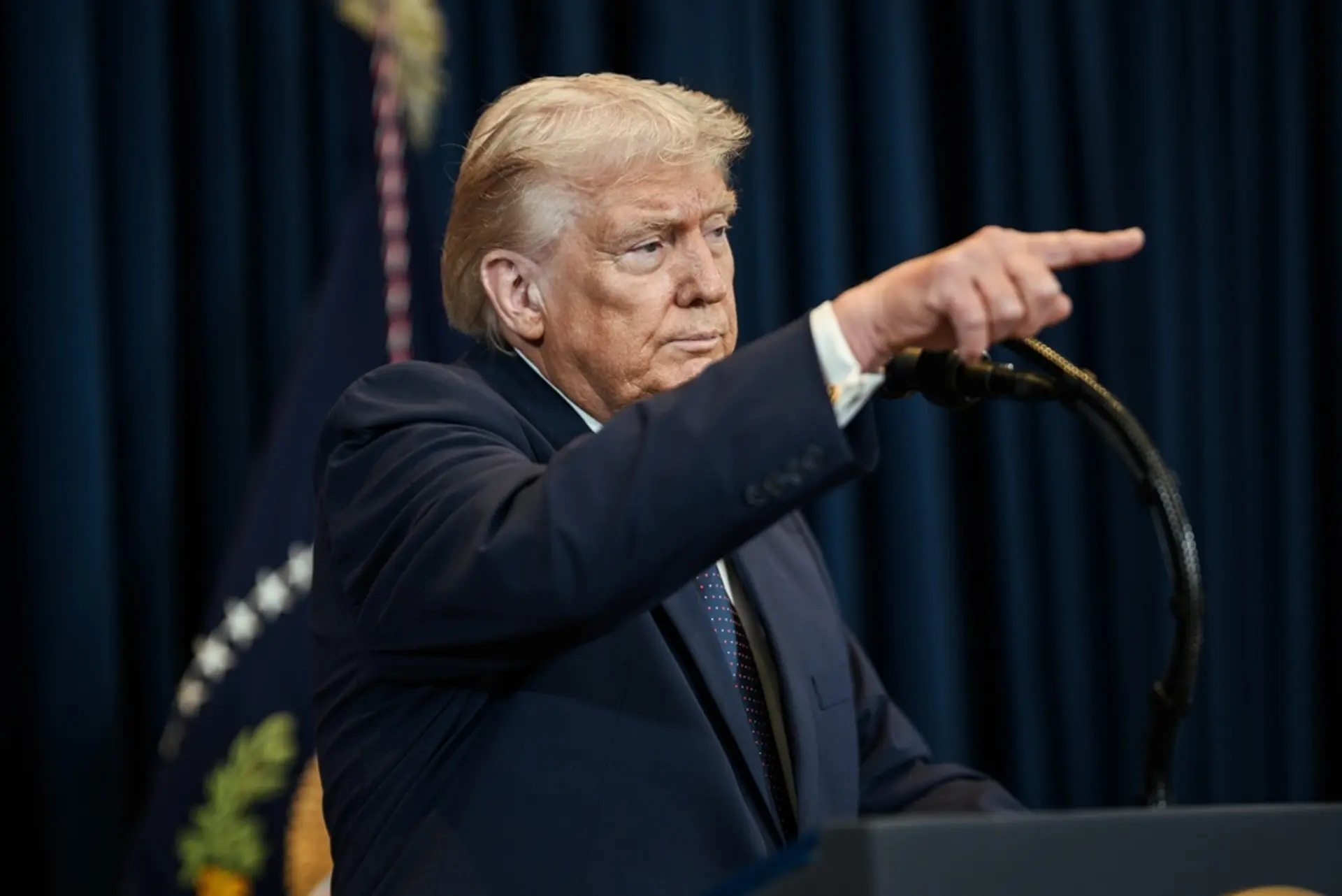
President Trump signed an executive order directing federal agencies to modernize rules so digital assets and fintech can be integrated into existing financial services and payment systems. The order gives regulators 3 months to review restrictive rules and 6 months to propose measures to encourage cooperation between fintech firms and federally regulated institutions. It could be favorable for crypto-friendly banks and Wyoming SPDIs, including institutions seeking broader access to payment system accounts.
This is less a crypto policy headline than a re-pricing of the bank-crypto interface. The first-order winners are institutions with existing compliance rails and balance-sheet capacity to intermediate between stablecoins, custodians, and payment flows; the second-order winner is any venue that can monetize deposit-like balances without taking full retail banking risk. The real economic value sits in access to settlement, treasury, and wallet infrastructure — not in token prices themselves — so the upside accrues most cleanly to listed fintechs, payment processors, and niche depository institutions that can widen spreads on operating balances and transaction-linked float.
The regulatory review timeline matters because the catalyst is staged, not instantaneous. Over the next 1-3 months, the market should start pricing headline optionality into crypto-friendly financials and payment names; over 3-6 months, actual rule changes could expand addressable distribution for stablecoin rails and lower onboarding friction for institutional flows. The second-order effect is competitive pressure on incumbent banks that have been reluctant to serve digital-asset firms: if access standards loosen, nonbank fintechs can route around slower bank partnerships, compressing incumbents' fee capture and accelerating the shift toward embedded payments.
The most important contrarian point is that policy support does not equal broad-based monetization. A friendlier framework can still preserve high capital, AML, and supervisory costs, which would favor a small set of scaled players rather than ignite a sector-wide rerating. Also, if the Fed tightens its stance on payment-account access or fragments approval authority across regional banks, implementation could become uneven, creating a patchwork of winners instead of a clean regime shift.
For positioning, the asymmetry is better in infra than in pure crypto beta: a regulatory thaw helps real-economy payment volumes more than speculative tokens. The market may be overestimating the speed at which access changes translate into revenues; the more durable edge is in firms that already have bank charters, custodial relationships, and merchant distribution, because they can capture share before competitors rebuild compliance stacks.
AI-powered research, real-time alerts, and portfolio analytics for institutional investors.
Request DemoOverall Sentiment
mildly positive
Sentiment Score
0.35
