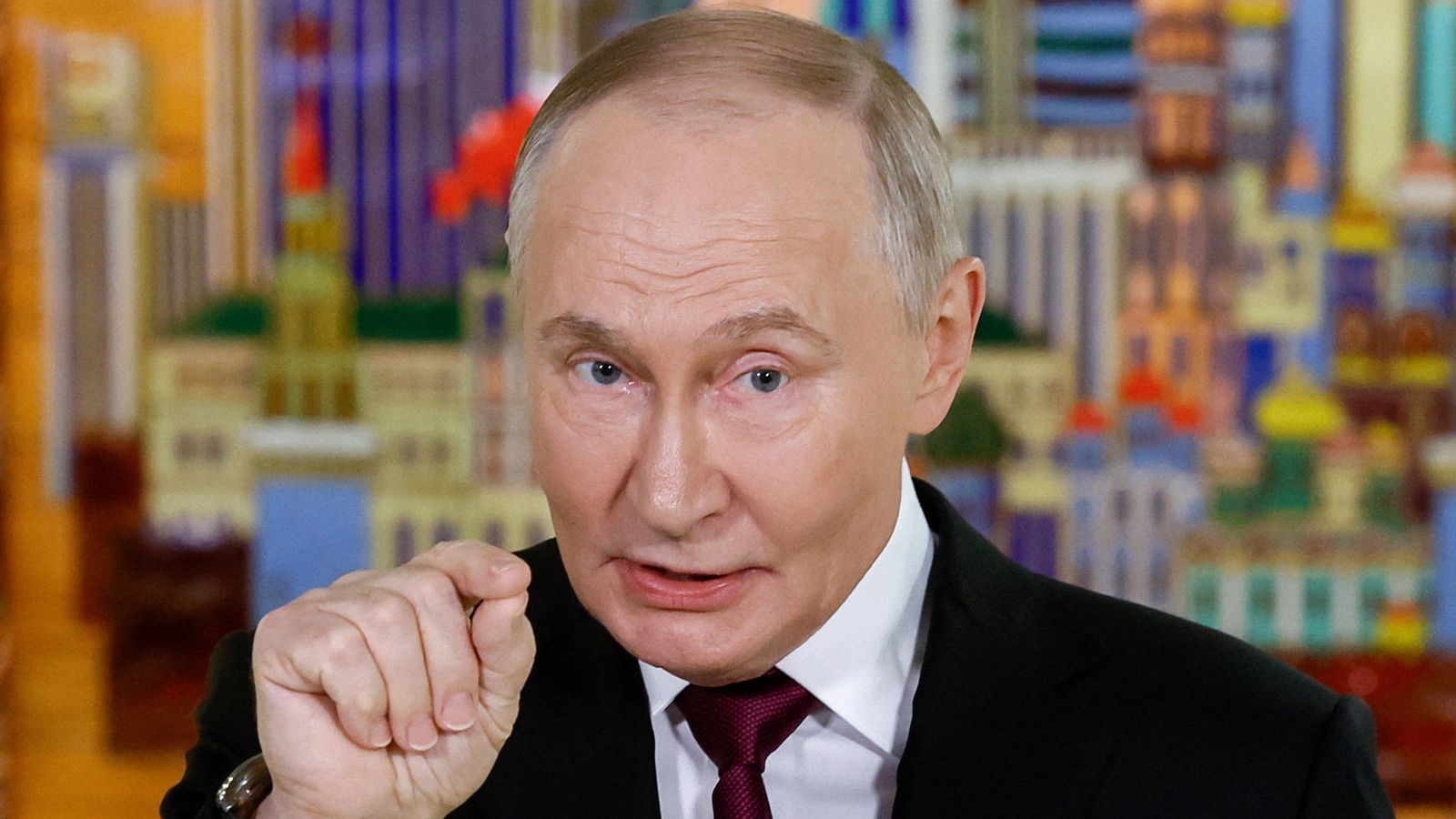
Ukrainian President Volodymyr Zelenskyy told the Irish Parliament that European unity since 2022 must be protected and urged the world not to forget Russia's invasion, calling it a criminal, unprovoked act and accusing Moscow of treating Ukraine as its property. He called for continued international support to establish a tribunal to hold Russian perpetrators accountable, a push that reinforces ongoing geopolitical risk and the potential for sustained legal and sanctions measures that could keep risk premia elevated for exposed markets.
Market structure: Continued high-profile political backing for Ukraine supports sustained demand for defense equipment, munitions and secure energy supplies. Direct winners are large defense primes (LMT, NOC, RTX), European defense OEMs (RHM.DE, BAES.L) and LNG/oil exporters (LNG, XOM, CVX) as procurement budgets and spot energy purchases remain elevated; losers are Russia-linked assets and European corporates with >10% Russia revenue. Cross-asset: expect tactical safe-haven flows into core sovereign bonds (downward pressure on yields), USD strength, higher implied vols for European equities and upside pressure on energy/food commodities over the next 3–12 months.
Risk assessment: Tail risks include a 5–15% chance within 12 months of a major Russian gas cutoff or escalation that triggers NATO support, causing sharp EU recession risk and commodity spikes. Immediate market moves are likely muted (days) but material policy outcomes (aid packages, sanctions enforcement) in 30–90 days will drive weeks–months repricing; structurally, defense/energy supply chains reconfiguration is a multi-year (1–3 year) trend. Hidden dependencies: EU fiscal capacity, winter weather and LNG shipping constraints; catalysts: EU/US aid votes, new sanctions, major cyber/offensive actions.
Trade implications: Favor modest, time-boxed allocations to defense and energy while hedging policy risk. Use long equity and call-spread exposure to LMT and Cheniere (LNG) with 3–12 month horizons, overweight fertilizer names (MOS, CF) for crop-price shock protection, and underweight European cyclicals with Russia exposure. Enter over next 2–6 weeks; trim or take profits if (a) EU approves multi-year procurement packages within 30 days or (b) Brent falls below $75 for four consecutive weeks.
Contrarian angles: Consensus assumes unity and permanent budget increases; history (post-2014) shows much of defense spending is front-loaded and mean-reverts after 12–24 months, creating a potential 10–25% downside if orders don’t repeat. Russian assets may already price extreme downside—shorts can be crowded and illiquid; main unintended consequence is higher headline inflation prompting central-bank hawkishness that could hurt growth stocks across 6–18 months.
AI-powered research, real-time alerts, and portfolio analytics for institutional investors.
Request DemoOverall Sentiment
moderately negative
Sentiment Score
-0.40
