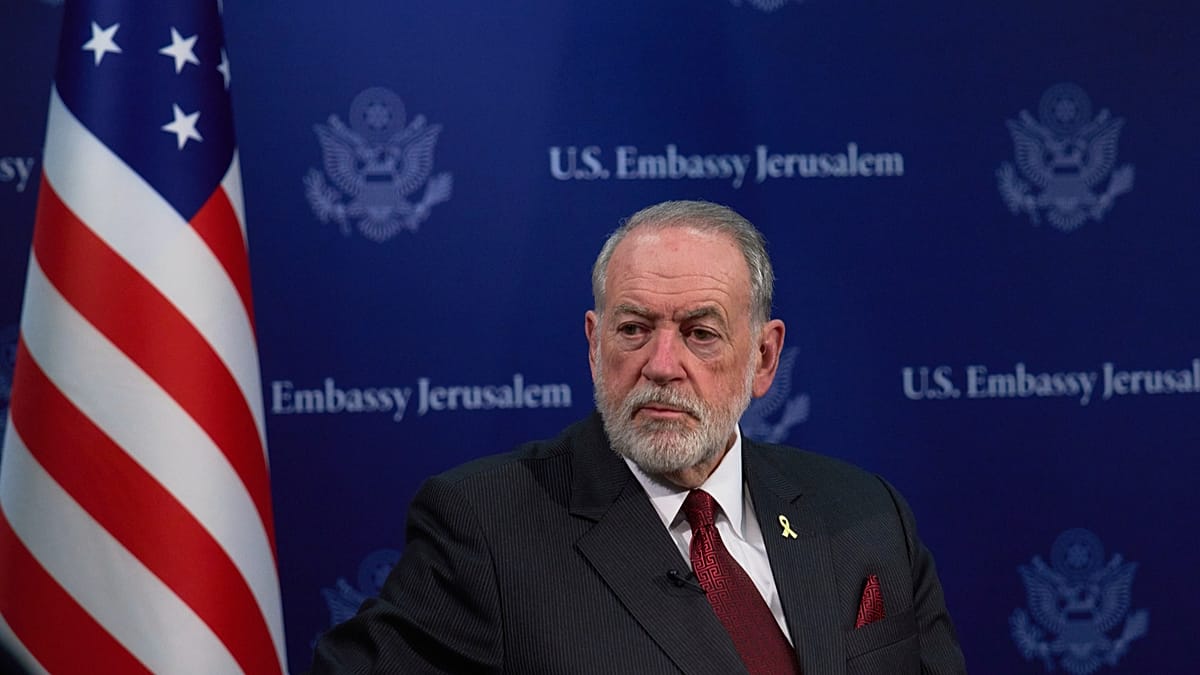
US Ambassador to Israel Mike Huckabee suggested Israel could take control of lands claimed by Arab states, prompting a joint condemnation from 14 Arab and Islamic countries together with the GCC, Arab League and OIC, which said the remarks violate international law and threaten regional security. The bloc demanded an end to annexation plans and reaffirmed support for a Palestinian state along 1967 borders; Qatar separately engaged Iran in a phone call aimed at de‑escalation. The episode raises geopolitical risk in an already volatile Middle East and could pressure risk assets and regional stability if diplomatic tensions intensify.
Market structure: Near-term winners are defense contractors and large integrated oil majors (pricing power, long-cycle contracts); losers are EM sovereigns, regional banks, tourism/airlines and shipping insurers. A modest supply shock (even 1–2% of global seaborne oil flows) would likely move Brent +$5–$10 within weeks, re-pricing energy equities and insurance premiums; majors can pass through higher prices, smaller E&P suffer margin stress. Cross-asset: expect USD strength, gold and USTs bid, EM credit spreads widen (EMB +100–300bps tail), and equity volatility (VIX) to spike +5–10 pts in the immediate window.
Risk assessment: Tail risks include Strait of Hormuz closure or a direct US-Iran/Israel escalation (probability <10% but systemic); impact could be multi-quarter oil shock and EM sovereign defaults. Time horizons: days—volatility/liquidity squeezes; weeks–months—re-rating of defense and energy sectors; quarters–years—higher capex in defense/energy security and possible reshoring of supply chains. Hidden dependencies include insurance/shipping reroutes, LNG chokepoints and counterparty exposure in regional banks and commodity traders. Key catalysts: military incident, US policy clarification, or failure of US‑Iran talks.
Trade implications: Immediate tactical trades favor long defense (LMT/RTX), long energy majors (XOM/CVX/XLE) and long gold (GLD) and USTs (TLT) as hedges; short EM beta (EEM) and EM sovereign debt (EMB) and airlines (JETS). Use 3–12 month call spreads on defense/energy to limit downside and 1–3 month put protection on EEM/EMB. Entry: deploy hedges within 1–5 trading days, scale core buys over 5–15 days; take-profits at +20–30% or if Brent +15%.
Contrarian angles: Market consensus may overprice perpetual escalation—historical parallels (2019–2020) show spare global capacity and diplomatic channels often cap long-term oil moves; EM selloffs can create 6–12% entry windows into selective exporters. Risk that a rapid diplomatic de‑escalation leaves defense/energy longs overstretched; stagger entries, size positions to volatility and set objective stop/profit thresholds to avoid being caught in mean reversion.
AI-powered research, real-time alerts, and portfolio analytics for institutional investors.
Request DemoOverall Sentiment
moderately negative
Sentiment Score
-0.50
