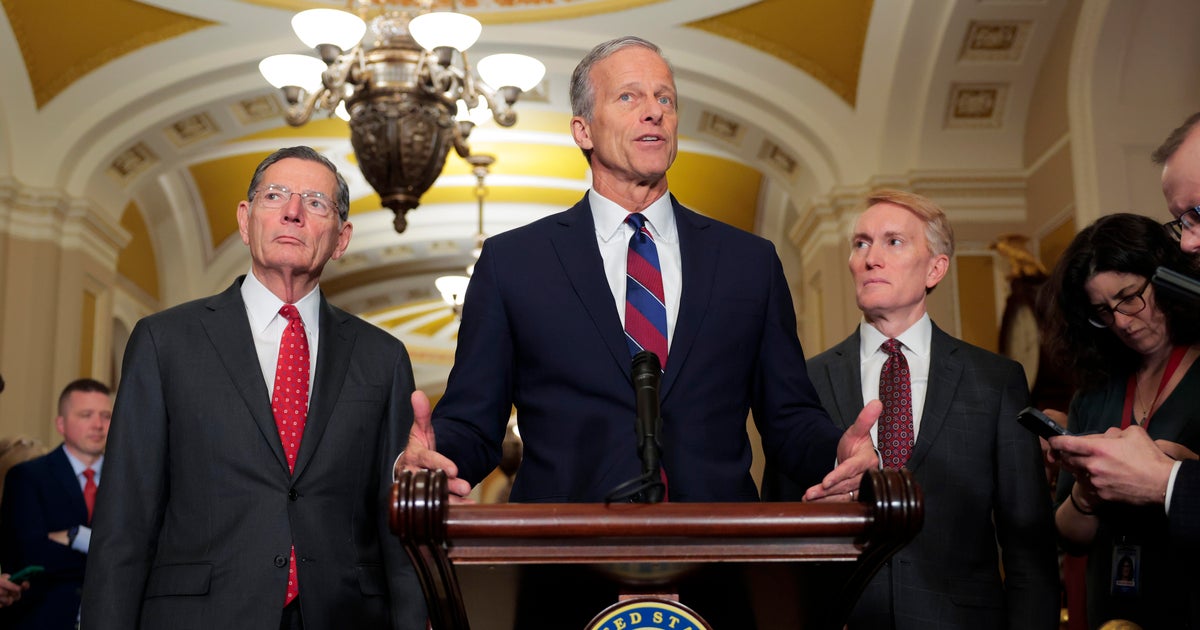
Senate Majority Leader John Thune said Republicans will offer a GOP alternative to Democrats' plan to vote on a three‑year extension of enhanced Affordable Care Act premium tax credits, putting the Cassidy‑Crapo Health Care Freedom for Patients Act on the floor as a side‑by‑side option; the GOP bill would not extend the credits but redirect funds to health savings account–style accounts for bronze exchange enrollees, which Republicans say reduces premiums and saves taxpayer money while Democrats called it "junk insurance." The enhanced tax credits helped roughly 22 million Americans in 2025 and their expiration is projected to raise average premiums by more than $1,000 (KFF estimates a rise from $888 to $1,904), but with 53 Senate Republicans neither the Democratic extension nor the GOP alternative is expected to reach the 60‑vote threshold, making Thursday’s votes primarily a political messaging exercise even as other GOP variants (shorter extensions or phased HSA shifts) circulate.
Senate Majority Leader John Thune announced Republicans will force a side-by-side vote this week on the Cassidy-Crapo Health Care Freedom for Patients Act as an alternative to Democrats' planned three-year extension of enhanced Affordable Care Act premium tax credits; the GOP bill would not extend the credits but redirect funds to HSA-style accounts for bronze-exchange enrollees. Thune argued the proposal lowers premiums and saves taxpayer dollars by delivering benefits directly to patients, while Senate Democratic Leader Chuck Schumer labeled the bill "junk insurance," underscoring sharp partisan disagreement over coverage and subsidy design.
The enhanced premium tax credit supported roughly 22 million Americans in 2025, and analyses cited in the article project large premium increases if credits expire in January — the Center on Budget and Policy Priorities forecasts an average rise of more than $1,000 and KFF estimates premiums would more than double from $888 in 2025 to $1,904 in 2026. With 53 Senate Republicans and the 60-vote threshold required for most Senate business, both the Democratic extension and the GOP alternative are expected to fall short, making Thursday's votes primarily a political messaging exercise rather than an immediate policy change.
Market-relevant implications are twofold: legislated subsidy outcomes remain the key risk for exchange enrollment, insurer revenue and taxpayer outlays, and several GOP variants (two-year extensions or phased HSA redirects) indicate continued legislative uncertainty rather than a single settled approach. The immediate probability of substantive statutory change is low, but the policy outlook through the January expiration carries asymmetrical economic effects that warrant monitoring for signaling from the vote and any subsequent bipartisan negotiation.
AI-powered research, real-time alerts, and portfolio analytics for institutional investors.
Request DemoOverall Sentiment
mixed
Sentiment Score
0.00
