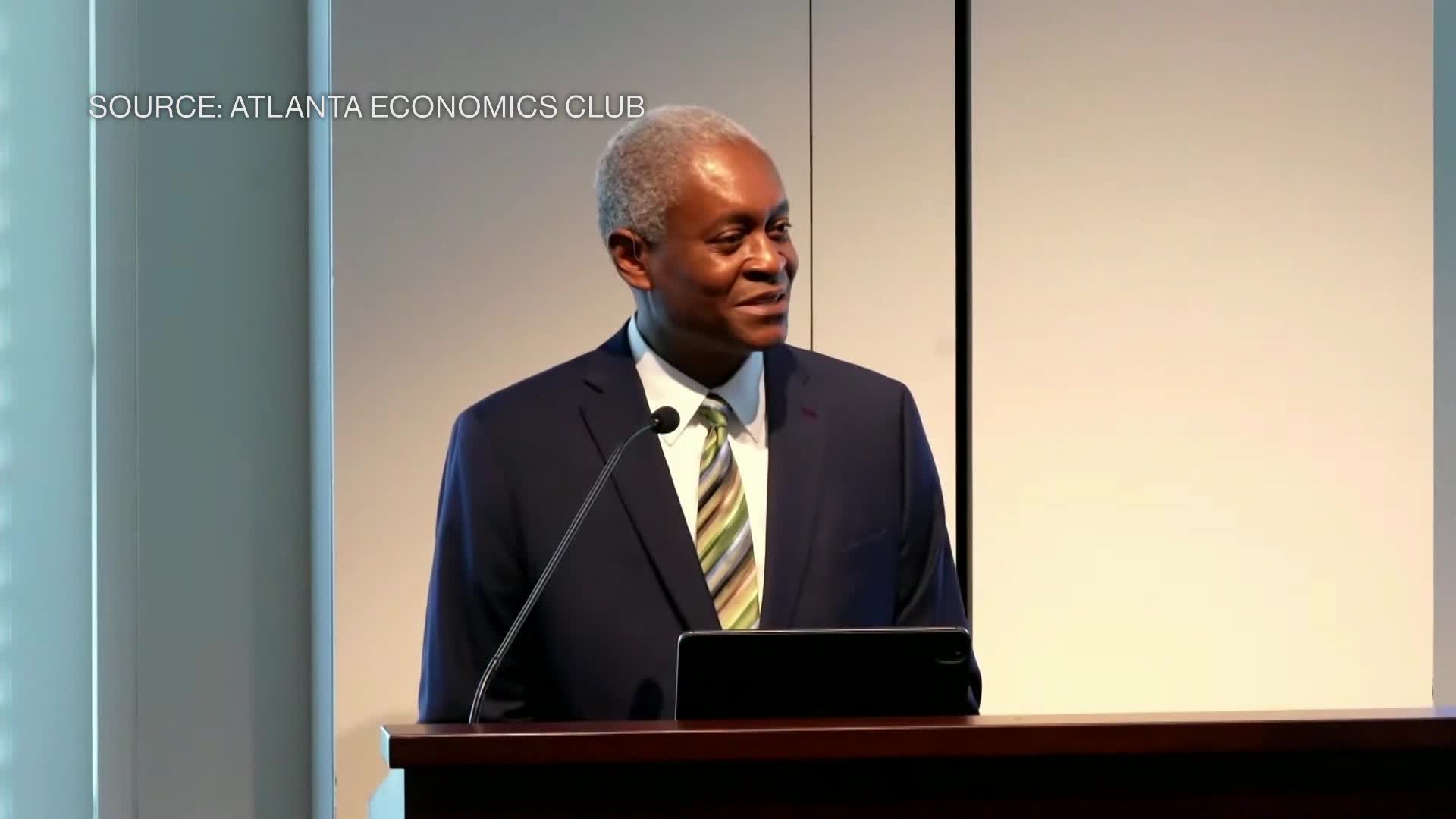
Federal Reserve Bank of Atlanta President Raphael Bostic stated that shifting monetary policy into accommodative territory risks reigniting inflation, emphasizing the ongoing concern within the Fed about price stability. This suggests a continued cautious stance on easing monetary policy, indicating that the central bank prioritizes controlling inflation over immediate rate cuts.
Federal Reserve Bank of Atlanta President Raphael Bostic reiterated a hawkish stance, stating that shifting monetary policy into "accommodative territory" risks reigniting inflation. This sentiment, expressed at the Atlanta Economics Club, underscores the Federal Reserve's continued prioritization of price stability. His remarks suggest a persistent concern about inflationary pressures despite recent moderation.
Bostic's comments indicate that the central bank remains cautious regarding premature rate cuts, aligning with a "mildly negative" sentiment for market participants anticipating easing. The hawkish tone from a voting FOMC member carries a moderate market impact, signaling that the path to lower rates may be longer than currently priced by some. This reinforces the Fed's commitment to its 2% inflation target.
The emphasis on the "inflation beast" suggests that the Fed is unlikely to pivot quickly, even if economic growth shows signs of slowing. This perspective implies that monetary policy will likely remain restrictive for an extended period. Investors should therefore temper expectations for aggressive rate cuts in the near term.
AI-powered research, real-time alerts, and portfolio analytics for institutional investors.
Request DemoOverall Sentiment
mildly negative
Sentiment Score
-0.25
