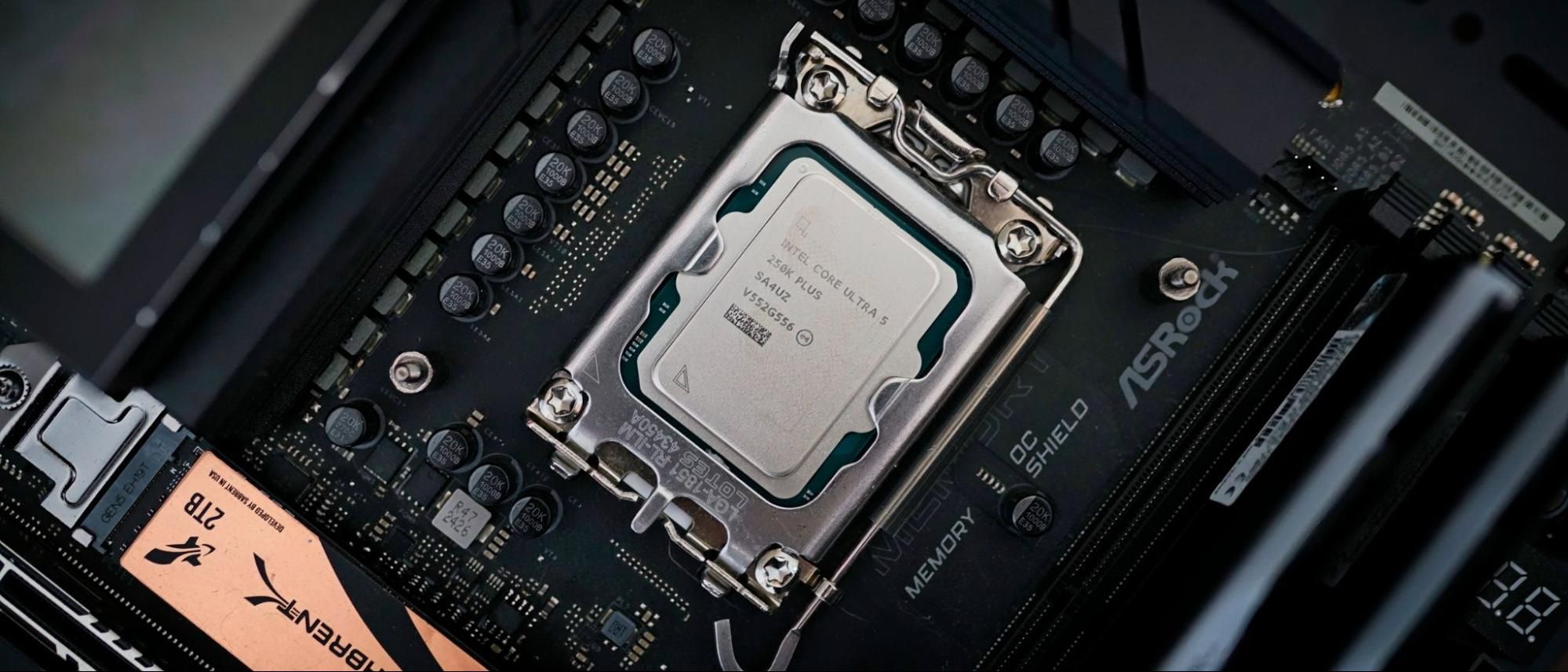
Intel's Core Ultra 5 250K Plus launches at $200 with 18 cores (6P+12E), 5.3 GHz P-core boost, 125W TDP (159W MTP) and official DDR5-7200 support. Tom's Hardware reports class-leading productivity for the price, often matching chips twice its cost in heavily-threaded workloads and equaling the Ryzen 5 9600X in gaming, making it a compelling budget option. The review highlights platform risk — LGA 1851 is described as a 'dead-end' with Nova Lake due later this year and AM5 supported through at least 2027 — which limits upgrade-path confidence and likely restricts the story's impact to modest movements in Intel/AMD share prices.
Intel’s $200 Arrow Lake SKU resets baseline expectations for entry-level compute performance, but the real strategic lever isn’t raw perf — it’s the combination of a cheaper die revision and runtime optimization (iBOT) that let Intel punch above price class. That dynamic creates a near-term pricing pressure on AMD’s mainstream desktop stack: AMD can defend with targeted retail promotions (Micro Center-style) or cede share while protecting AM5 ASPs via OEM focus. Expect consumer PC ASPs to be immaterially affected, but ASP mix could shift away from legacy 6-core buys into higher-core, lower-margin Intel SKUs over the next 3–9 months.
Two second-order supply effects matter: first, Intel’s wafer revision implies either yield or cost improvement, giving it tactical freedom to be aggressive on pricing or margin recovery; second, LGA1851’s short runway and Nova Lake due later this year create a compressed decision window for OEMs and builders — adoption will be spike-like and then roll off if Intel fails to secure design wins quickly. iBOT is a double-edged sword — it can materially lift real-world IPC but invites software, anti-cheat, and enterprise security pushback that could force opt-outs and erase some gains within 1–2 quarters if incidents emerge.
Catalysts to watch: (1) OEM design-win announcements and unit commitments over the next 2–3 months; (2) any anti-cheat or enterprise advisories on runtime binary translation within 30–90 days; (3) Nova Lake product launches and Intel commentary into Q4 2026 that could reprice the current SKU. Upside is binary but real: if iBOT scales without friction and Intel converts channel/OEM share, expect material beat-and-raise for INTC in next two quarters; downside is equally sharp if platform abandonment or software friction emerges, favoring AMD’s longer socket support over a 12–24 month horizon.
AI-powered research, real-time alerts, and portfolio analytics for institutional investors.
Request DemoOverall Sentiment
moderately positive
Sentiment Score
0.35
Ticker Sentiment
