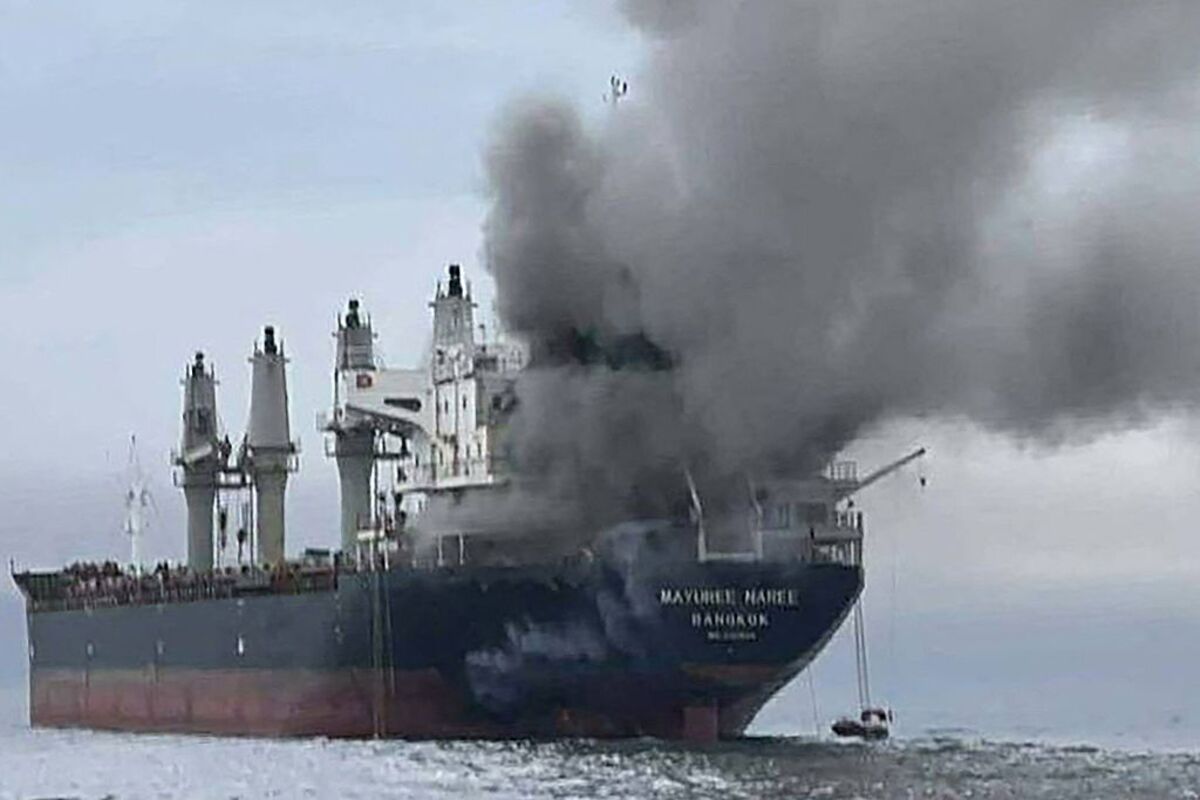
Three crew members are missing and presumed trapped after the Thai-flagged cargo vessel Mayuree Naree (owned by Precious Shipping Pcl) was struck by Iranian projectiles in the Strait of Hormuz on March 11; 20 of 23 crew were rescued by the Omani navy. The stern was hit and a fire broke out with searches failing to locate the three believed trapped in the engine room, raising regional maritime security risk and potential insurance and operational costs for ships transiting the waterway.
This incident is a catalyst that will compress the insurance take on Gulf transits and force immediate operational adjustments across affected trades. Expect underwriters to push war-risk premiums for Strait-of-Hormuz transits up 15–35% within 30–90 days — mechanically adding ~$5k–$25k/day to voyage breakevens depending on vessel size — which will show up as margin pressure for thin-margin spot voyages and as higher contract prices for long-term charters.
Second-order commercial effects will be non-uniform: commodity flows with time-sensitive delivery windows (automotive parts, electronics components routed via Asia-Europe lanes) will be more likely to pay for priority space or re-route via the Cape, adding ~7–12 days and materially altering working capital cycles for importers; bulk and tanker owners can see higher dayrates that persist if transits stay elevated. Port and feeder operators on alternative routes gain incremental volumes; integrated logistics providers that can flex routes and buy coverage cheaply will win market share.
Tail risk resides in escalation and insurance market capacity: a limited strike series or a successful campaign against multiple commercial vessels would move this from a regional cost shock to a systemic supply-chain disruption, triggering sustained rate spikes and political responses within 30–90 days. Conversely, a rapid diplomatic de-escalation or concentrated naval escorting could see premiums normalize within 60–120 days — that is the most direct path to reversal and compresses the opportunity window for security-reallocation trades.
The consensus is likely to overshoot both ways: headline-driven buying of shipping equities ignores immediate margin erosion from higher voyage costs, while blanket shorts ignore that many publicly traded owners are set to capture outsized spot-rate upside if transits re-route or convoys raise demand for larger, faster ships. Best opportunities are asymmetric plays that isolate repricing of risk (insurance/reinsurers) versus operational exposure (spot-heavy owners).
AI-powered research, real-time alerts, and portfolio analytics for institutional investors.
Request DemoOverall Sentiment
strongly negative
Sentiment Score
-0.65
