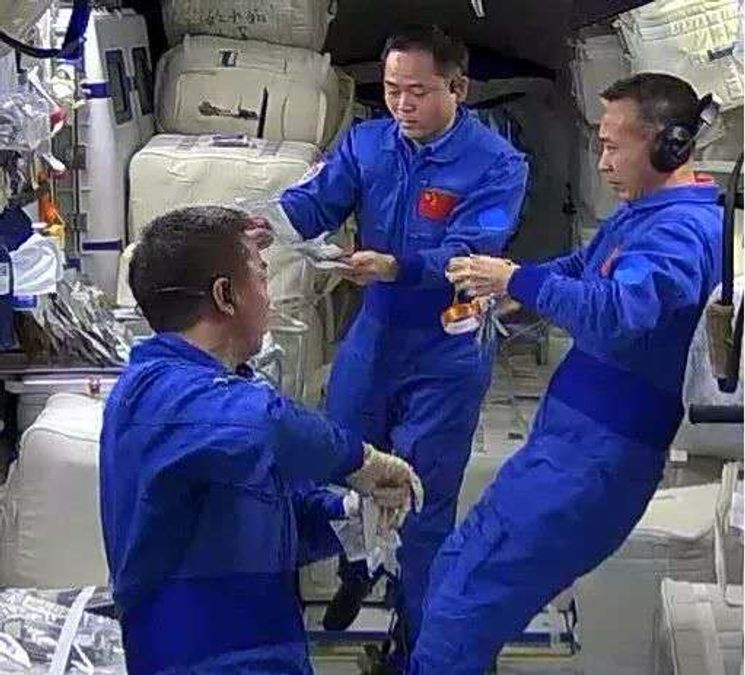
A newly discovered microbe, Niallia tiangongensis, has been found thriving aboard China's Tiangong Space Station, exhibiting enhanced radiation resistance due to supercharged stress-response systems; this discovery, part of China's CHAMP program, raises concerns about potential threats to astronaut immunity and spacecraft integrity, while also offering opportunities for breakthroughs in waste-recycling technology and industrial applications on Earth.
A novel microbe, Niallia tiangongensis, has been identified thriving aboard China’s Tiangong Space Station, demonstrating remarkable adaptation to zero gravity and cosmic radiation through supercharged stress-response systems. This discovery, stemming from China's space microbiome surveillance program (CHAMP), presents a dual-edged sword: while the microbe's resilience offers potential breakthroughs for safer space travel, waste-recycling technologies, and industrial enzyme applications on Earth, it also poses risks. These include potential threats to astronaut immunity due to microbial mutations and the possibility of corroding vital spacecraft components, a concern actively being investigated by engineers. The Tiangong Station effectively serves as an incubator for next-generation microbes, which could revolutionize terrestrial applications in agriculture, waste management, and medicine, underscoring the significant, albeit early-stage, implications of this microbiological finding for both space exploration and earthly industries.
AI-powered research, real-time alerts, and portfolio analytics for institutional investors.
Request DemoOverall Sentiment
neutral
Sentiment Score
0.10
