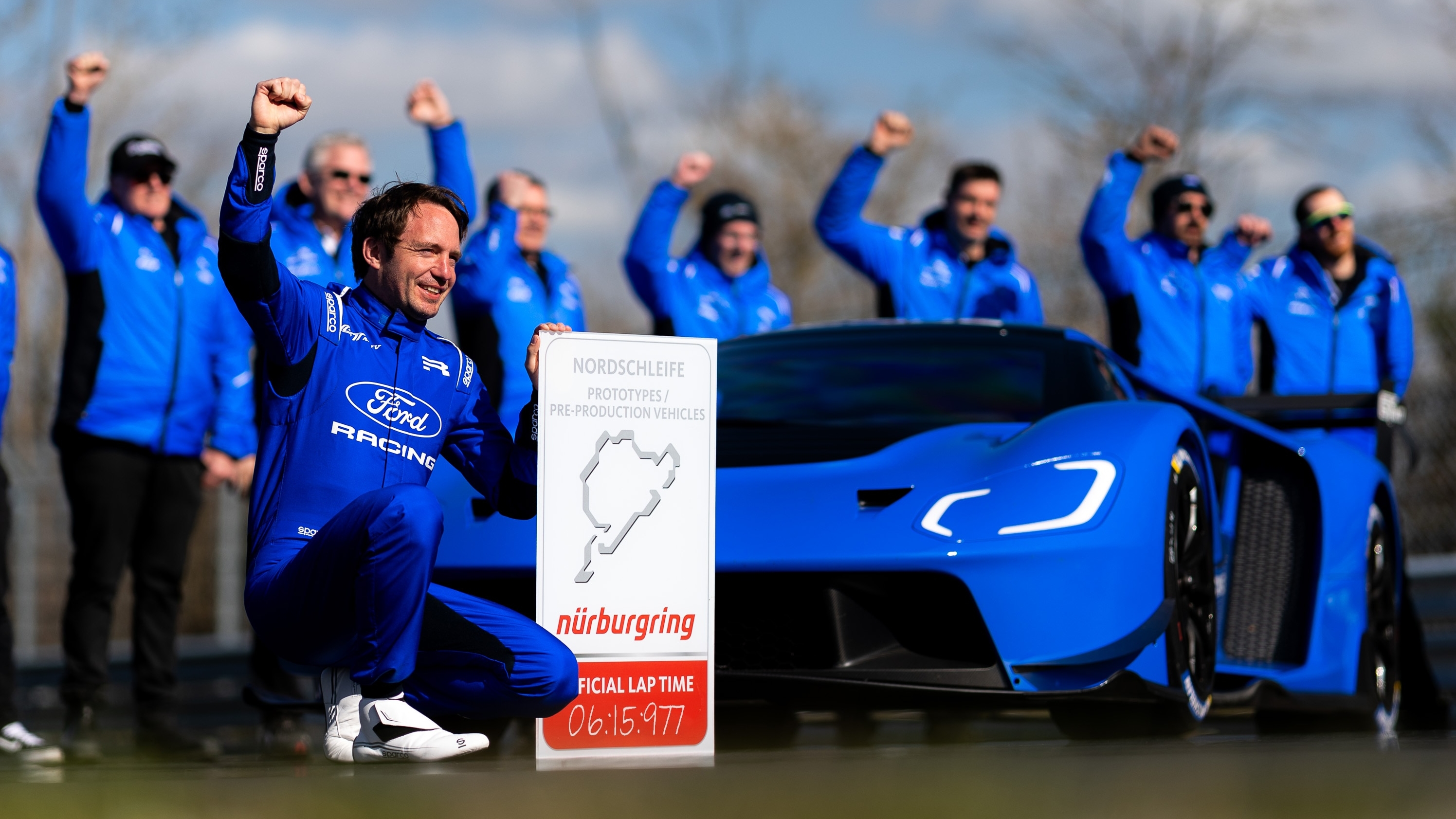
Ford posted the 3rd-fastest Nürburgring lap ever, reclaiming performance bragging rights from Chevrolet after eight months. The wider auto sector has had a weak start to 2026 as vehicle affordability concerns, surging gasoline prices, lackluster job growth and falling consumer confidence have pushed markets lower and are increasing near-term volatility.
A headline performance moment creates a marketing halo that disproportionately benefits high-margin trims, captive finance economics, and certified-pre-owned pricing rather than broad volume. If Ford can monetize through limited-run SKUs and option packages, expect a 1-2 percentage-point uplift to EBIT margin in the niche performance channels over 6-12 months and a 2-4 point improvement in lease residuals on affected models — which feeds directly to FCF and NII at the captive. Dealer-level effects (increased showroom traffic, higher trade-in quality) compound over a few selling cycles and can tighten used inventory, raising pricing power even as new-vehicle demand softens.
Headwinds from affordability and rising fuel pushback mean the conversion rate from PR to incremental unit sales will be low and skewed toward wealthier buyers; broad-market volume will remain hostage to macro (jobs, gas) over the next 3-9 months. There are second-order supply-chain frictions: demand for performance-specific components (tires, brakes, calibrations) can reroute capacity away from EV powertrain suppliers, potentially slowing EV program ramp if not managed — a risk to execution timelines, not immediate profits. The market reaction will likely be binary: a short-lived pop on PR followed by either measured outperformance if Ford monetizes or reversion if incentives are needed to move mainstream inventory.
Tail risks include a sharp gasoline spike, regulatory announcements tightening ICE performance rules, or a macro shock that forces broad incentive programs which erase any premium realization; these can flip the thesis within 30-90 days. Watch near-term catalysts: month-over-month retail share, lease residual prints, limited-edition SKU announcements, and 30-day gas price moves. Contrarian read: consensus is overstating retail volume upside but understating the durability of residual/finance gains — the largest near-term alpha is in captive economics and specialty SKU pricing, not unit growth.
AI-powered research, real-time alerts, and portfolio analytics for institutional investors.
Request DemoOverall Sentiment
mixed
Sentiment Score
0.00
Ticker Sentiment
