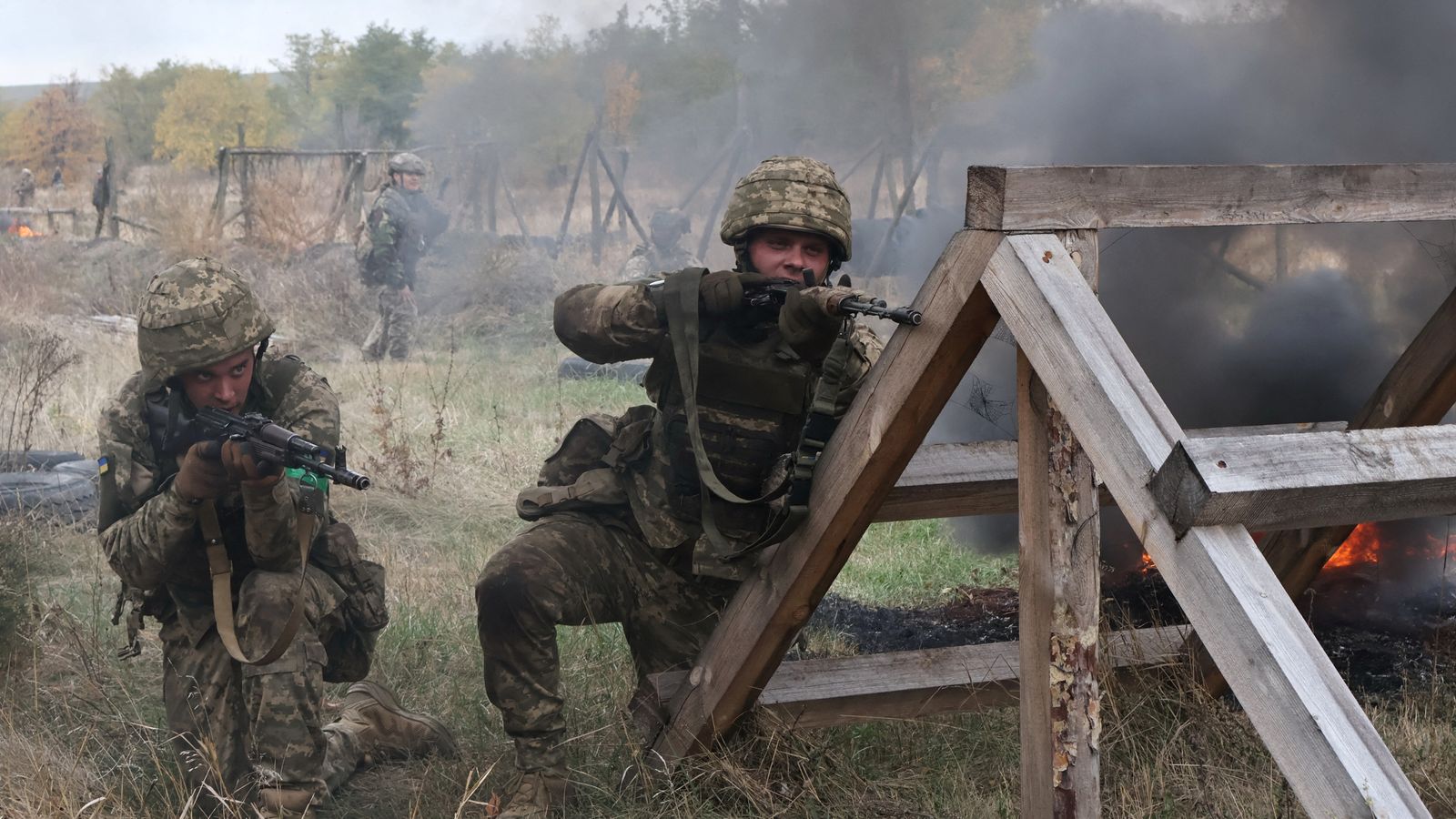
Ukraine's President Zelenskyy reported recent counteroffensive gains in Zaporizhzhia and near Dobropillia, while simultaneously highlighting Russia's intensified attacks on Ukraine's energy grid ahead of winter. Zelenskyy also engaged in discussions with former President Trump and US officials regarding advanced long-range weaponry, including Tomahawks, and advocated for stricter sanctions on Russian oil buyers. These developments underscore persistent geopolitical risks, potential for conflict escalation, and continued volatility in global energy markets, particularly concerning oil supply and the resilience of Ukraine's energy infrastructure.
Ukrainian forces report recent gains in the Zaporizhzhia region, including a 3km advance, while Russia denies these claims and asserts its own strategic advantage, having captured 5,000 square kilometers this year. This conflicting battlefield narrative underscores the persistent uncertainty and protracted nature of the conflict, now exceeding three and a half years. The ongoing counteroffensive and territorial disputes maintain elevated geopolitical risk.
Russia has intensified its aerial campaign against Ukraine's energy infrastructure, targeting the power grid ahead of winter, using over 3,100 drones, 92 missiles, and 1,360 glide bombs in the past week. This sustained assault aims to cripple the country's energy supply, signaling continued pressure on global energy markets, particularly concerning supply disruptions and price volatility. President Zelenskyy's call for tighter sanctions on Russian oil buyers further highlights these energy market sensitivities.
Discussions between President Zelenskyy and US officials, including former President Trump, regarding the provision of long-range precision strike weapons like Tomahawks and ATACMS, indicate a potential escalation in military aid. The US President's statement of having "sort of made a decision" on Tomahawks, coupled with the Kremlin's "extreme concern," suggests a significant shift in military capabilities could be imminent, prolonging the conflict and increasing regional instability.
AI-powered research, real-time alerts, and portfolio analytics for institutional investors.
Overall Sentiment
mildly negative
Sentiment Score
-0.20
