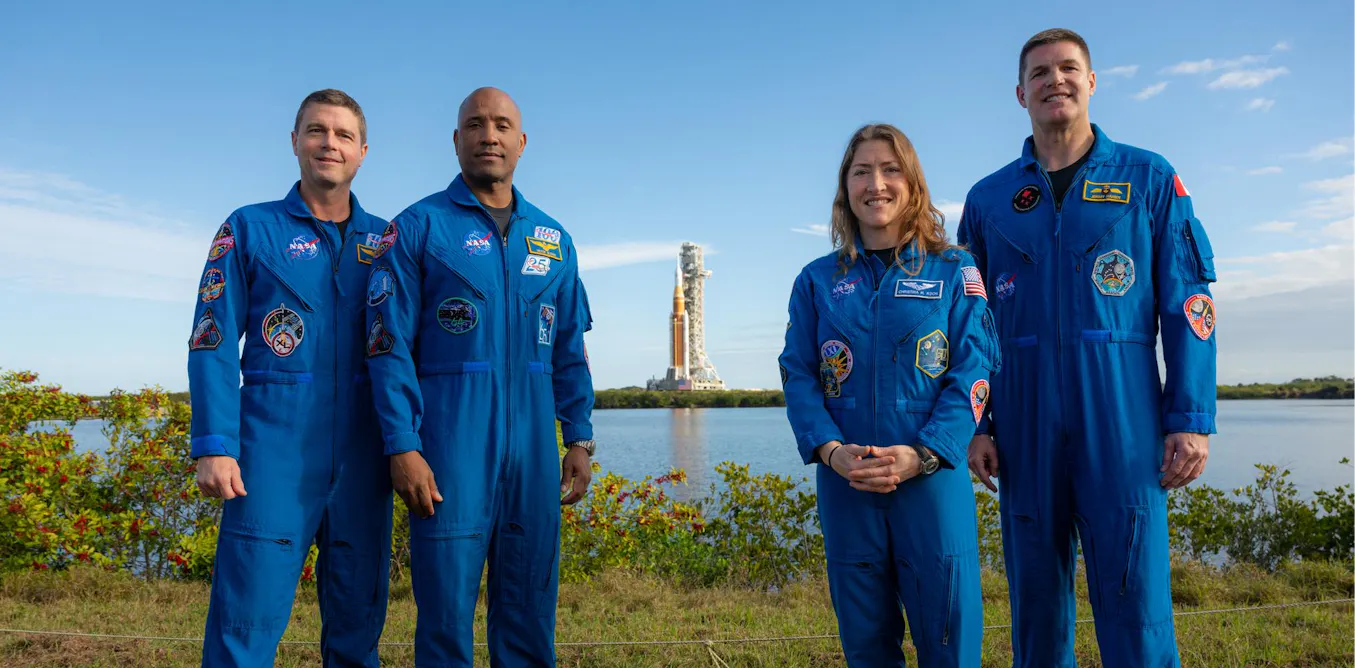
Key event: the Nov 11, 2025 solar particle event increased ground-level radiation by ~145% for two hours at Lerwick; a comparable 1972 event was ~40x larger and could have caused severe illness or death for Apollo crews. University of Surrey’s SAIRA detectors and MAIRE modelling are being used to quantify aviation- and spaceflight-level exposures, three papers are in preparation, and a High Energy Proton instrument is in development with potential lunar-orbit flight late this decade. Operational and infrastructure implications include NASA’s planned US$20 billion lunar south-pole base, crew sheltering procedures aboard Orion (storage lockers by the heat shield), and aviation mitigations (lower altitudes/latitudes or grounding) during high-radiation periods.
Recent upticks in extreme-space-radiation risk create a multi-year demand shock not just for spacecraft shielding but for a narrow set of upstream capabilities: radiation-hardened semiconductors, high-Z and hydrogenous shielding materials, and on-board monitoring/forecast telemetry. Those inputs have long lead times and concentrated capacity (specialized fabs, legacy space-grade suppliers), so procurement-driven price and margin improvements are likely to be front-loaded over the next 12–36 months as programs accelerate technical hardening rather than redesigning missions.
A second-order beneficiary set includes prime integrators that own systems engineering and space-weather analytics (they can cross-sell hardened subsystems), and commercial services that monetize directional warnings for aviation and logistics (flight reroute optimization, mission ops insurance). Conversely, smallsat operators and consumer-focused LEO services that cannot economically harden payloads will face a wave of retrofits, insurance repricing, or stranded-capex risk — expect consolidation or premium exits for marginal players.
Key catalysts and tail risks: a government procurement push or new standards (FAA/NASA/DoD) could accelerate multi-year budgets immediately, while a Carrington-scale event remains low-probability but high-consequence and would reprice risk globally overnight. The main reversion risk is a sustained quiet Sun season or breakthrough in low-mass active shielding that reduces incremental demand for specialty components.
Practically, this is a time-limited structural trade: capture cyclical capex and durable spending on hardening over 1–4 years, then reassess as tech adoption and new supply capacity evolve. Position sizing should assume event-driven knee-jerk volatility and program timing slippage of 6–18 months.
AI-powered research, real-time alerts, and portfolio analytics for institutional investors.
Request DemoOverall Sentiment
neutral
Sentiment Score
0.00
