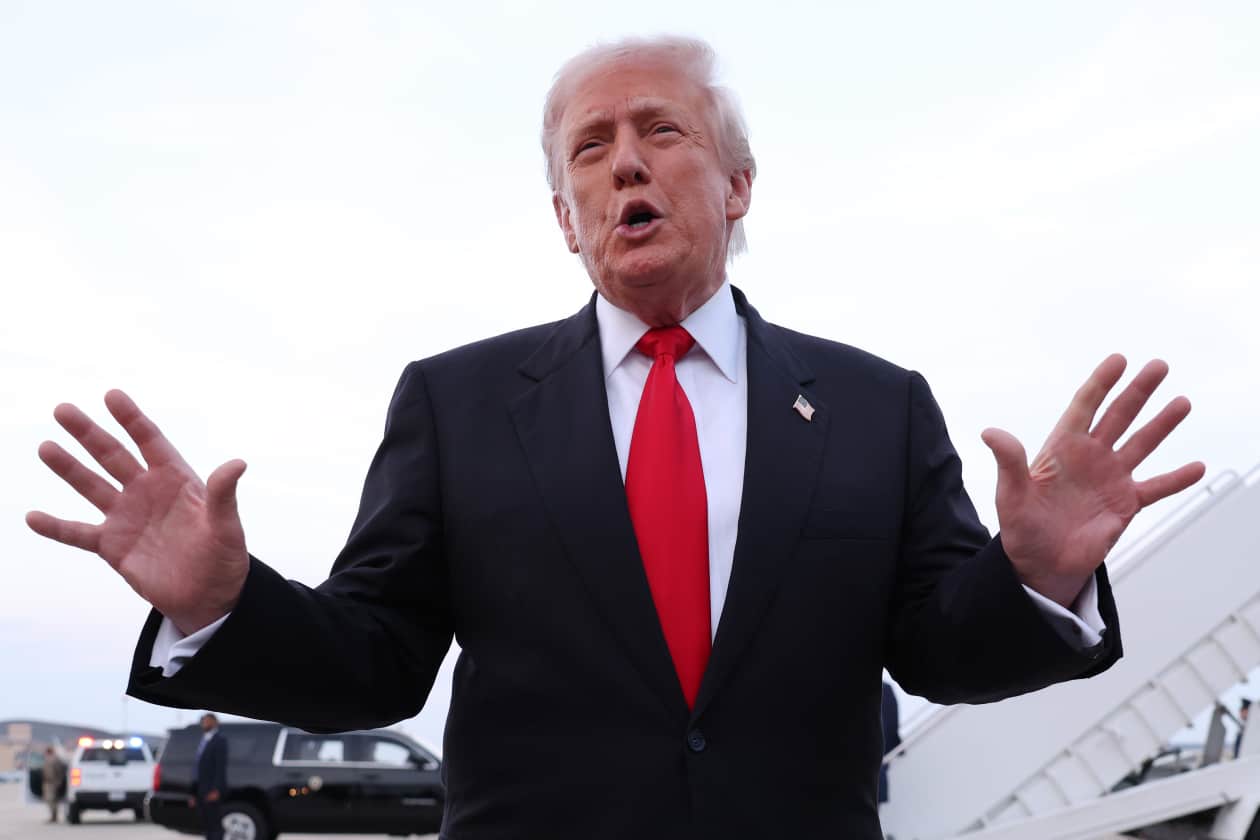
Former President Trump has proposed direct payments of at least $2,000 to most Americans, funded by tariff revenues, to demonstrate the benefits of his trade policy. However, Treasury Secretary Scott Bessent suggested that this 'dividend' might instead manifest as various tax savings, such as eliminating taxes on tips or overtime, rather than direct checks. The feasibility of such proposals is complicated by the Supreme Court's recent skepticism regarding Trump's authority to impose tariffs and the likely requirement for congressional approval for direct payments.
Former President Trump has proposed direct payments of at least $2,000 to most Americans, funded by existing tariff revenues, which he states have collected "tens of billions of dollars." This initiative aims to highlight the benefits of his tariff policy, citing a "record stock market price" and "almost no inflation" as economic successes.
Treasury Secretary Scott Bessent, however, suggested that this "dividend" could manifest as tax savings, such as eliminating taxes on tips or overtime, rather than direct checks. The implementation of either direct payments or significant tax cuts would likely require congressional approval.
Furthermore, the U.S. Supreme Court has shown skepticism regarding Trump's authority to impose reciprocal tariffs, which could undermine the proposed funding mechanism. This discussion signals potential shifts in fiscal policy and the allocation of trade-related revenues, moving from previous mentions of national debt reduction to direct consumer benefits.
AI-powered research, real-time alerts, and portfolio analytics for institutional investors.
Request DemoOverall Sentiment
mixed
Sentiment Score
0.15
Ticker Sentiment
