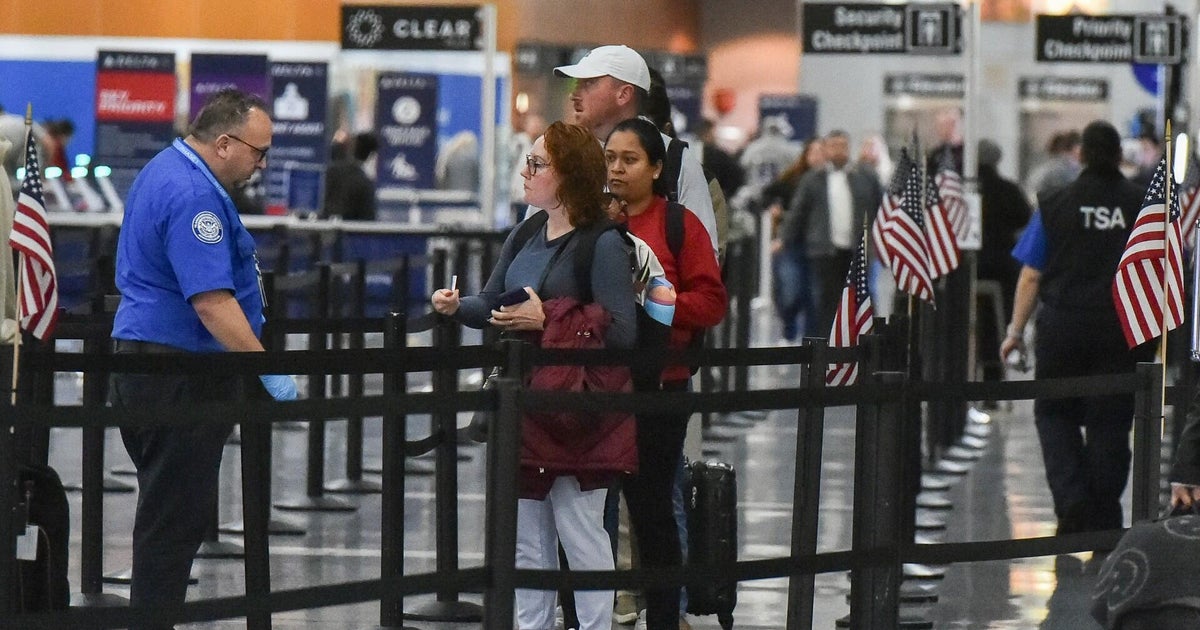
Logan Airport has just over 1,000 TSA employees working without pay amid the partial government shutdown; 25 Boston TSA workers have already left and the union warns of further attrition if paychecks are missed. President Trump announced ICE agents could assist TSA at airports starting Monday, while a DHS funding bill failed to advance in the Senate on Friday. Low morale and staffing shortages raise the risk of increased passenger delays and operational disruption at affected airports.
This is primarily a supply-side labor shock to airport operations with concentrated near-term convexity: attrition and fatigue raise the marginal cost of running gates and checkpoints (overtime, temporary hires, training) and create a non-linear rise in flight cancellations once staffing falls below local breakpoints. Expect localized disruption in the next 2–8 weeks at hubs with tight turnaround schedules where a 3–5% staff shortfall can cascade into 1–3% of flights delayed or cancelled on peak days, imposing direct opex and passenger-reaccommodation costs on carriers and boosting short-notice ancillary spend (hotels, parking, rentals).
A political/catalyst timeline matters: the near-term driver is funding votes and union tolerance thresholds — once a missed-payroll count crosses a visible threshold (e.g., next missed check), attrition accelerates and legal/contractual remedies (overtime limits, sick-call spikes) increase costs materially; resolution can be immediate if funding passes, so market moves should concentrate in discrete windows around Senate/DHS votes (days) and payroll dates (weeks). Deployment of federal tactical resources (e.g., cross-agency staff) reduces immediate operational risk but raises regulatory and reputational risk for incumbents and could drive durable policy changes increasing contractor spend.
Second-order beneficiaries are companies that can supply rapid security capacity and training (cleared defense contractors, managed-services providers) and short-term consumer spend winners like rental cars and airport hotels; losers are thin-margin, high-frequency carriers and concession operators in airports where service breakdowns depress spend-per-passenger. The biggest mistake for investors is extrapolating a multi-month demand hit from what is primarily a front-loaded supply disruption that is binary on funding outcomes.
AI-powered research, real-time alerts, and portfolio analytics for institutional investors.
Request DemoOverall Sentiment
mildly negative
Sentiment Score
-0.30
