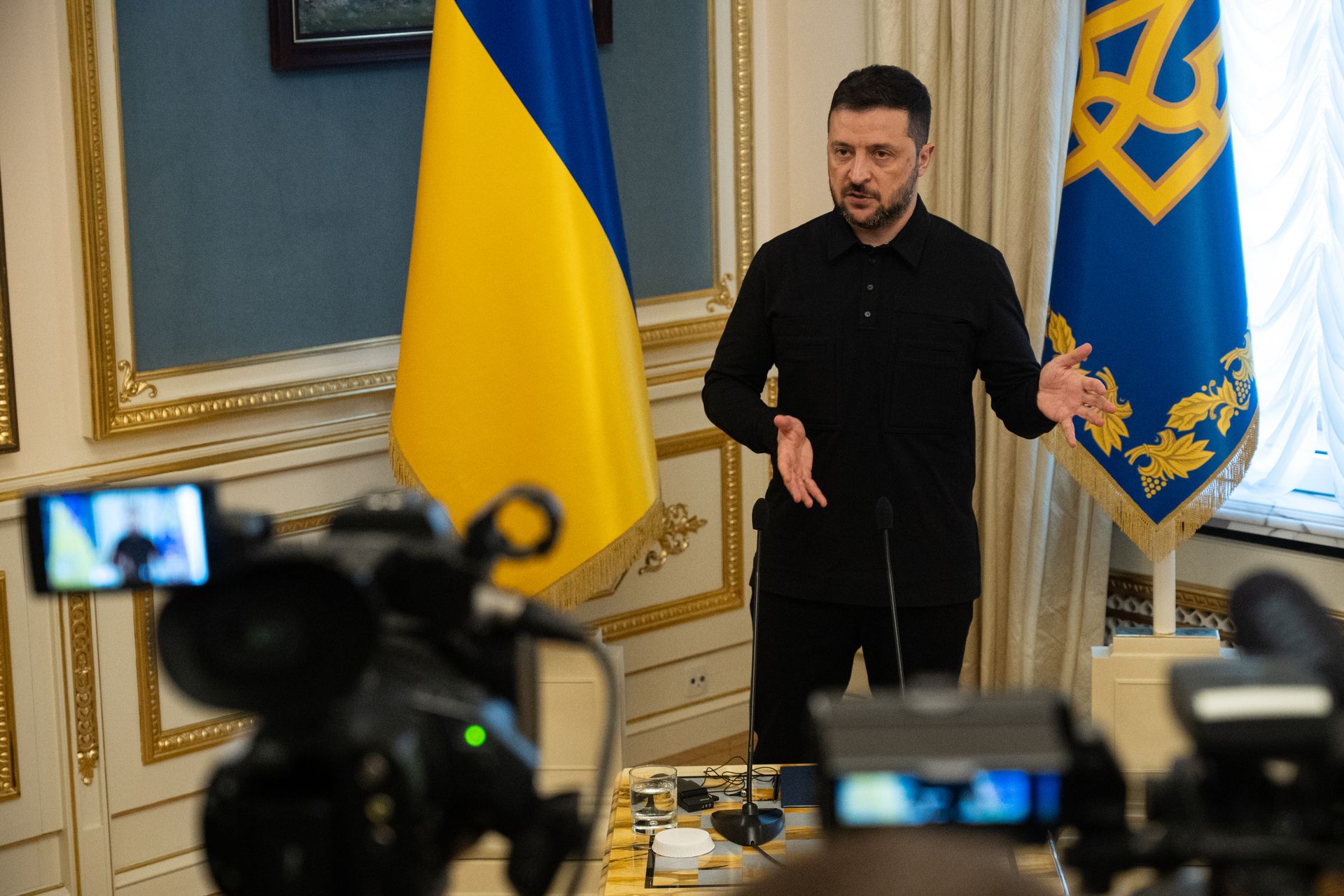
At least 10‑year agreements: Ukraine will export weapons, naval/sea drones, electronic warfare systems and software to Gulf states and offer expertise aimed at unblocking the Strait of Hormuz (roughly 20% of global oil flows). Gulf partners have committed reciprocal energy support (including diesel), which plus potential deployment of Ukrainian air‑defense/interceptor drone tech could materially affect regional energy security and lift demand in the defense sector; deal specifics and timing remain limited, leaving significant geopolitical and market uncertainty.
Ukraine positioning its low-cost maritime drones and EW stacks as exportable, interoperable building blocks changes the economics of Gulf maritime security: instead of buying a few high-end air-defense blocks, states can buy distributed denial architectures that scale linearly with price. Mechanically, that raises the attacker’s required sortie rate or mine/drone inventory to re-close a critical chokepoint, which should reduce the frequency of extreme short-lived oil-price spikes (our back-of-envelope: reduce once-in-12-months spike probability by ~30–40% if deployment is successful within 6–12 months).
Incumbent Western primes face a bifurcated outcome — downward pressure on margins for turnkey, high-ticket systems but a new revenue channel in joint production, sustainment, and training. Public small/medium cap vendors exposed to unmanned maritime platforms, low-cost interceptors, and sensor/EW integration (supply of components and software rather than whole systems) are the asymmetric beneficiaries if Gulf buyers favor rapid tech-transfer and cost-per-unit economics.
Near-term catalysts to watch are: contract annexes (30–90 days), US/EU export-control sign-offs (weeks–months), and any asymmetric Iranian/Russian operational tests (days–weeks) that validate or discredit the concept. Tail risks include reversal via sanctions on Ukrainian arms exports, a decisive retaliatory closure event that outpaces Gulf defenses, or major primes outbidding with subsidized packages — any of which could unwind the nascent de-risking of Hormuz.
For markets, a sustained build-out lowers short-tail oil volatility and tanker insurance rates over 6–18 months but raises structural defense procurement in the Gulf for a decade. That duality creates a clear event-trade window: defensives tied to unmanned/ EW manufacturing should re-rate on contract flow, while oil-volatility sellers and insurance-rate shorts become attractive conditional plays if deployments proceed on timeline.
AI-powered research, real-time alerts, and portfolio analytics for institutional investors.
Request DemoOverall Sentiment
mildly positive
Sentiment Score
0.25
