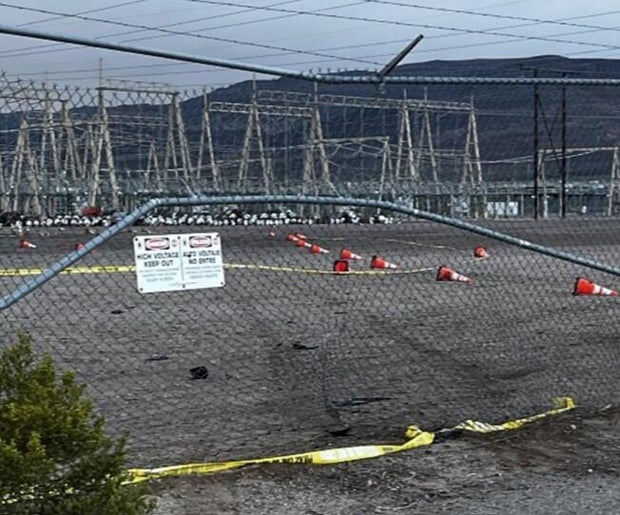
A vehicle deliberately rammed a Los Angeles Department of Water and Power substation in Boulder City, Nevada, near Hoover Dam; the 23-year-old driver, identified as Albany law student Dawson Maloney, died from an apparent self-inflicted gunshot, and authorities found explosive materials, weapons and extremist literature. Officials reported no service disruptions or major infrastructure damage and LA DWP said operations were unaffected, but the discovery of weaponry, flamethrowers, 3D-printed gun components and extremist material elevates security and regulatory concerns for electricity transmission assets. The incident reinforces prior attacks on energy infrastructure and could prompt heightened security measures and oversight for utilities and grid operators, although immediate market impact appears limited.
Market structure: Physical-attack risk on transmission/substation assets favors engineering/field-services and security vendors (Quanta Services PWR, L3Harris LHX, ADT ADT) plus OT/cyber vendors (Palo Alto PANW, CrowdStrike CRWD) who can capture multi-year retrofit budgets. Regulated utilities (NextEra NEE, Sempra SRE) have higher pricing power to pass through mandated security capex, while small unregulated/merchant project developers and thin-credit municipals face margin and credit pressure. Expect stronger contract pricing for specialty contractors by ~2–5% over 12–36 months as risk premiums are bid into bids and insurance costs rise.
Risk assessment: Tail risks include a successful coordinated attack causing multi-week outages (power price spikes, legal/regulatory shock) and a rapid federal mandate that forces $1–10+ billion of immediate upgrades. Immediate (days) impact is sentiment and risk-off flows; short-term (30–180 days) sees policy signals and contract awards; long-term (1–5 years) is capital cycle for transformers/field hardening (supply-chain lead times ~12–24 months). Hidden dependencies: transformer manufacturers, 3–D printed weapon trends, and municipal bond spreads.
Trade implications: Favor 12-month overweight to PWR (grid-harden engineering) and 6–12 month call-spread exposure on PANW/CRWD to capture OT security spending; tactically add ADT for physical security revenue. Hedge by reducing exposure to small-cap renewable project developers and buying 3–6 month protection (puts) on regional utility/renewable small-cap ETFs if DOE/FEMA funding < $1B in 90 days. Use scale-in: add on 5–10% pullbacks, trim after 20% rallies or at 12 months.
Contrarian angles: Consensus underprices a multi-year capex cycle; markets may underreact because no outage occurred—opportunity to buy contractors/cyber on muted moves. Equally, if federal response is limited within 90 days, upside is capped; policy drift would favor shorting small developers and trimming defense cyclicals. Historical parallels (2023 substation attacks) produced policy attention but limited immediate spend; use 90-day funding/legislation triggers to re-rate positions.
AI-powered research, real-time alerts, and portfolio analytics for institutional investors.
Request DemoOverall Sentiment
moderately negative
Sentiment Score
-0.45
