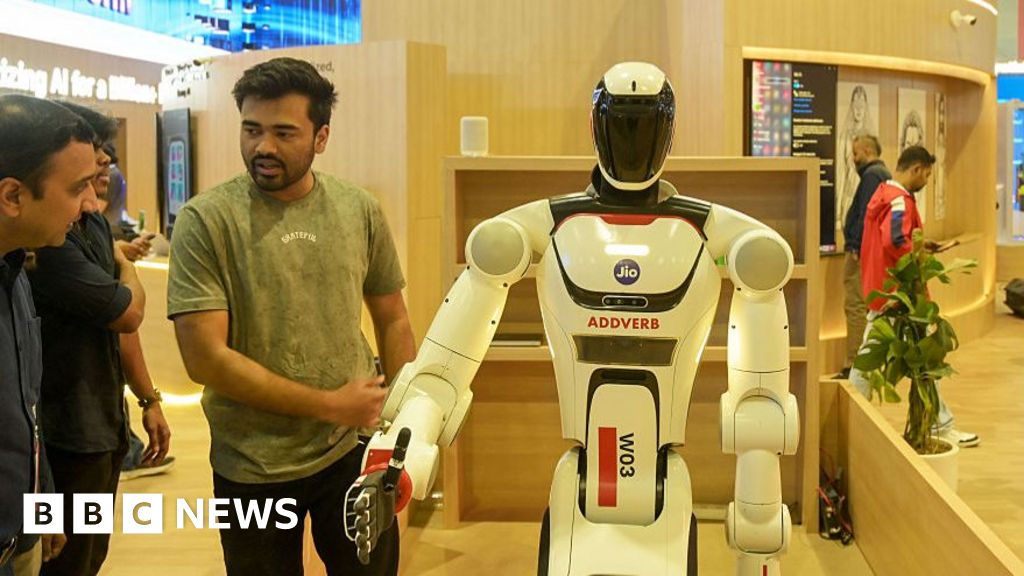
India's five-day AI Impact Summit, inaugurated by Prime Minister Narendra Modi and hosting representatives from over 100 countries, saw roughly 70,000 attendees but was disrupted on opening day by severe logistical failures — long queues, overcrowding, session closures, cash-only food stalls and allegations of stolen exhibitor goods. Information Technology Minister Ashwini Vaishnaw apologised, set up a "war-room" and promised fixes; the operational lapses create reputational and short-term investor-sentiment risk for India's AI ecosystem and startups exhibiting there, though the event is unlikely to cause immediate material market moves.
Market structure: The summit's operational failures are a reputational negative for event-services, local exhibition SMEs and cash-only vendors, but they do not change the core demand driver — enterprise AI adoption — which favors hyperscalers (GOOGL/GOOG, MSFT, AMZN) and chipmakers (NVDA). Expect modest re‑allocation of spend toward turnkey cloud + managed‑services vendors over the next 6–18 months as enterprises prefer lower execution risk; this increases pricing power for large cloud providers and keeps GPU/accelerator demand tight.
Risk assessment: Tail risks include rapid regulatory tightening (export controls or Indian data residency rules) or a high-profile security/ liability case that could slow commercial deployments; probability low-medium, impact high. Immediate (days) effects are sentiment noise; short-term (weeks–3 months) could see small tech vol spikes and EM FX moves; long-term (6–36 months) structural demand for cloud AI and chips should continue unless regulation materially constrains model deployment. Hidden dependencies include local payments/infrastructure and talent availability; key catalysts are any announced Big Tech investments or partner contracts in India in the next 30–90 days.
Trade implications: Favor concentrated exposure to global AI incumbents: establish a 1–2% position in GOOGL (GOOG) with a 3–6 month horizon and 10% stop; add 0.5–1% NVDA exposure for 6–12 months to capture GPU tightness (target +25–35%, stop -15%). Implement a relative-value pair: long GOOG / short INDA (1:1 notional) sized 1% of portfolio for 1–3 months to capture global leaders vs India small-cap execution risk. Use cost‑limited options: buy 2–3 month call spreads on GOOG with strikes +5%/+12% to cap premium if implied vol rises >20%.
Contrarian angles: The consensus fear (that a poorly run summit derails India AI momentum) is overdone; procurement and deployment decisions are driven by contracts and technical capability, not opening‑day chaos. Mispricing likely in India small‑cap tech and event services; historical parallels (logistics failures at major conferences like CES) show short-term noise but unchanged long-term demand. Unintended consequence: buyers may consolidate vendors, accelerating share gains for hyperscalers — a structural tailwind for GOOGL/GOOG and NVDA over 12–36 months.
AI-powered research, real-time alerts, and portfolio analytics for institutional investors.
Request DemoOverall Sentiment
moderately negative
Sentiment Score
-0.35
Ticker Sentiment
