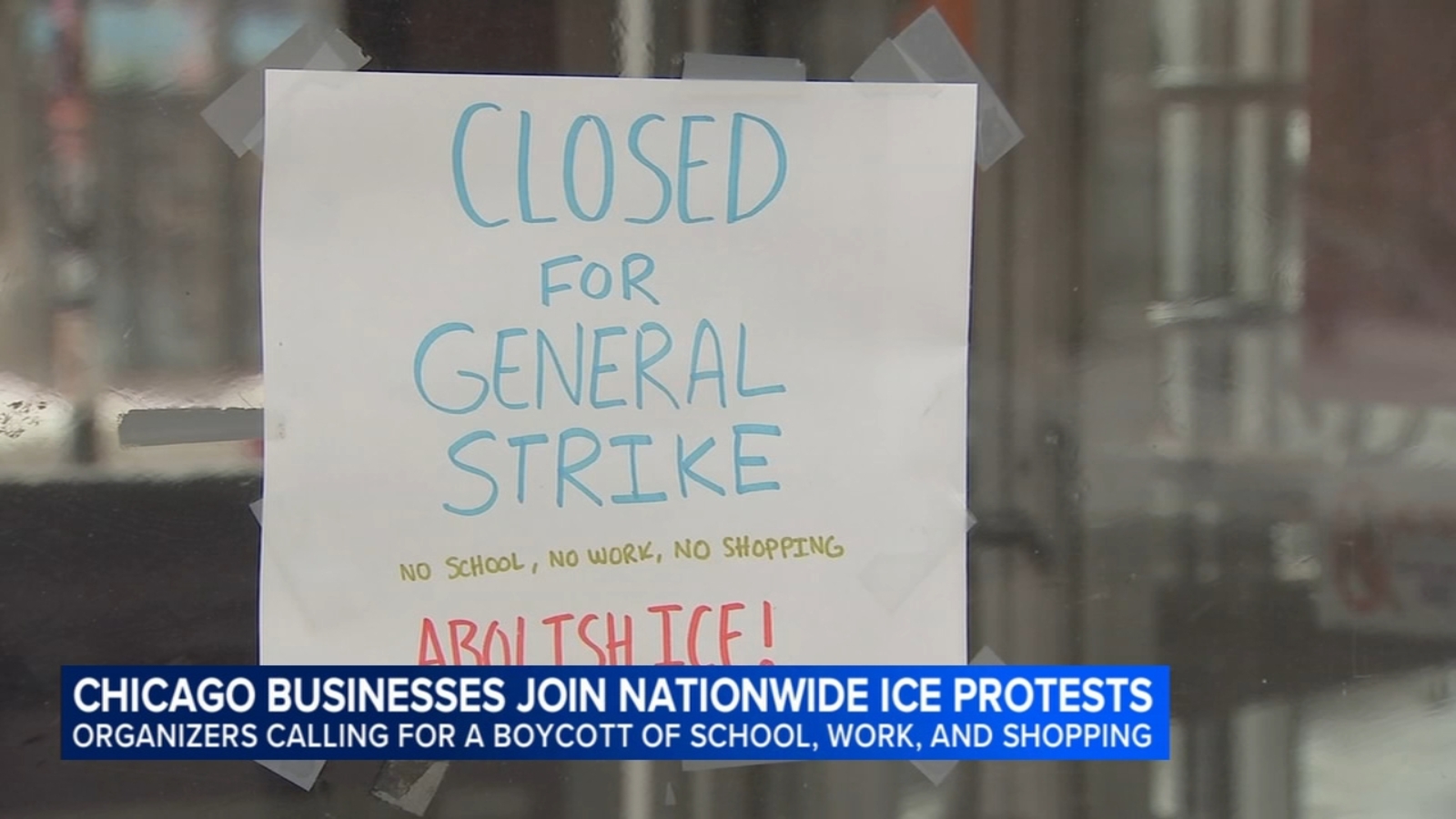
Local businesses in Chicago joined a nationwide day of protest calling for a shutdown—'no shopping, no school, no work'—in response to recent immigration-enforcement actions and fatal shootings involving federal agents. Several small retailers (e.g., The Brewed, Bric-a-Brac Records) closed and posted notices, while others stayed open and donated to immigrant-support organizations to avoid payroll disruption; the event represents localized retail disruption and reputational/legal risk but is unlikely to produce material market-moving effects.
Market structure: The immediate winners are defensive consumer staples, grocery chains, and digital payments (resilient to single-day foot-traffic shocks), while independent brick-and-mortar small retailers and restaurants take the direct hit — a one-day local shutdown can reduce daily sales 5–15% for affected stores and squeeze weekly comps by 1–3%. Competitive dynamics could accelerate share gains for national grocers and delivery platforms that capture displaced demand; pricing power for small retailers is impaired by lost sales and fixed labor costs. Cross-asset signals are modest: minor safe-haven flows into Treasuries and gold (+0.5–1% intra-week), slight lift in USD in risk-off spikes, and localized volatility in regional REITs and small-cap retail ETFs (XRT).
Risk assessment: Tail risks include escalation to multi-day coordinated shutdowns or violent clashes that depress local economic activity 2–4% QoQ for affected metros, and regulatory/legal fallout (municipal ordinances, federal enforcement budgets) that could raise compliance costs for logistics and security firms. Timeline: immediate (days) sees transient sales dips and intraday volatility; short-term (weeks/months) could pressure small-business loan performance and tenants in retail REITs; long-term (quarters/years) changes to immigration policy could alter labor supply and wage inflation in hospitality/construction. Hidden dependencies: payroll liquidity for small businesses, local municipal revenue shortfalls, and consumer mobility metrics (SafeGraph/Placer.ai) are leading indicators. Catalysts: high-profile DOJ/DHS actions, city-level strikes expanding to multiple metros, or midterm election developments within 30–90 days.
Trade implications: Tactical short exposure to small-cap retail (XRT) or individual vulnerable names (mall/mid-tier retailers) is appropriate on confirmed mobility declines; hedge with long positions in KO/PG and digital payment leaders (V, MA) for resilience. Use options to cap risk: buy 3-month put spreads on mall REITs (e.g., SPG) sized to 0.5–1% of portfolio to profit from collection declines while limiting premium. Rotate 2–4% into GLD/TLT if VIX breaches 20 and 10-yr yields fall >25 bps in five trading days — signals persistent risk-off.
Contrarian angles: The market likely underestimates dispersion — national indices will underreact while localized small-cap/retail pockets face outsized pressure, creating relative-value opportunities (short XRT, long KO). Historical parallels (localized protests 2016–2018) show national consumer spending rebounds within weeks absent sustained violence or policy shifts, so avoid large, permanent shorts unless mobility data and rent/collection metrics deteriorate for 2+ consecutive months. Watch unintended consequences: heavy-handed enforcement could accelerate muni-level festival/city cancellations, hurting tourism and hospitality stocks more than headline retail names.
AI-powered research, real-time alerts, and portfolio analytics for institutional investors.
Request DemoOverall Sentiment
neutral
Sentiment Score
-0.10
