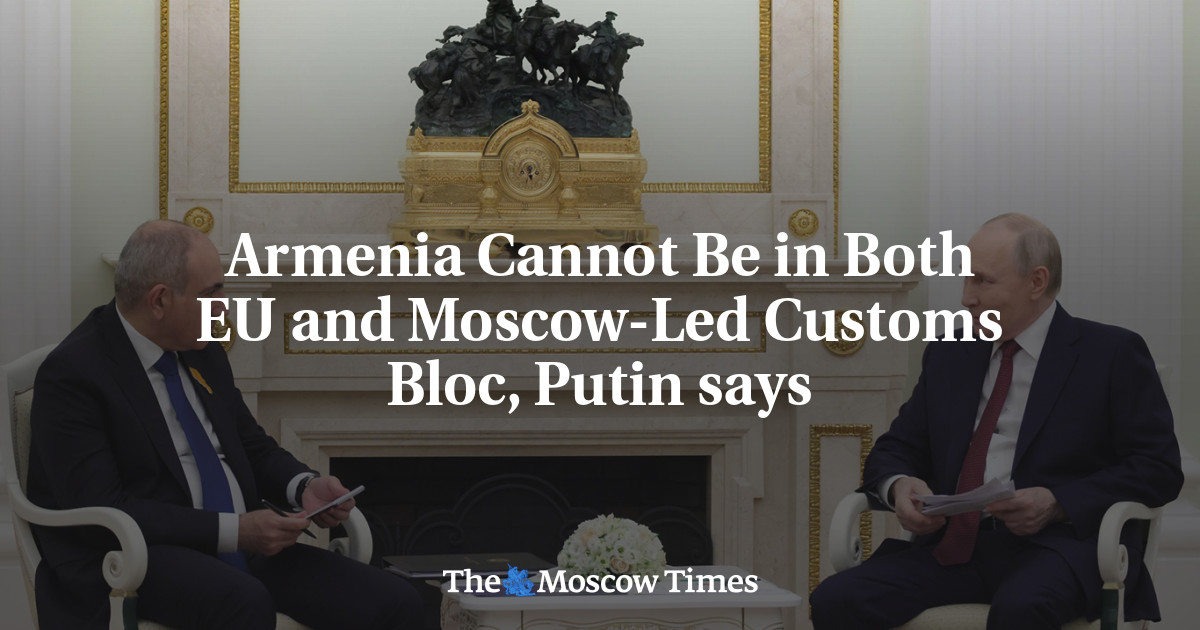
Armenia is moving toward closer ties with the EU while President Putin warned it cannot simultaneously be in the European Union customs space and the Russian-led Eurasian Economic Union; PM Nikol Pashinyan acknowledged the incompatibility but said pursuing both paths is possible 'for now'. Armenia froze its CSTO membership in 2024 after Moscow did not militarily intervene following Azerbaijan's September 2023 offensive, signaling a sustained deterioration in Armenia-Russia relations. Implication for portfolios: limited near-term market impact, but elevated political risk for regional sovereign and EM assets and potential knock-on effects for Russia-Armenia bilateral cooperation.
Armenia’s tilt toward the EU is small in absolute GDP terms but disproportionately reduces Moscow’s political leverage in the Caucasus; the key transmission channels are customs alignment, pre-accession funding, and security cooperation rather than immediate troop deployments. If Brussels begins structured accession talks or targeted infrastructure grants within 12–24 months, expect a cascade of EU-funded tenders (border, customs IT, energy interconnectors) that favor mid-cap European engineering and defense contractors over Russian suppliers.
Moscow’s toolkit is mostly economic and administrative: stepped-up customs frictions, selective trade restrictions via third-country transit (Georgia/Iran routes), energy price adjustments, and labor/permits pressure on Russian-based Armenian workers. Those actions can materialize within weeks-to-months and would likely show up first as a 5–15% depreciation in the dram, a 150–400bp rise in short-term sovereign spreads, and a temporary spike in remittance outflow volatility.
Market reaction will be asymmetric: Western defense/critical-infrastructure vendors get optionality from potential new contracts, while Russia-exposed banks, state exporters and EM sentiment face downside on escalation. The consensus underprices the timing risk — accession mechanics are slow but political signaling happens quickly; the real decision point is administrative (candidate status or customs harmonization steps) rather than full membership, and that is the 6–24 month catalyst investors should trade around.
AI-powered research, real-time alerts, and portfolio analytics for institutional investors.
Request DemoOverall Sentiment
mildly negative
Sentiment Score
-0.15
