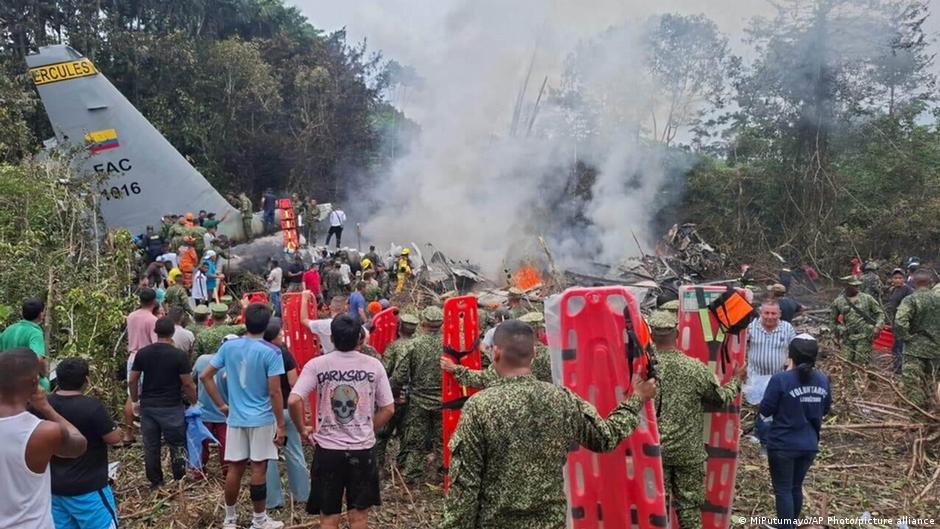
A Colombian military Lockheed Martin Hercules C-130 transporting 128 people crashed after takeoff from Puerto Leguizamo, killing at least 66, injuring about 81 and leaving 4 missing. Authorities say investigators are probing the cause with no current indications of an attack; President Petro publicly blamed bureaucratic delays in military modernization, raising the prospect of accelerated procurement or political fallout. Expect limited immediate market impact but potential sector-level scrutiny of military procurement, operational safety, and increased domestic political risk.
Expect a two-phase market reaction: an immediate regulatory and inspection impulse across Latin America (days–weeks) that raises demand for short-cycle MRO, spare-parts, and inspections while creating transient operational disruptions for regional military and certain cargo fleets. That impulse favors firms with existing defense-MRO footprints and supply-chain access to OEMs, but is unlikely to prompt large airframe orders inside a 0–6 month window because procurement cycles and funding approvals are much slower.
Over 6–24 months the political angle matters more than the technical one: executives pushed out and public outrage can accelerate budget reallocations or fast-track modernization RFPs — a classic “bureaucratic friction removal” catalyst that materially shortens procurement timelines in small emerging-market programs. That dynamic benefits contractors who can offer turnkey, rapid-delivery upgrade packages or used/recertified airframes, while creating downside for suppliers reliant on slow government procurement processes.
Second-order winners are regional airframe competitors and MRO specialists (who can supply KC-390 or retrofit services) and insurers who will reprice risk, potentially creating higher recurring revenue for maintenance-focused vendors. Tail risks include an investigation finding systemic maintenance failings, which could trigger fleet groundings across operators and a protracted decline in asset values and higher insurance costs, shifting benefit from new-build OEMs to MRO/parts businesses for 12–36 months.
AI-powered research, real-time alerts, and portfolio analytics for institutional investors.
Overall Sentiment
strongly negative
Sentiment Score
-0.80
Ticker Sentiment
