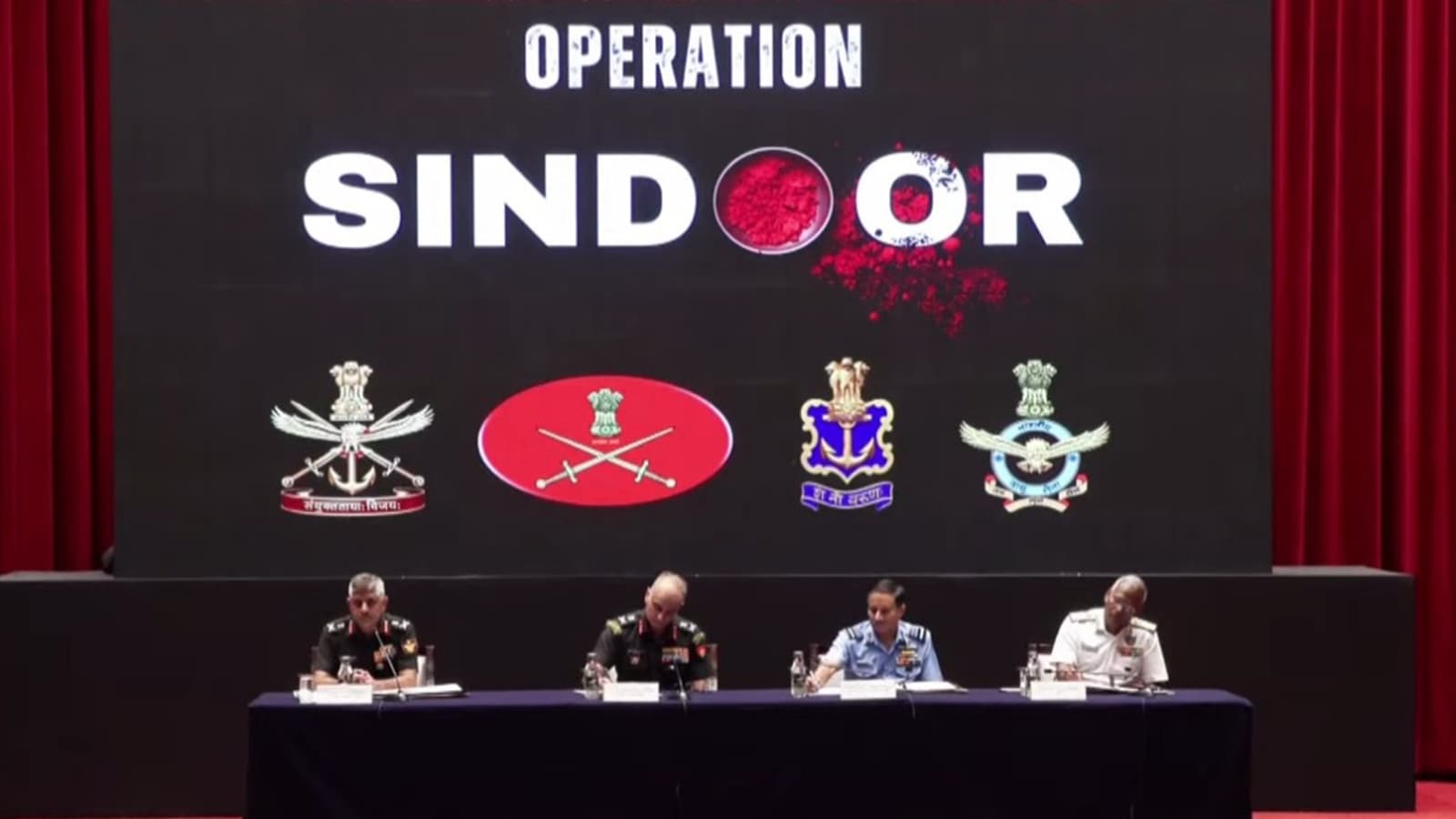
India’s armed forces said Operation Sindoor targeted 9 terror infrastructures in Pakistan and Pakistan-occupied Kashmir with precision strikes, claiming no collateral damage and that the mission objectives were completed. Officials said India stepped beyond traditional methods, used joint tri-service capabilities and indigenous systems such as BrahMos and Akash, and warned that no terror hub in Pakistan is safe. The remarks underscore heightened India-Pakistan military tensions, but the article is primarily a retrospective operational briefing rather than new escalation data.
The market-relevant takeaway is not the military recap; it is the signaling effect. Publicly framing the operation as repeatable, joint, and limited-aims lowers the probability of an immediate conventional escalation, but raises the long-tail risk of intermittent cross-border retaliation, covert action, and heightened security posture. That combination tends to support a mild risk premium in Indian defense, cybersecurity, and domestic infrastructure security spend rather than a broad EM de-risking unless fatalities or asset damage materially rise. Second-order beneficiaries are firms with exposure to procurement normalization and “sovereign self-reliance” capex: Indian defense electronics, missile systems, UAVs, radars, and command-and-control integrators. The real catalyst is budget persistence over the next 2-4 quarters, not the headline itself; if the political message sticks, procurement cycles can accelerate and order visibility improves. The losers are border-adjacent logistics, insurers, and any India-sensitive foreign capital that treats the subcontinent as a low-volatility EM allocation. The main tail risk is miscalculation: a single high-casualty incident, or a strike on a more visible military target, could force an escalation that compresses timelines from months to days. A separate, underappreciated risk is supply-chain rerouting for Pakistani manufacturing and ports, which can spill into fertilizer, textiles, and regional freight costs without showing up immediately in headline indices. In contrast, if there is no follow-through within 4-8 weeks, the market likely fades the geopolitical premium quickly and the opportunity becomes alpha in relative value rather than outright directional positioning. The contrarian view is that the market may already be too comfortable with contained escalation. The rhetoric around deterrence is stronger than the actual ability to keep incidents bounded, so volatility should be bought on dips rather than sold outright. If India sustains the narrative of indigenous precision capability, the more durable trade is not “war risk” but a structural rerating of domestic defense capacity and a small, persistent premium for Indian industrial self-reliance.
AI-powered research, real-time alerts, and portfolio analytics for institutional investors.
Request DemoOverall Sentiment
neutral
Sentiment Score
0.10
