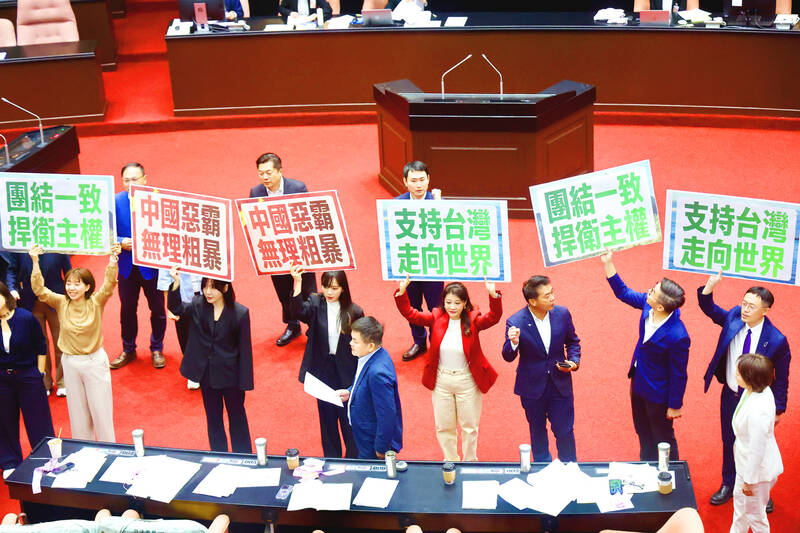
China is accused of pressuring Mauritius, Seychelles and Madagascar to revoke overflight rights for Taiwan President William Lai’s planned trip to Eswatini, prompting criticism from U.S., Japanese and Taiwanese officials. The episode escalates geopolitical tensions around Taiwan and raises concerns about civil aviation norms and diplomatic coercion, but it is unlikely to have direct broad market impact beyond regional risk sentiment.
This is less about one flight and more about the cost of participating in Taiwan’s diplomatic perimeter. The immediate marketable effect is on sovereign behavior: smaller countries now know Beijing can impose a reputational or administrative penalty with little direct expense, so the marginal cost of siding with China falls further unless the U.S./EU attach a tangible price. That shifts the contest from symbolism to balance-sheet warfare, where aid, visas, debt rollover, and market access become the real battleground.
The second-order winner is China’s coercive leverage model, but the medium-term loser is the predictability of cross-border aviation and state travel norms. If overflight permissions become politicized, every Taiwan-related itinerary, and eventually other sensitive diplomatic movements, carries higher scheduling risk and insurance/friction costs. That is a subtle but real tailwind for countries and carriers with strong alignment to Beijing, while raising transaction costs for neutral jurisdictions that rely on overflight fees and aviation hub status.
For defense and Taiwan-exposed assets, the larger signal is that Taiwan’s external support network is hardening rather than collapsing. The defense budget gridlock still matters more than the overflight episode: political theater can lift risk premia for a day, but procurement conversion and legislative passage determine whether U.S. systems actually get ordered and shipped over the next 6-18 months. The contrarian point: this kind of coercion often backfires by strengthening cross-party support in Washington and Tokyo, but only if policymakers move from statements to conditionality; without follow-through, Beijing’s playbook gets normalized at low cost.
Near term, the best trade is not directional Taiwan beta alone but a relative-value basket that monetizes rising geopolitical friction versus lower-quality diplomatic counterparts. The article also flags that the real time horizon is months, not days: sanctions, aid freezes, and travel restrictions would take time to implement, while defense procurement flows are contingent on legislative passage and production capacity. If the U.S. responds rhetorically only, the market will fade this quickly; if it targets aid or travel privileges, the pressure propagates into African sovereign spreads and airline operating permissions within one quarter.
AI-powered research, real-time alerts, and portfolio analytics for institutional investors.
Request TrialOverall Sentiment
mildly negative
Sentiment Score
-0.20
